Last week, Andrea Herbei joined 25 young people from across Europe for a conversation with EU Commissioner Glenn Micallef about the future of sport in Europe.
Andrea Herbei is Co-president of Ceva de spus, our member in Romania, and a wheelchair basketball player.
Andrea Herbei was at the meeting to make sure one voice was in the room that too often isn’t: the voice of people with intellectual disabilities.
The Commissioner invited Andrea Herbei following a meeting with Inclusion Europe earlier this year.
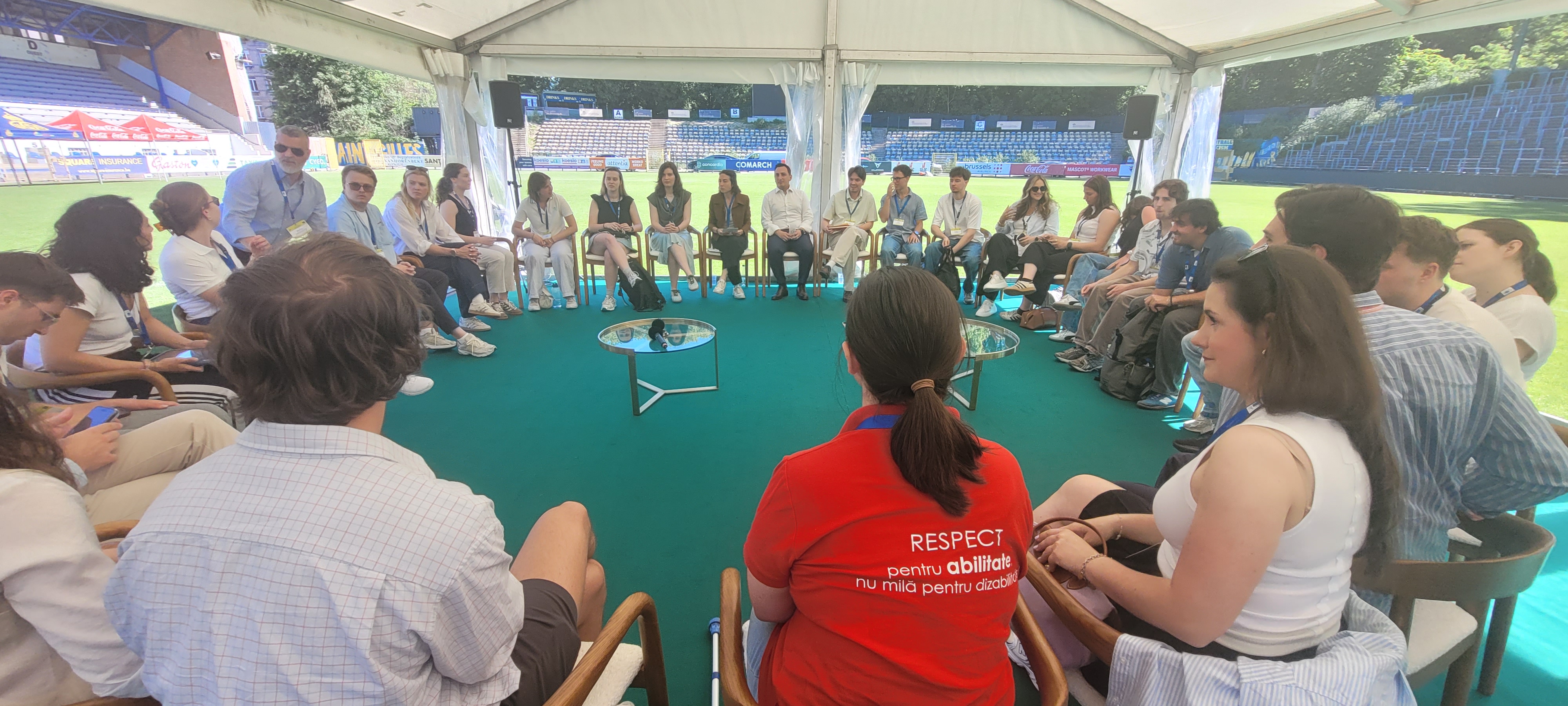
Youth Dialogue
The meeting is part of the European Commission’s work on a new Strategic Vision for Sport in Europe, to be published later this year.
The meeting took place at the stadium of Union Saint-Gilloise football club in Brussels on 26 May 2026.
The Youth Dialogues are the European Commission meetings with young people to talk about different topics.
In March, there was a similar meeting, attended by self-advocate Tamara Byrne.
It is important part of Inclusion Europe work to create opportunities for self-advocates to talk directly with decision-makers at European level.
Sport’s importance
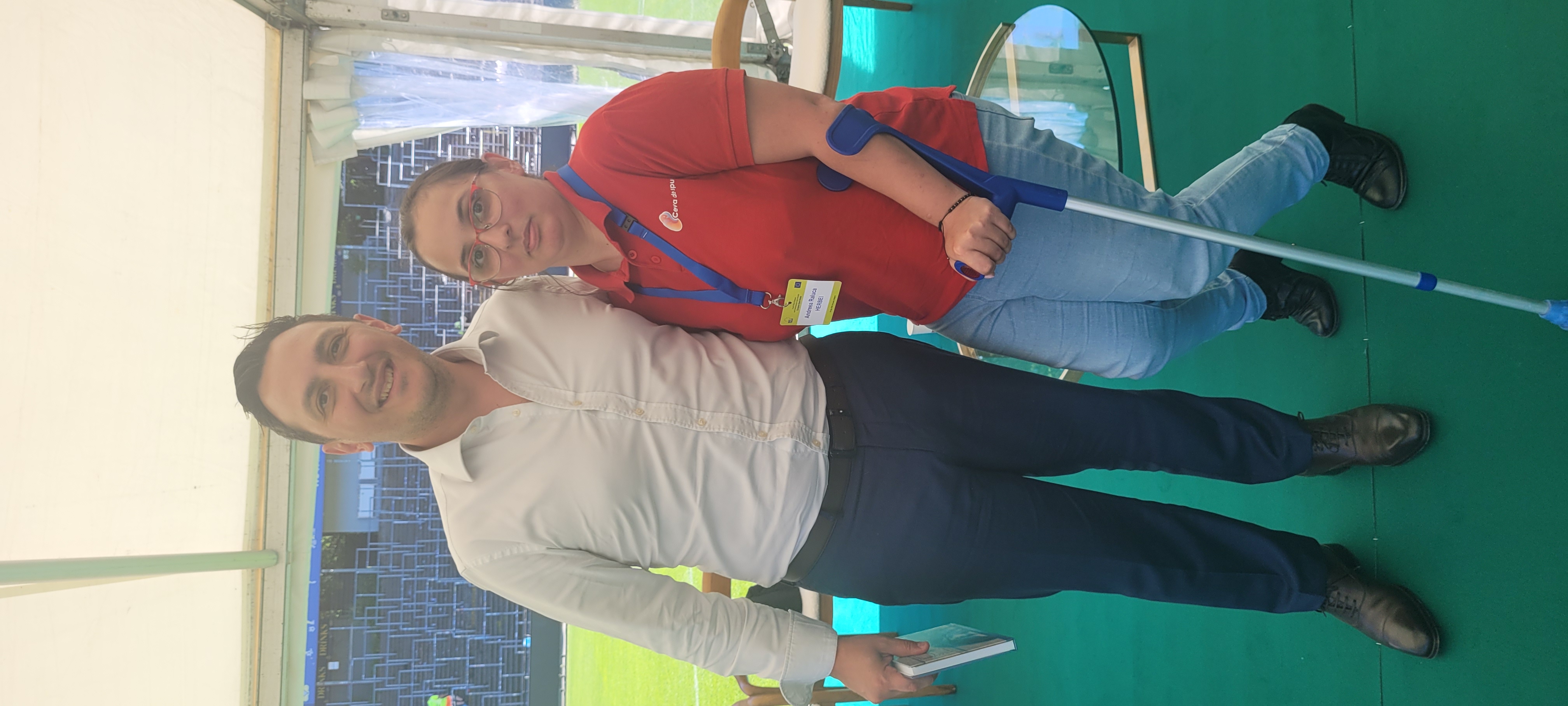
During the meeting in Brussels, Commissioner Micallef spoke from personal experience about the role sport plays in a person’s development — not just physical health, but confidence, belonging, and growth.
Andrea Herbei talked about what this means for people with intellectual disabilities.
Ms. Herbei gave the Commissioner a book called Becoming Eli.
It is a book about Elisabeta Moldovan, self-advocate and Ms. Herbei’s colleague from Ceva de spus.
Elisabeta Moldovan spent years in an institution. The book is about her life.
The reality we brought into the room
More than one million people with intellectual disabilities are living in segregated institutions across Europe. Cut off from their communities. Cut off from education and work. And cut off from sport.
“In Europe more than one million people are living in segregated institutions without access to sport,” said Andrea Herbei.
“Inclusion in sport is very important for people with intellectual disabilities because it helps you develop as a person, increase your self-esteem, belong to a group, make new friends.
“We all want a full life in the community.”
Read also: Interview with Andrea Herbei