In this episode we take you to Timișoara, Romania, to meet Roxana Damaschin-Țecu.
Roxana is an economist by education, working to support people with intellectual disabilities to get out of institutions and to have a good life included in the community.
Roxana shares her journey, beginning in 2002, working closely alongside Elisabeta Moldovan, a self-advocate and survivor of institutional abuse.
Roxana talks about the need for community-based support for people with disabilities, about her work with self-advocacy organisation Ceva de spus. About development of housing with UnLoc, and about a social enterprise OilRight providing jobs for people with disabilities while reducing environmental impact.
She also discusses the challenges and necessary steps for deinstitutionalisation in Romania, emphasising the importance of collaborative efforts between public authorities, NGOs, and community partners.
The conversation was recorded in October 2025, during a visit to Timișoara where all kinds of things happenedhttps://open.spotify.com/embed/episode/3vHJi5TzgRWhqoYXfApAK0?utm_source=generator
Episode 13 of In Conversation With…
00:00 Welcome to Inclusion Europe Radio
00:38 Introducing Roxana Damaschin
01:38 Eli’s Story: A Journey of Resilience
05:22 The Self-Advocacy Organization
07:19 Creating Community-Based Support Services
11:10 Social Enterprise for Inclusion and Sustainability
14:07 Challenges and Future of Deinstitutionalization
25:32 Housing
Listen in your favorite app
| App | Link to episode |
|---|---|
 | Listen on Apple Podcasts |
 | Listen on Spotify |
 | Listen on Pocket Casts |
More podcasts from Inclusion Europe Radio.
Things were said
About what support should look like: “We are talking about supporting a person. We must not forget the individual we are supposed to help.”
About dangerous of bureaucracy to good support: “We should not overcomplicate things, not over-bureaucratize. Support is a citizen-to-citizen, person-to-person relationship.”
About building support around people, not systems: “It’s a different approach where we see the individual, not the service provider, as the main actor in this social system.”
About what helps avoiding re-institutionalisation: “We have partnerships with cultural, sports, training organisations. We try to create opportunities for the interaction, participation, and involvement.”
“It gives a diversity of roles to the persons that used to have only one, the one of being recipient of social services.”
“If the organisation providing the support is open as much as possible to different collaboration and interactions, that also protects from overwhelming institutionalised service provision.”
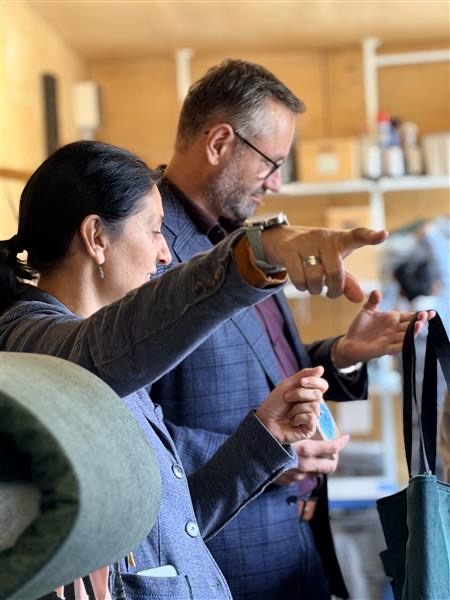
About long-term support when leaving institutions: “We wanted to be there for the long run, not just a momentary initiative. People need a safety net when they get out of institutions.”
About lack of support services: “We need mobile teams, support services, and respite centers. Many parents in their eighties cannot care alone anymore.”
“When there are no support services, authorities start saying institutions are necessary. The waiting list becomes their excuse.”
This episode was produced with co-funding by the European Union.