


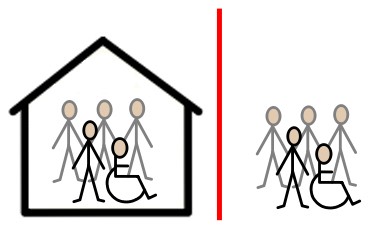








The strategy calls for an inclusive society in which the rights of people living with disabilities are protected and where there is no discrimination.
The European Commission presents an ambitious Strategy for the Rights of Persons with Disabilities 2021-2030 (Easy-to-read version) to ensure their full participation in society.
The new strategy builds on its predecessor, the European Disability Strategy 2010-2020, and contributes to the implementation of the European Pillar of Social Rights.
87 million people in the EU have some form of disability and face considerable barriers in access to healthcare, education, employment, recreation activities, as well as participation in political life. The employment rate of people with disabilities stands at 50.8%, compared to 75% for people without disabilities and 28.4% of people with disabilities in the European Union are at risk of poverty or social exclusion.
“Persons with disabilities have the right to have good conditions in the workplace, to live independently, to equal opportunities, to participate fully in the life of their community. All have a right to a life without barriers. And it is our obligation, as a community, to ensure their full participation in society, on an equal basis with others.” Commission President von der Leyen
Enhancing equal participation and non-discrimination
EU rights
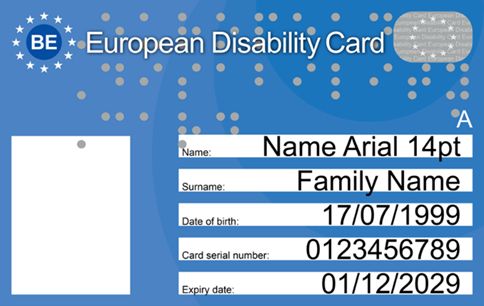
Persons with disabilities have the same right as other EU citizens to move to another country or to participate in political life. Building on the experience of the pilot project ongoing in eight countries, by the end of 2023 the European Commission will propose a European Disability Card for all EU countries that will facilitate mutual recognition of disability status between the Member States, helping disabled people enjoy their right of free movement. The Commission will also work closely with the Member States to ensure the participation of persons with disabilities in the electoral process in 2023.
Independent living and autonomy
Persons with disabilities have the right to live independently and choose where and with whom they want to live. To support independent living and inclusion in the community, the Commission will develop guidance and launch an initiative to improve social services for persons with disabilities.
Non-discrimination and equal opportunities
The strategy aims to protect persons with disabilities from any form of discrimination and violence. It aims to ensure equal opportunities in and access to justice, education, culture, sport and tourism. Equal access must also be guaranteed to all health services and employment.
Flagship projects
To foster the inclusion of persons with disabilities the Commission will propose several flagship initiatives:
AccessibleEU
In 2022 the Commission will launch a European resource centre AccessibleEU to increase coherence in accessibility policies and facilitate access to relevant knowledge. This cooperation framework will bring together national authorities responsible for implementing and enforcing accessibility rules with experts and professionals from all areas of accessibility, to share good practices across sectors, to inspire policy development at the national and EU level, as well as to develop tools and standards aiming to facilitate implementation of EU law. The Commission will start preparations for AccessibleEU within the newly established Disability Platform.
European Disability Card
Free movement of persons is a right of every EU citizen. The Commission will propose a European Disability Card recognised by all Member States, that will make it easier for persons with disabilities to exercise their right to move freely. The Commission will propose creating a European Disability Card by end of 2023 with a view to be recognised in all Member States. It will build on the experience of the ongoing EU Disability Card pilot project in eight Member States and upon the European parking card for persons with disabilities.