Inclusion indicators 2024 report was presented on 4 December during a high-level event organised by the High Level Group on Gender Equality and Diversity of the European Parliament for Disability Rights Week, in collaboration with Inclusion Europe.
The event, attended by over 200 participants—including self-advocates—and joined by additional participants online, featured contributions from key policymakers.
European Commissioner Hadja Lahbib and European Parliament Vice-Presidents Younous Omarjee, Antonella Sberna, and Nicolae Ștefănuță delivered opening remarks, emphasizing the importance of inclusion, accessibility, and the rights of people with intellectual disabilities.
Self-advocates and experts highlighted challenges in areas such as employment, education, healthcare, and public transport, alongside calls for better data and policies to improve participation and equality across Europe.
Inclusion indicators show what Europe looks like for 20 million people with intellectual disabilities and their family members. Seven indicators offer a clear picture of issues such as the right to decide and right to vote, education, or healthcare.
Agenda
European Commissioner Lahbib and European Parliament Vice-President Omarjee opened the event:
Hadja Lahbib, European Commissioner for Equality; Preparedness and Crisis Management
Commissioner Lahbib highlighted the importance of the Disability Rights Week and pledged to support their full inclusion across Europe and beyond.
She emphasised defending their rights, breaking down barriers, and ensuring they could make their own decisions and live independently.
Commissioner Lahbib committed to creating job opportunities, promoting active participation in society, and listening to their voices to ensure no one is left behind.
Younous Omarjee, Vice-President of the European Parliament
Vice-President Omarjee stressed the importance of amplifying the voices of people with disabilities and making the European Parliament a welcoming space for all.
He called for improved accessibility and greater involvement of people with disabilities in key discussions, citing the Inclusion Indicators 2024 report as a stark reminder of the work needed to build an accessible and inclusive society.
While acknowledging progress, like the European Disability Card, Omarjee urged politicians to take responsibility and work collectively for inclusion, appealing for further action to improve the lives of people with intellectual disabilities.
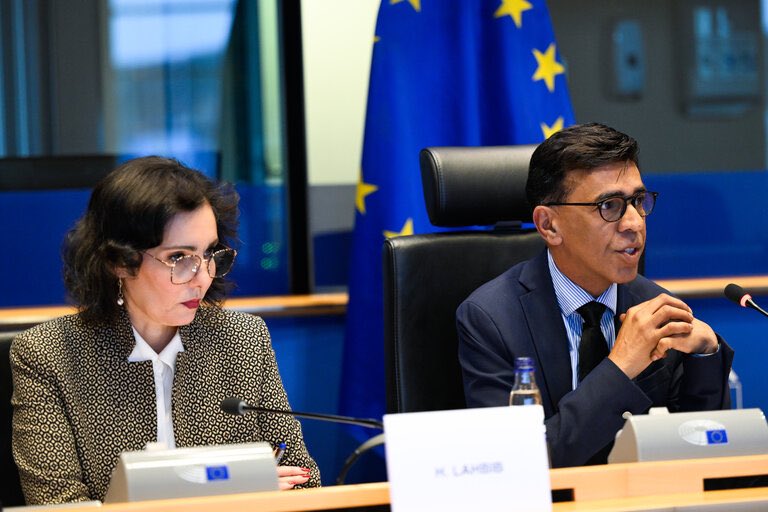
The first panel of the event covered the topic “Monitoring the rights of people with intellectual disabilities”.
Antonella Sberna, Vice President of the European Parliament
Ms. Sberna emphasised the importance of addressing intellectual disability in a cross-cutting manner across activities and policies. She highlighted efforts to raise awareness and educate colleagues within the Parliament about this issue.
Additionally, Ms. Sberna underscored the significant social and economic challenges posed by deinstitutionalisation, describing it as one of the most critical issues for the European Parliament to address.
Soufiane El Amrani, Self-advocate, Accessibility expert of Inclusion Europe
Mr. El Amrani presented the key finding of Inclusion indicators 2024.
He highlighted the challenges faced by people with intellectual disabilities and their families in Europe, asking what actions would be taken to improve their situation.
Katrin Langensiepen, Chair of the Disability Intergroup, European Parliament
Ms. Langensiepen highlighted the underrepresentation of people with disabilities in politics, noting that only three out of 720 members have disabilities.
She emphasised the need for data on how people with learning difficulties are treated across Europe, sharing her own experiences of ongoing discrimination and barriers preventing many from accessing spaces like Parliament.
Christophe Lefèvre, Chair of the Permanent Working Group on Disability, European Economic and Social Committee
Mr. Lefèvre noted that accessing Member States’ markets was crucial, advocating for not only better jobs but also quality work to help improve the social situation of people with disabilities.
~
The second panel focused on situation in different countries, and what can be done to improve the situation in Europe. This panel was moderated by Catherine Naughton, director of the European Disability Forum.
Nicolae Stefanuta, Vice President of the European Parliament
Mr. Stefanuta expressed his desire for people with disabilities to see the European Parliament as their closest partner in their advocacy and efforts.
Marie Louise Johannessen, Director of LEV, Denmark
Ms. Johannessen criticised the lack of sufficient accountability from governments regarding the ongoing denial of disability rights.
She also described the worsening situation in Denmark when it comes to access and quality of disability support for people with intellectual disabilities.
Thomas Dabeux, Policy Manager of Inclusion ASBL, Belgium
Mr. Dabeux stressed that the goal of inclusive education should be to foster greater participation in the community for people with disabilities.
Sanja Jovicic, EU Agency for Fundamental Rights
Ms. Jovicic highlighted the persistently low level of participation of people with intellectual disabilities in the electoral process. Ms. Jovicic also pointed out the lack of comparable data across Member States, which poses a challenge to addressing this issue effectively.
Lucie Davoine, Head of Unit “Disability and Inclusion”, Social Rights and Inclusion, DG EMPL, European Commission
Ms. Davoineemphasised that employment is a key factor not only for financial autonomy but also for fostering participation in society.
Ellen Robson, Director-General for Personnel, European Parliament
Ms. Robson highlighted the importance of the European Parliament’s administration leading by example, emphasizing their commitment to listening and learning.
She also announced the creation of a new internship scheme for people with intellectual disabilities in the European Parliament.
Miriam Lexmann, Quaestor of the European Parliament
Ms. Lexmann acknowledged the significant amount of work still needed to ensure equality, reaffirming the European Parliament’s commitment to fighting for equality.
~
The event concluded with statements from self-advocates:
László Bercse, Vice-President of inclusion Europe, chair of European Platform of Self-Advocates
Mr. Bercse, Vice-President of Inclusion Europe and Chair of the European Platform of Self-Advocates, expressed gratitude to the European Parliament for organising the event, especially Vice-President Omarjee for his contribution and Commissioner Lahbib for her dedication to the rights of people with intellectual disabilities.
He acknowledged the importance of the high-level conference and emphasised the need for more progress in Europe, noting that many governments still limit the rights of people with intellectual disabilities through harmful laws like institutionalisation.
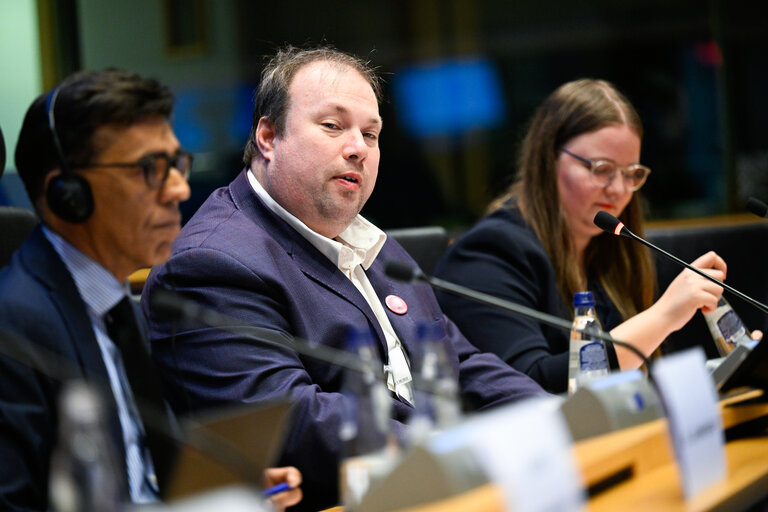
Self-advocates from Belgium
Eric Delfeld noted that, despite significant changes, progress had not been fast enough.
Mathilde Cotman noted the need for more accessible public transport, recounting a personal experience where she couldn’t locate a bus stop and had to rely on a taxi, with no assistance available.
Jean Mylonas stressed the importance of creating a society where people with disabilities could live better lives and fully participate.
Dimitri Yannoussis highlighted persistent difficulties with public transport, such as buses, metros, and trams, and questioned how these systems could be improved for people with intellectual disabilities.
Acknowledgements
We would like to thank Hadja Lahbib, European Commissioner for Equality, Preparedness and Crisis Management for joining the event for what was her first public speech in her role as Commissioner. Inclusion Europe director, Milan Šveřepa, had an opportunity to give the printed Inclusion indicators 2024 report to Commissioner Lahbib.
We were also honoured to have Younous Omarjee, Vice-President of the European Parliament, collaborate with us on this event and help us with the organisation.
We want to thank the High Level Group on Gender Equality and Diversity of the European Parliament for hosting the event.
And we thank to all the speakers and participants.
Watch the full event here and read the full report here. Read our dedicated Europe for us issue here.