Report from an event on the importance of having a job and developing skills for inclusion of people with intellectual disabilities. The event was also the official launch of the Ulla Topi traineeships in inclusive policy-making.
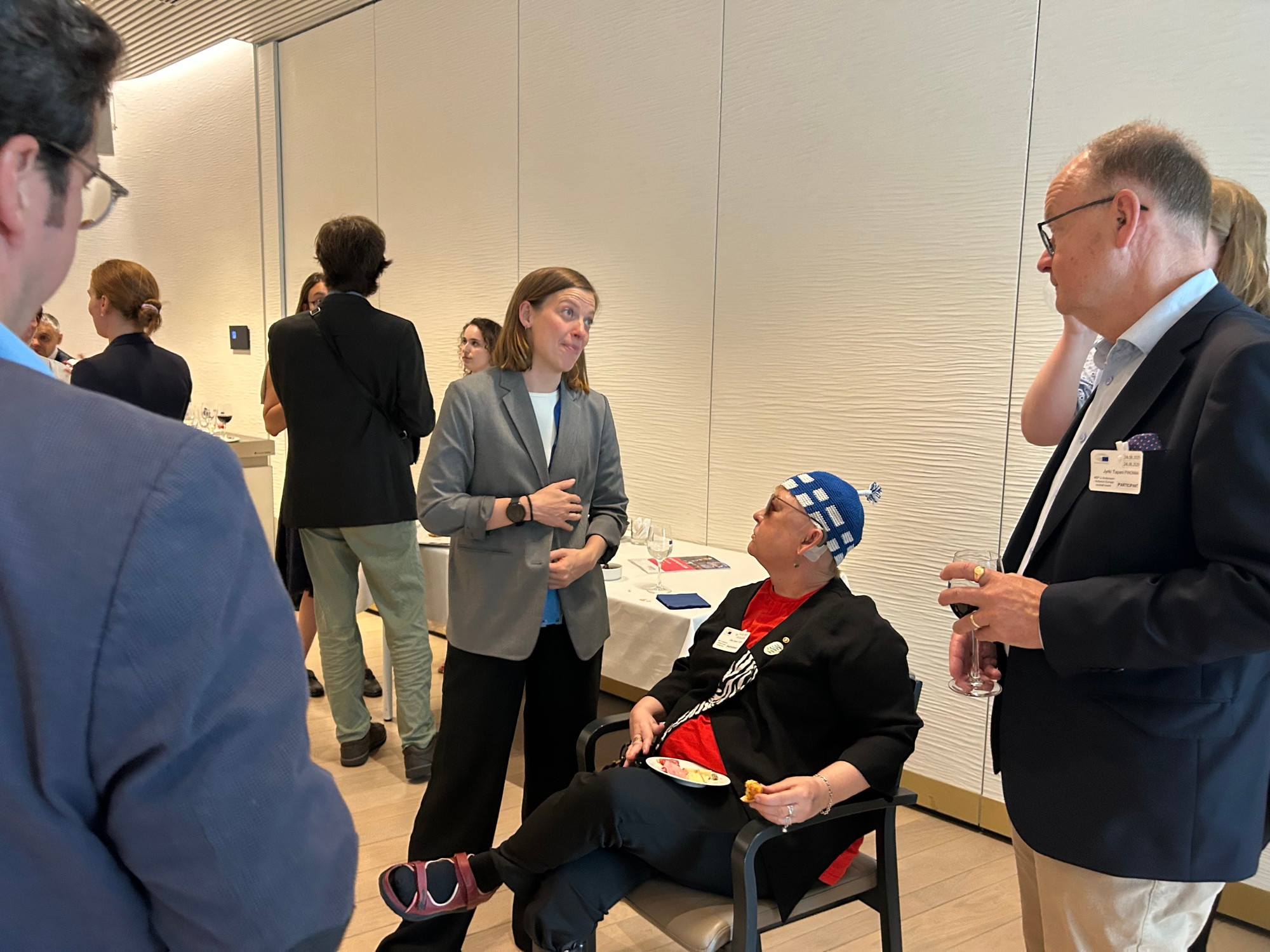
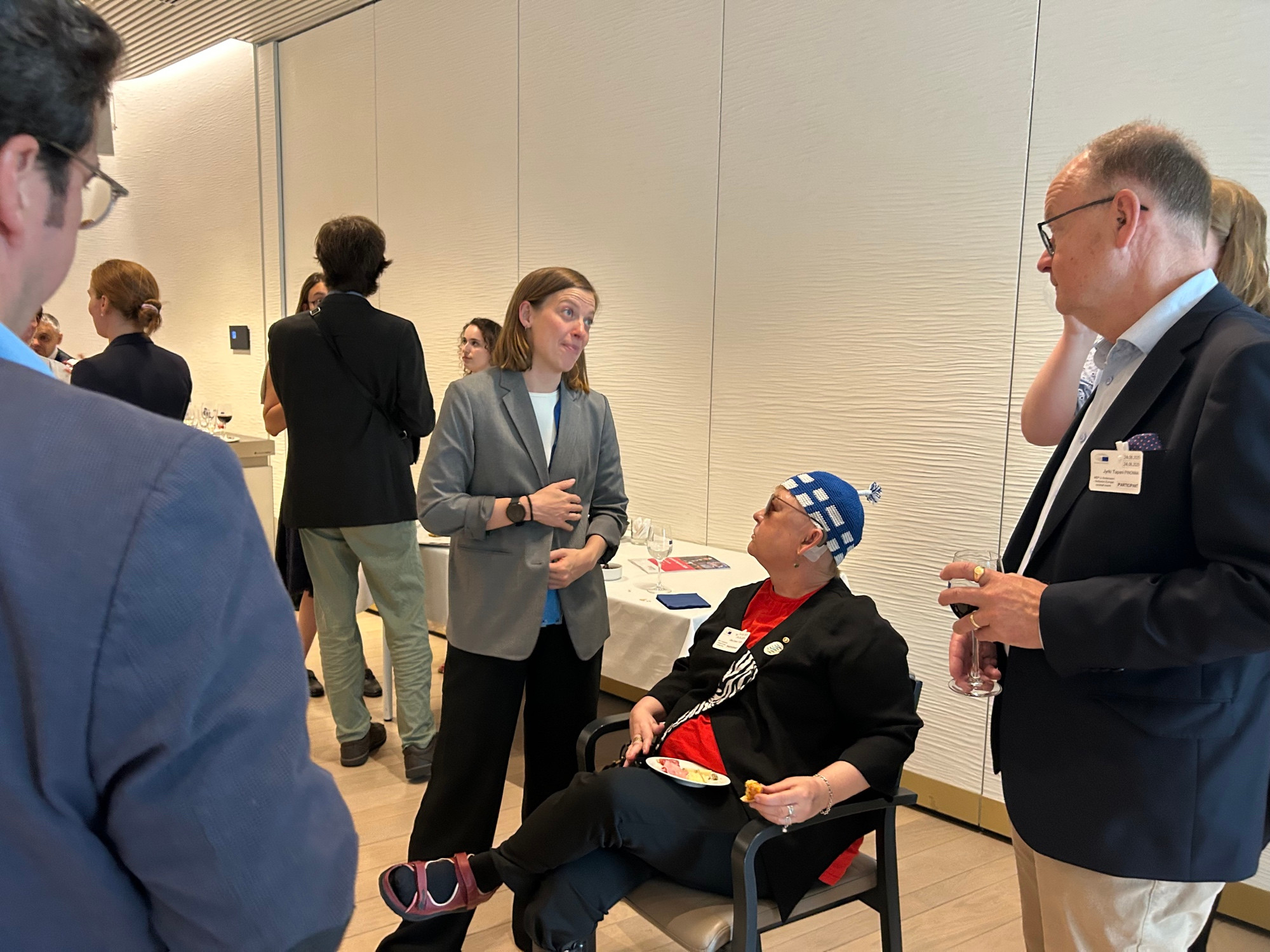
The event was hosted by Li Andersson MEP in collaboration with Inclusion Europe, and took place in the European Parliament on 24 June 2025.
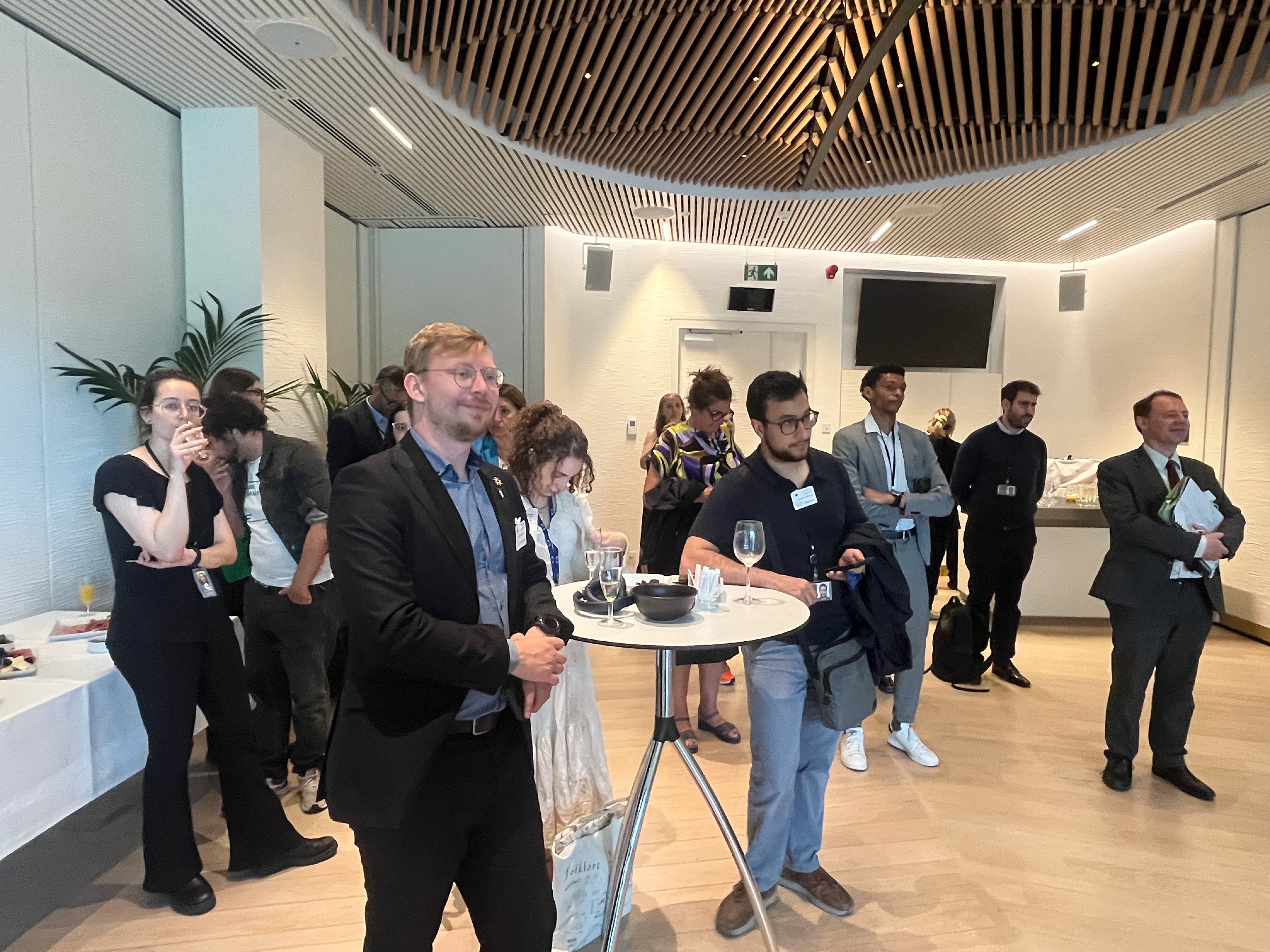
37 participants attended the event.
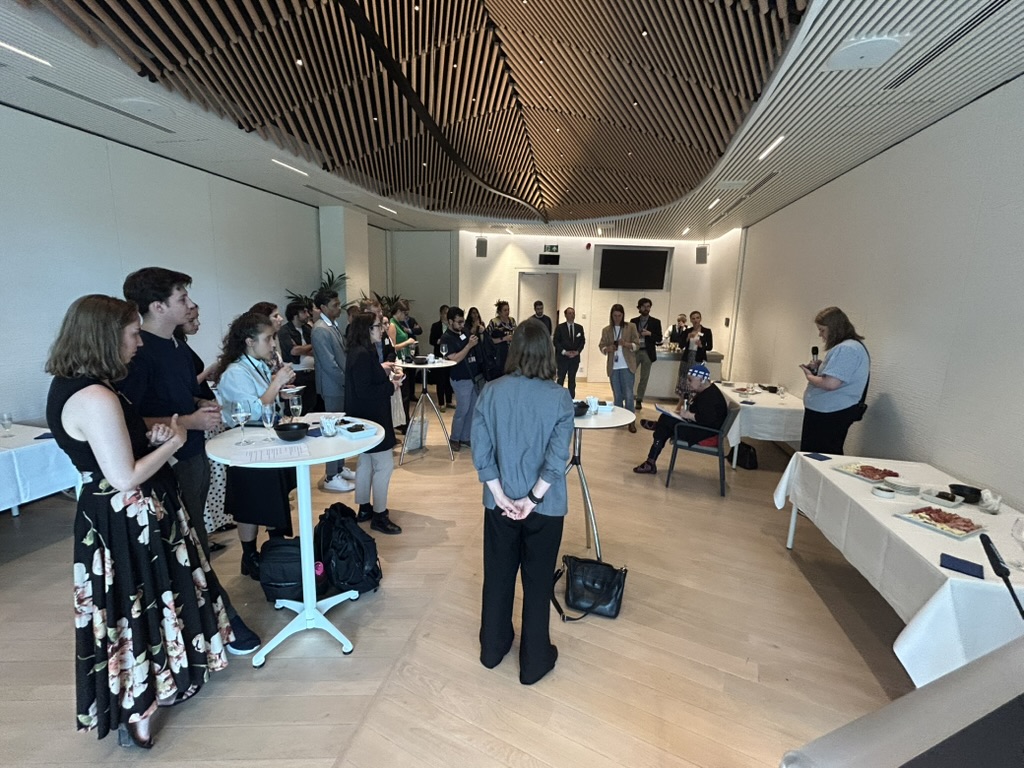
Li Andersson MEP
Li Andersson is Member of the European Parliament, and the Chair of the Committee on Employment and Social Affairs. Li Andersson is from Finland. Li Andersson is member of the The Left group in the European Parliament.
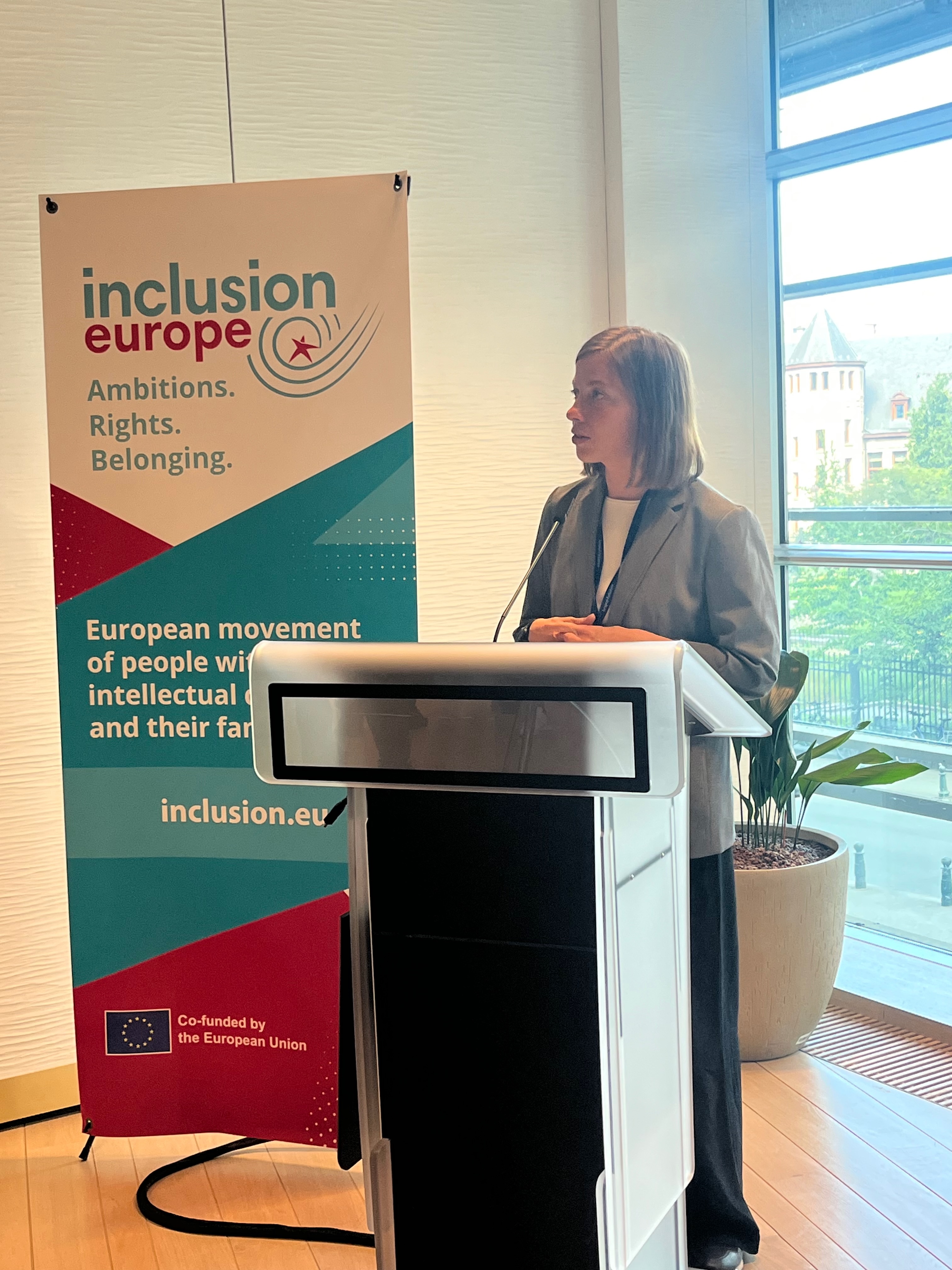
Excerpts from Li Andersson’s speech:
“I am the Chair of the Committee on Employment and Social Affairs. Our committee is responsible for promoting disability rights and ensuring social inclusion for people with disabilities. I am therefore especially proud to host you all here today.
The event’s title, ‘Skills for inclusion, skills for life’, highlights two important aspects that ultimately come together.
Firstly, we need skills for inclusion in order to be truly capable of creating inclusive policies and practices throughout society. This involves raising awareness, creating accessible schools and workplaces and also learning how to achieve inclusion in practice. Inclusion is a matter for all of society, and therefore it is crucial that we all develop these skills.
Secondly, we need skills for life to enable persons with disabilities to live life to the fullest, with access to education, training and employment. This is about equal rights to acquire and maintain the necessary skills needed to participate fully in society. This is a well-recognised aspect of the Social Agenda of the European Union, yet we still face problems in turning our guidelines and policy targets into reality.
Just two weeks ago, I attended the UN meeting on the Convention on the Rights of Persons with Disabilities in New York. Among the many topics discussed were the findings of the UN CRPD Committee report on EU policies.
In the area of education, the report’s observations highlighted concerns regarding the segregation of children with disabilities in many Member States, where they face difficulties accessing regular schools due to a shortage of qualified teachers and educational support staff, a lack of reasonable accommodation, and inaccessible school buildings.
This is also reflected in educational outcomes: In 2024, around a quarter of people with disabilities aged 18–24 were early school leavers in the EU, compared to 8% of people without disabilities.
Access to inclusive education is a fundamental human right and crucial for enabling especially young people with disabilities to live an independent life and make their way to employment. We need concrete action by member states and by the European Union to make a difference.
Investing in inclusive education is also the best way to enhance employment of persons with disabilities in Europe.
Across the EU, people with disabilities are significantly less likely to be employed. According to data from 2019, the employment rate for disabled people is 24.4 percentage points lower.
Only 50.8% of disabled people are employed, compared to 75% of non-disabled people. The share is even lower for women. The disparity is even more pronounced in the context of full-time employment, with only 20.6% of women and 28.5% of men with disabilities in full-time employment. The most affected group is people with intellectual disabilities.
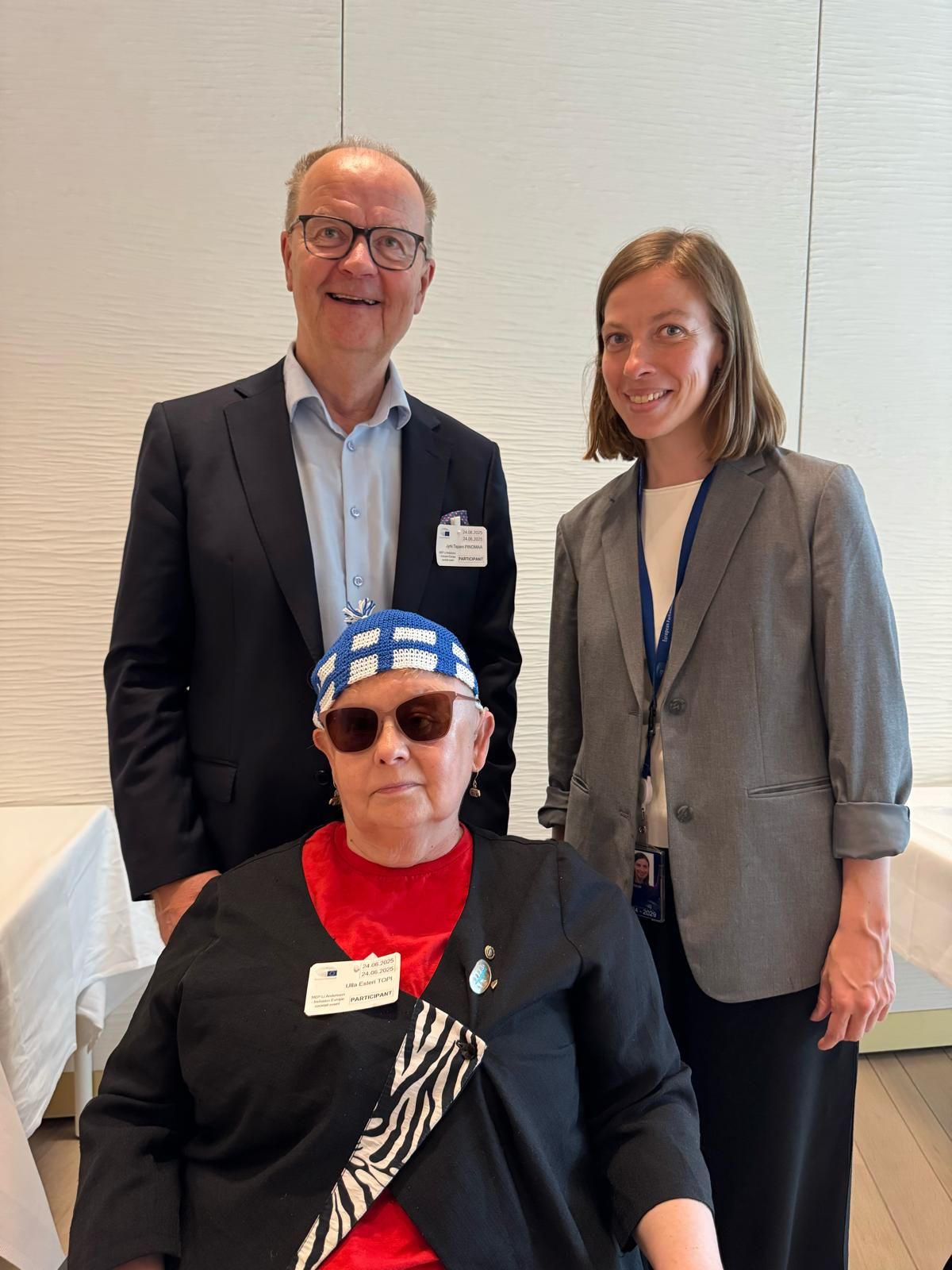
This brings us to the people who make the difference. Today, Ulla Topi will share her experience and insights from her admirable and exemplary lifelong work in self-advocacy for people with intellectual disabilities.
We are also here today to celebrate that, from now on, Inclusion Europe’s traineeship will be known as the ‘Ulla Topi traineeship in inclusive policy-making’.
I would like to share a quote from Ulla Topi that reminds us of the most important thing:
‘We want to be treated as independent human beings. We want people to take our hopes and needs seriously. We want our rights’.”
Jyrki Pinomaa, President of Inclusion Europe
“This event is especially important now when Europe is deciding how it will be spending its money in the near future – it will show what priorities Europe has and what truly matters to the people who make decisions.
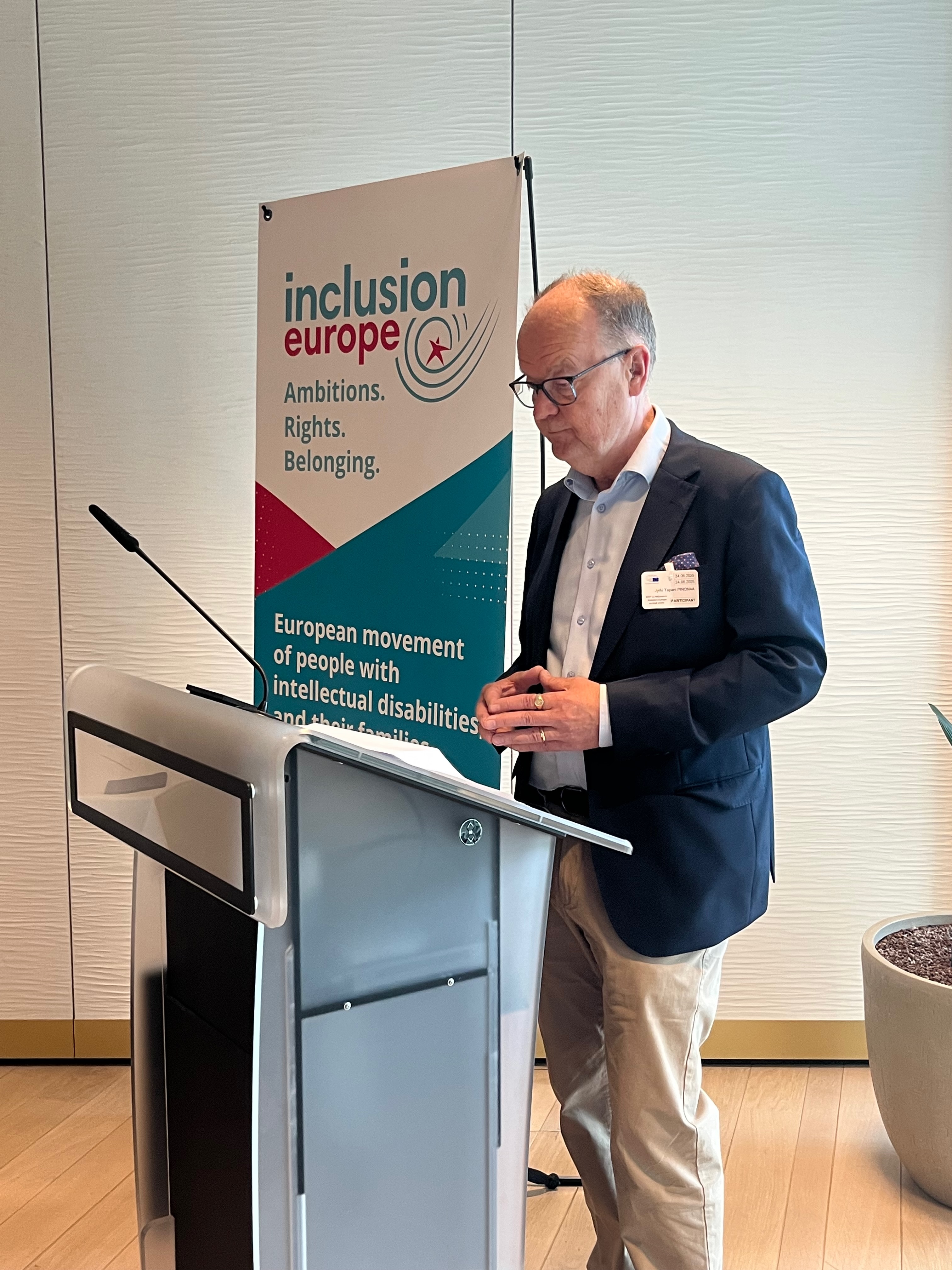
People with intellectual disabilities face major barriers in finding work. They are often excluded from regular jobs. Many live in poverty and are isolated from their communities.
Work is more than a way to earn money. It helps people to be independent, build confidence through application of their skills and interactions with others. It helps them to belong.
Work is also a way to influence policies and decisions. When people with intellectual disabilities are excluded from jobs in public organisations and other places that have influence on their life, they are not in the room when policies are made.
That is why we are here today. To look at how jobs for people with intellectual disabilities can be better supported. And also to talk about development for skills that are important for inclusion.
This event is called Skills for inclusion, skills for life. What we mean by that is that the skills that shape inclusion policies have the power to change a person’s life.
That applies both to people with intellectual disabilities, when they have good support to develop skills that help them succeed in a job and in life.
And it applies to the many policy-makers who shape the world in which people with intellectual disabilities live. The better they know about inclusion and have themselves the skills to work alongside people with intellectual disabilities, the better policies they will create.
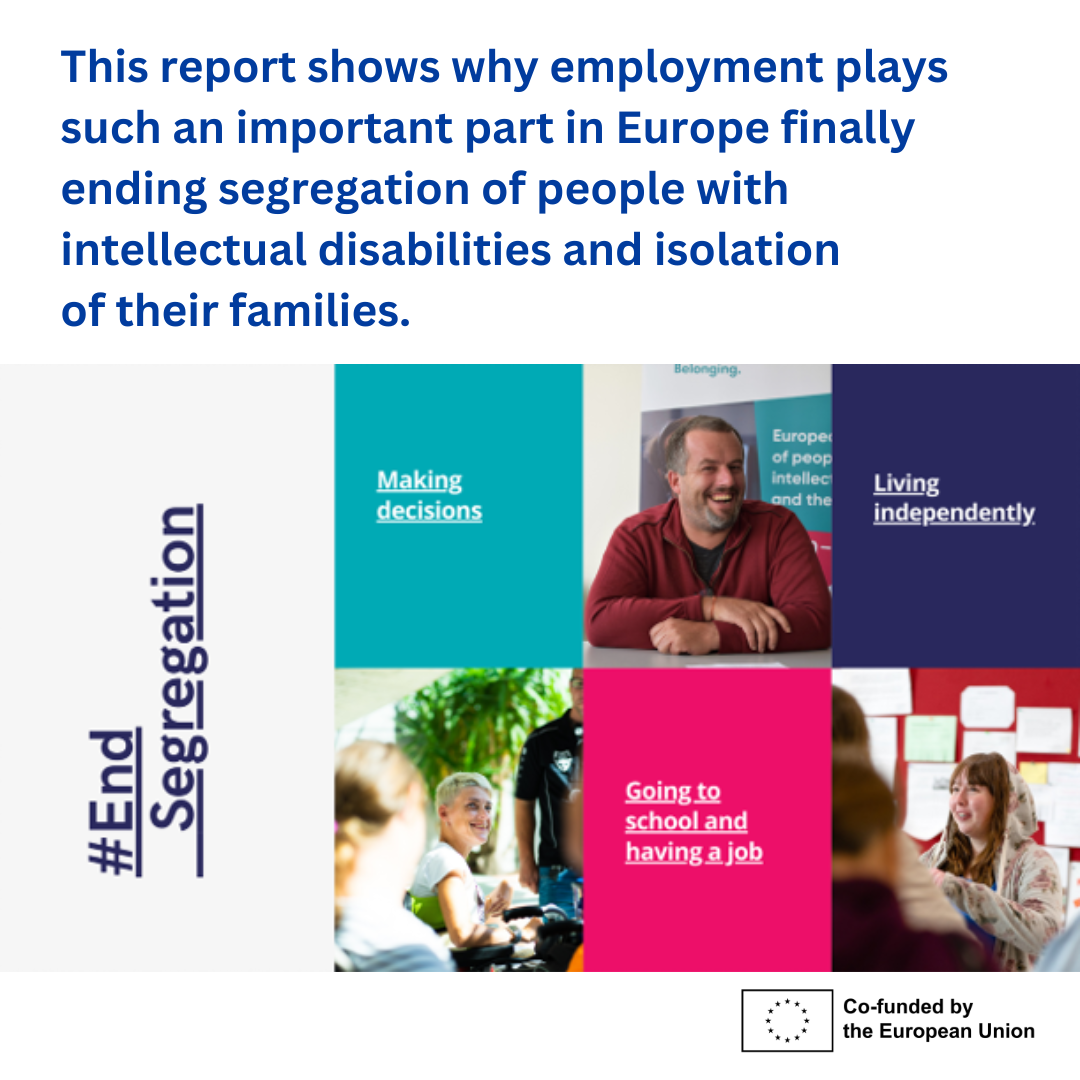
That’s why Inclusion Europe prepared this new report. It shows why having a job is so important. It has 15 examples of support to employment of people with intellectual disabilities in different countries.
Soufiane El Amrani
Soufiane El Amrani is a self-advocate and works as Accessibility Expert of Inclusion Europe. Soufiane was unable to attend the event, and his speech was presented by Inge Volleberg.
“Being in the room is the first step to influence policies and decisions. People with intellectual disabilities can provide knowledge, expertise, and experience.
We make public communication accessible. We can also train policy-makers on inclusion. That way, policies and laws become more representative and inclusive.”
Ulla Topi traineeship in inclusive policy-making
Ulla Topi is a self-advocate from Finland. She was elected the first ever President of the European Platform of Self-Advocates. In her honour, Inclusion Europe traineeships are from now on called the Ulla Topi traineeship in inclusive policy-making.
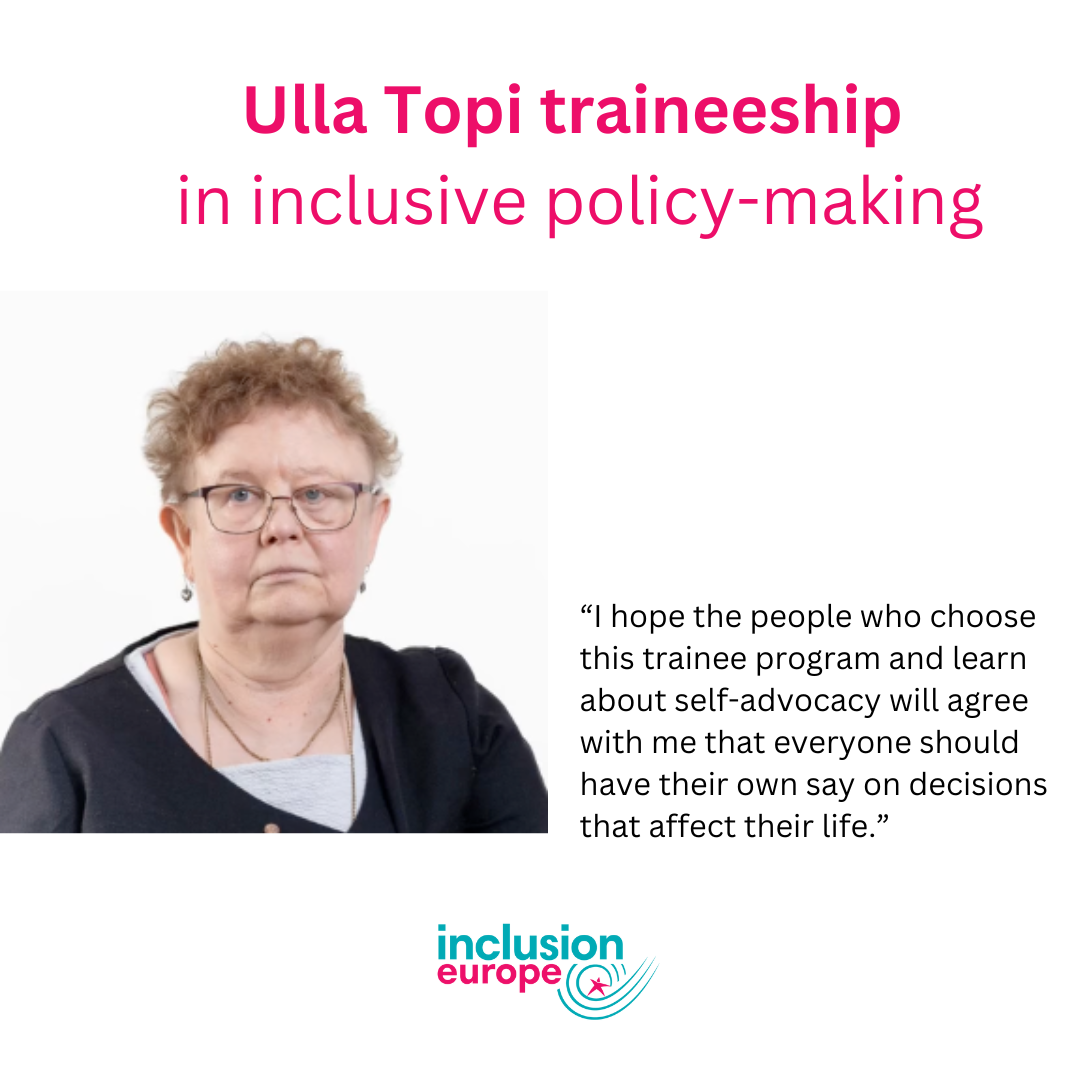
Jyrki Pinomaa said:
“Ulla was the first President of the European Platform of Self-Advocates, back in 2001.
She paved a way for many self-advocates in Finland and Europe who followed in her stead.
She was also important in Inclusion Europe becoming a more inclusive organisation, working better for and with self-advocates.
Inclusion Europe plays an important part not only in advocating for full rights and inclusion. But we also help many young professionals get a good experience working in European policy and learning about people with intellectual disabilities – but most importantly working with them.
We’ve been offering traineeships for young professionals in Brussels for many years. There have been a lot of people who came to Inclusion Europe to learn and get new skills – especially in inclusive policy, easy to read or accessible communication.
And they go and carry those skills and experiences into your new jobs in Brussels or elsewhere. Contributing to a better, more inclusive world.
Inclusion Europe has also been employing and training people with intellectual disabilities for many years. This has had all sorts of different formats over the years, but the goal was always the same – to support people with intellectual disabilities in learning new skills, getting new experiences, and applying them in places where decisions about important policies are made.
And from now on, we will also be honoring Ulla Topi and her pioneering contribution to the self-advocacy movement and European policy-making.
From now, young people coming to Inclusion Europe to learn about policy or communication will be taking part in what is called the Ulla Topi traineeship in inclusive policy-making.
With that, we thank you, Ulla, for all what you have done as a self-advocate in Finland and at European level. It is an honor we can name this program after you.“
Ulla Topi said:
“I remember very vividly when I was elected as the first president of the European Platform of Self Advocates in 2001.
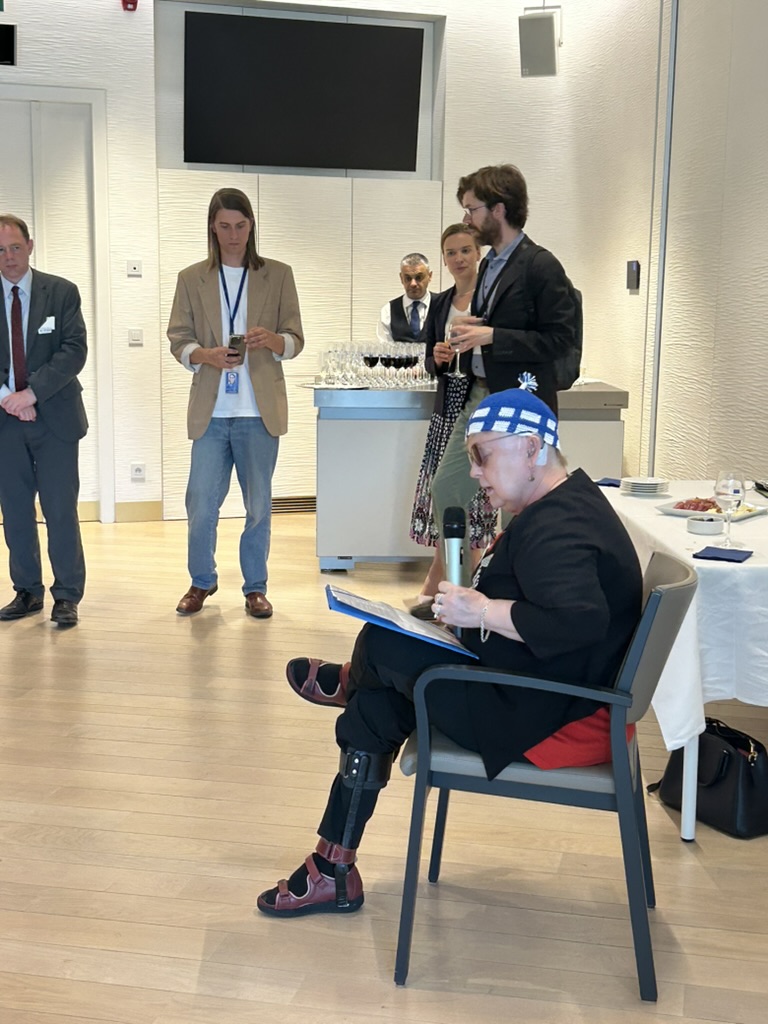
You had to be always ready for the responsibilities it came with. You had to have an opinion for every topic of discussion, including deinstitutionalisation, employment and marginalisation. (…)
I have to admit that going from thinking about Finland’s population of thousands to Europe’s scale of millions was a huge step in my advocacy career.
I thank you for this accolade, this special honour you’ve given me.
I hope that the people who choose this trainee program and learn about self-advocacy will agree with me that everyone should have their own say on the decisions that affect their own lives.”
Read Ulla Topi’s full speech here.
Policies for employment and skills development
Monika Chaba and Darwyn Bruelemans continued the conversation about support to employment to skills development.
Monika Chaba
Monika Chaba is a Policy Officer in the Directorate-General for Employment, Social Affairs and Inclusion of the European Commission, coordinating work on the Disability Employment Package.
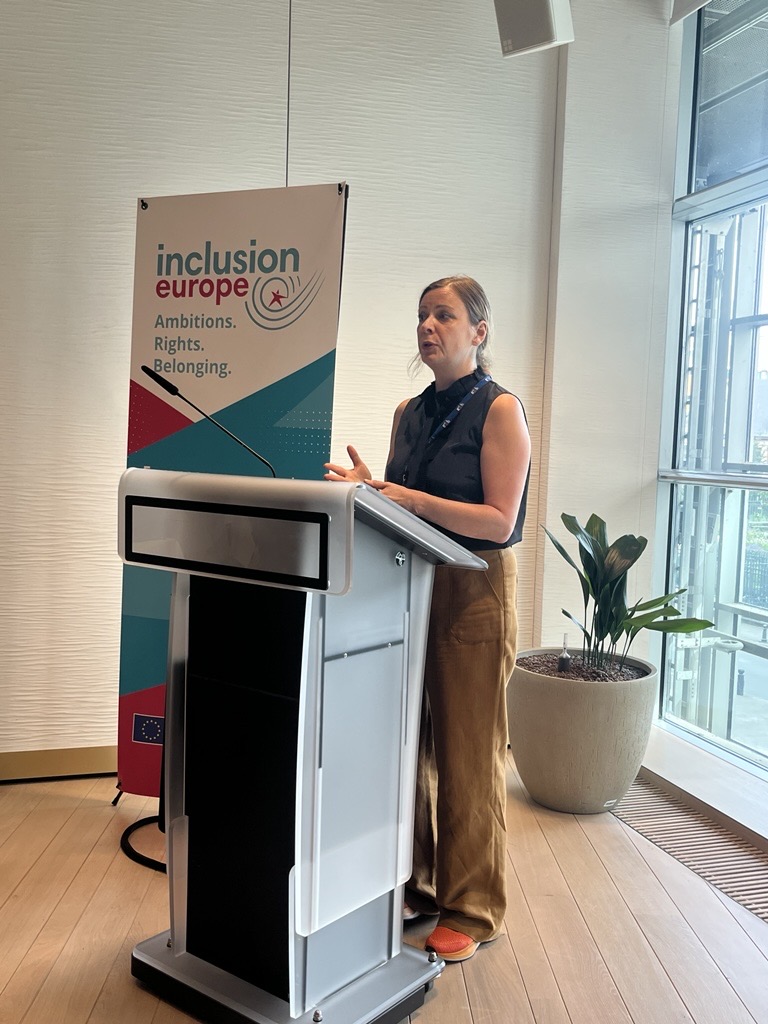
The Disability Employment Package aims to ensure that persons with disabilities enjoy social inclusion and economic autonomy through employment. The package is part of the Strategy for the Rights of Persons with Disabilities 2021-2030.
Only half of the 42.8 million persons with disabilities of working age in the EU is employed. The Disability Employment Package will help develop national policies that involve persons with disabilities in the fair green and digital transition.
There are many documents and tools developed as part of this initiative, giving examples of how to support employment of people with disabilities.
Darwyn Bruelemans
Darwyn Bruelemans is Erasmus Student Network’s Board member responsible for digitalisation. ESN represents international students, providing opportunities for cultural understanding and self-development.
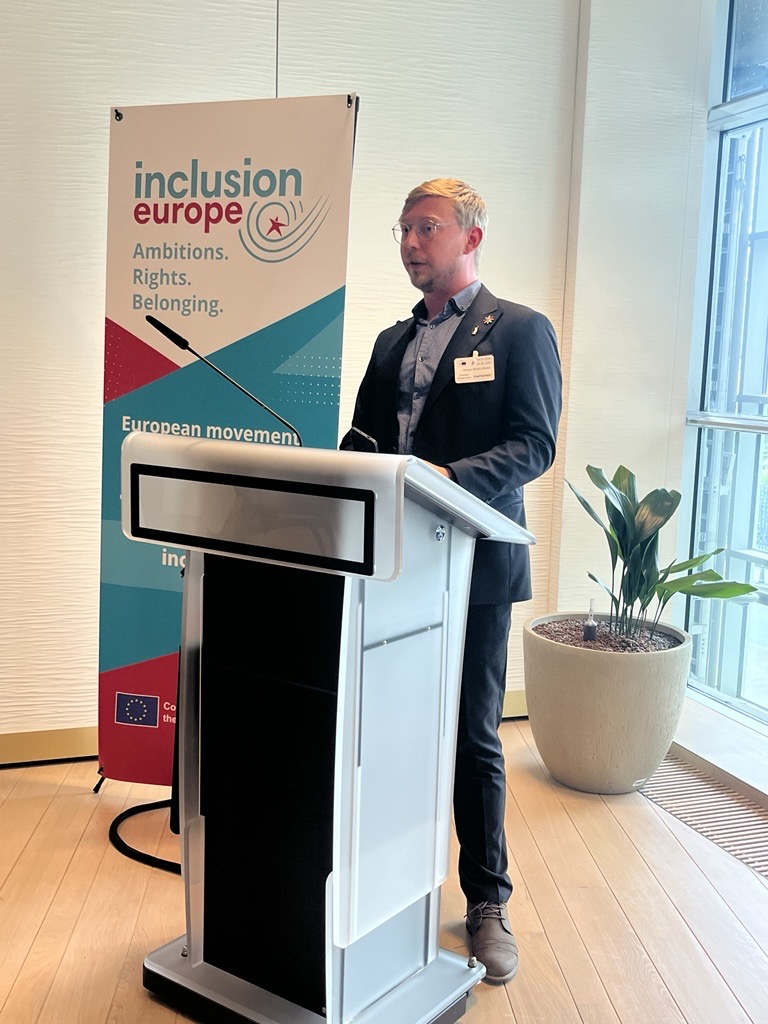
Darwyn Bruelemans spoke about how important it is to support young people in developing skills, for example with the Erasmus+ program. Such programs need to improve in terms of accessibility for people with disabilities.
Darwyn Bruelemans also gave examples of different activities the ESN is doing to improve accessibility and diversity, including with digital tools.
The event was co-funded by the European Union.