Inclusion Europe is working on a survey of young families (parents, siblings) of people with intellectual disabilities. As we start the work, I sat down and wrote down my own thoughts and experiences growing up as a sibling, writes Inge Volleberg.
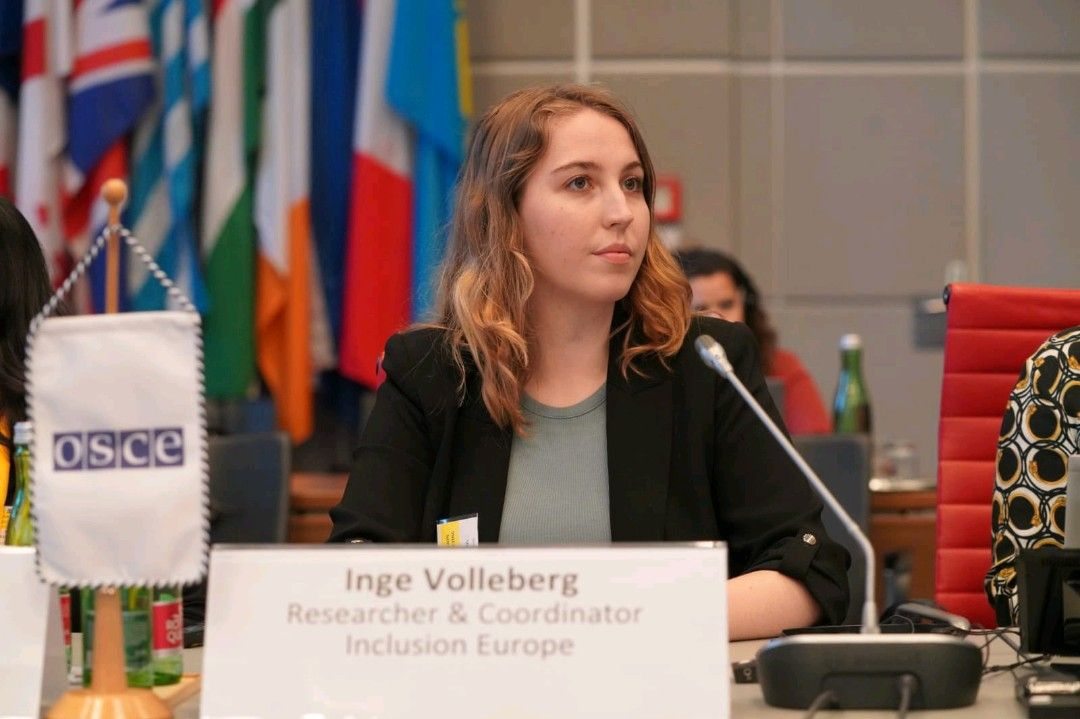
Inge Volleberg is Inclusion Europe’s researcher and coordinator. She works a lot on the Inclusion indicators reports. Inge also co-leads our work on young families. This is Inge’s story:
It was fun and a little bit therapeutic to write all of this down. But I might have gotten carried away a little bit and ended up with 5 pages of text.
So first, I will summarise the main point:
I do what I do because I believe there is a lot that can be improved for people with intellectual disabilities, their siblings, and their families. Siblings need to receive more support and should be considered more. I don’t think my experiences or those of other siblings are worse than the discrimination and segregation that people with intellectual disabilities face. At the same time, it is not a competition and improvements for siblings would also mean that people with intellectual disabilities can have a more ‘normal’ sibling relationship without the caregiver-dependent label. It works the other way around as well – if things improve for people with intellectual disabilities or their parents, chances are the situation will also improve for siblings.
Some points I think we need to address in our project, concerning siblings:
- More awareness for the situation of siblings and their support needs (e.g. when getting family support, there is specific attention for the sibling, this also helps with acknowledging that this situation is different than their peers)
- More resources for families on ‘glass children’, so they can look out for the signs and make sure the sibling get the necessary support
- The importance for community and support groups with other siblings/young caregivers.
Now, for the full story:
“Condolences”
Growing up as a sibling of someone with an intellectual disability comes with its challenges. But before I continue I feel the need to stress that I love my sister, I wouldn’t change her or our relationship for anything.
I feel the need to stress this because my entire life people have assumed that being a sibling is ‘hard’, something to pity, something I would resent – which is far from the truth.
In general, interactions went like this: I want to tell a funny story about my sister. Ah, they will not understand what is funny about it if they don’t know about her disability. I quickly note her disability as a sidenote, so that I can tell the funny story. Now the mood shifts, the other person gets this sad look. They tell me: Aww, condolences? I am in no mood for my funny story anymore.
There is no need to get a sad look, there is definitely no need to share your condolences (what is that even about?!). But this exact situation has happened more times than I can count on my hands.
Fair enough, most people don’t say “condolences”, but by far the majority get the sad look, the majority will shift the mood, the majority will make a comment on how ‘hard’ it must be.
The few that don’t, I make a note, I keep them close, because they passed a test. A test that I didn’t want to give them, they didn’t know about and has no other repercussions except for me being grateful that I can finally tell my funny story.
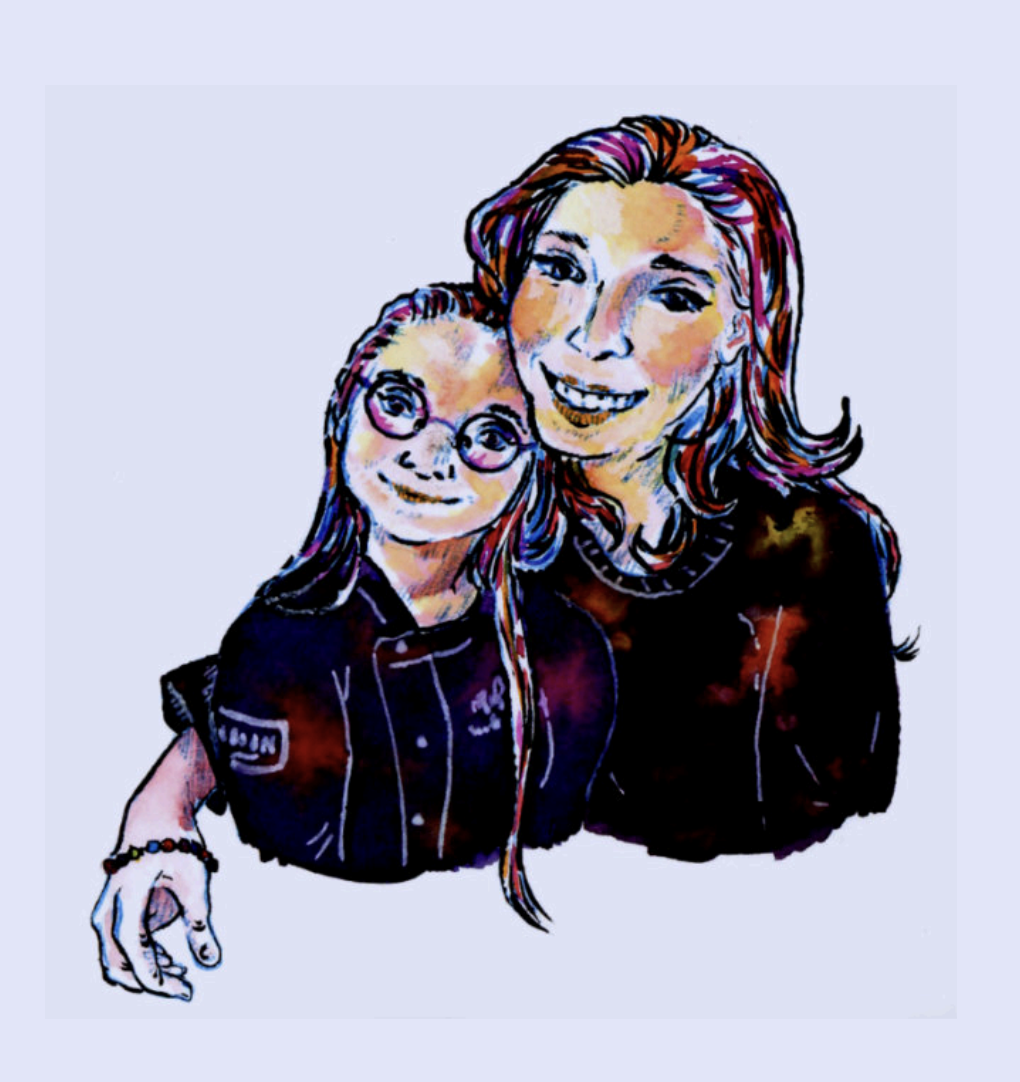
We had a normal relationship, but people treated us differently
Growing up, Esther and I had a great time. We played pretend, I defeated her in many board games, we were always looking for new hide and seek spots.
As far as I remember, we had a normal sibling relationship. I knew from a relatively young age that Esther had a disability, but I did not understand what that meant other than that we needed to change the rules for board games because the actual rules were too difficult.
However, I did notice that other people treated us differently. Sometimes, people said weird things, mean things about Esther. I didn’t understand why.
More often, people were kinder to Esther, most frequently giving her more food than me (or other children). But also giving her free stuff or allowing her an extra round on the ponies.
These were the things I noticed as a kid. How adults treated us differently while for me, we were the same. Okay Esther has a disability, but other than that we were the same, equal.
Years later I learned the word discrimination, and I realised that in our childhood (and still if I am being honest), Esther faces a lot of discrimination. Luckily (?) often in the form of positive discrimination. I say this with a big question mark because it was not fun for me as a sibling. And Esther, when she realised she was being treated differently, resisted it too.
This was something I struggled with a lot in my childhood. Why do people treat Esther differently? Why do they say mean things, but also why am I not deserving of an extra candy? We are sisters, we are equals, but only in our own eyes and those of our family. The rest of the world was adamant on reminding us that we are different.
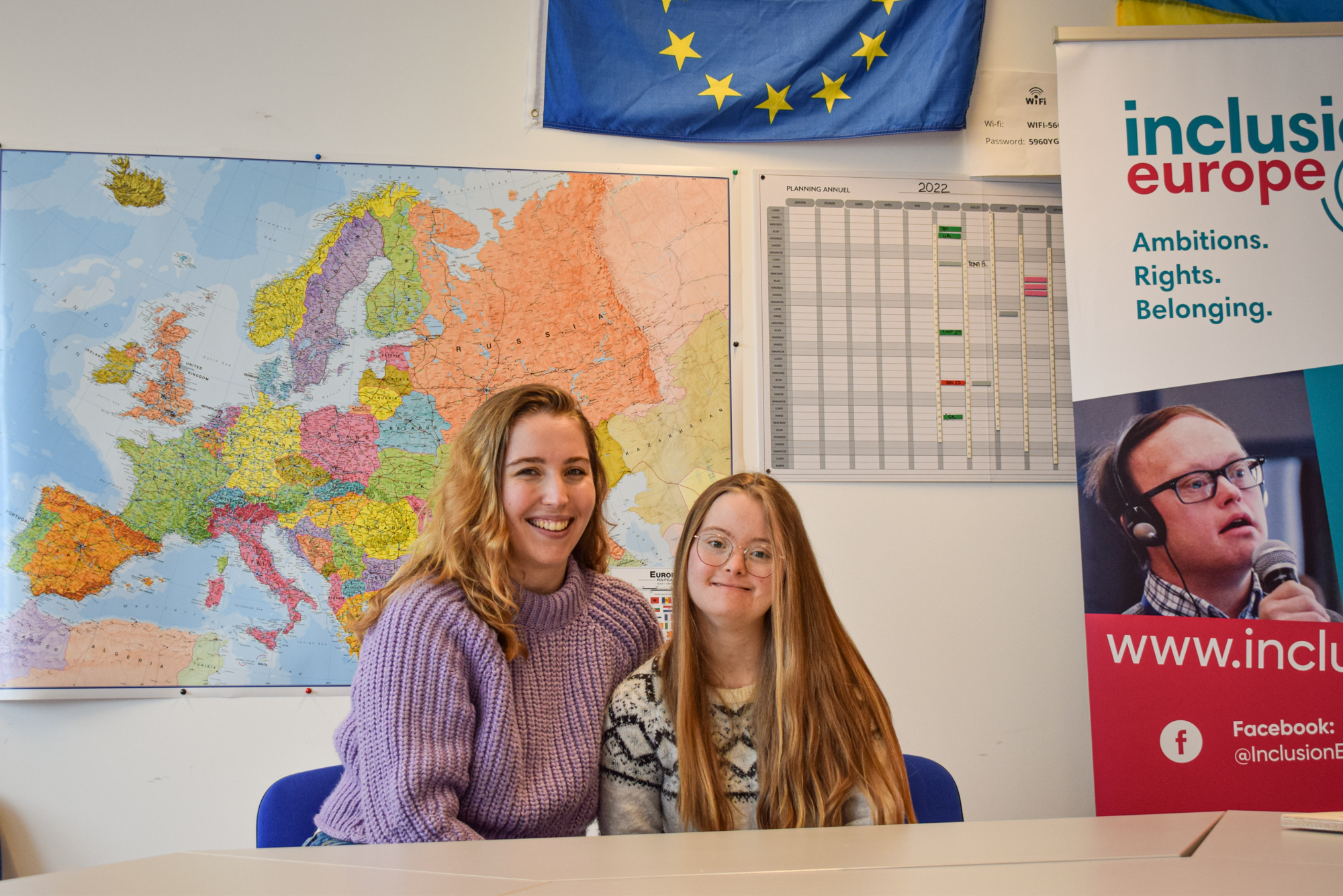
Care and support
As I was growing older, I started to see the differences more. In a way, I noticed that Esther “aged slower” than me: the 3-years age-gap between us seemed to grow to 5, 7, 9-years.
This brought new challenges. First, and most importantly for 9-year-old Inge, Esther couldn’t play the games I wanted to play. Second, slowly but surely our relationship was changing, from purely sisters, to also someone who needs care and support, and me providing that support.
Here I feel the need to put another sidenote, another warning, because I have learned that if I tell people that ‘I care and support my sister’, people will just assume things.
I will make a list of just some of the things I have heard over the years:
- Oh, she is in a wheelchair?
- So, you need to carry her up and down the stairs?
- You help her with washing, showering and brushing her teeth?
- Like, you need to feed her?
This always showed me how little people knew about Down Syndrome, and specifically how little they knew about my sister.
No, taking care of her was hardly ever in a purely physical sense. More often it was:
- Being home when mom and dad were away because she couldn’t stay home alone. (This sometimes meant having to cancel my own plans.)
- Related to that – making sure she didn’t hurt herself. I always needed to have an extra eye out when we were playing outside for example. (One time, I wasn’t paying attention, and she walked 4 whole streets away from our house.)
- Being called by her school and asked if I could come and bring an extra set of clean clothes.
I think these tasks can be relatable for people who have a sibling that is much younger. When you are a teenager, and they are a baby or a toddler. But Esther and I are only 3 years apart.
Young carers’ peer support
This brings my story slowly to my teenager years. And part of being a sibling of someone with a disability, I think, is growing up a little quicker than others. From the age of 10 or 11, I started to worry. I worried about a lot of things, but many were about Esther.
A few years later when I hit puberty, I started to realise fully how unusual my family was. How different we were from my peers and their families. At this point, my parents still wanted to hold on to the ‘we are a normal family and we care for each other just like everyone else does’. While I craved acknowledgement that our situation was not normal. That it was not normal for me to have this caregiver role, that it was not normal for me to worry so much. I did not care that I was a caregiver or that I worried. I cared that my parents acted as if that was normal. I felt overlooked, invisible, unseen (more on all of that later).
So, I did some research. And I discovered there was a local support group for young caregivers. The group organised fun outings so that the kids could forget for a moment (or try to at least) the worries at home. But at the same time, you were with other children in a similar situation. Not all of them were siblings, some were grandchildren of a grandparent that lived at home, and some were children of a sick parent. But we all had in common that we were young, and we had to be a caregiver to a family member. And we all agreed that can be hard – and feeling that way doesn’t mean we don’t love our family member. I felt seen.
This support group was a godsend for me in many ways. It helped me put words to some of my experiences, which made it easier to discuss with my parents. I could finally talk about the challenges I faced without someone getting the sad look in their eyes or making weird assumptions. I could also still celebrate my sister.
I am not sure who I would be now without that support group. I also still feel sad that I didn’t find out about them sooner. They had 2 age groups, I joined the teenager group, but they also had a group for primary school-aged kids. I could have had this support and community sooner.
Glass children
The last challenge I want to highlight was something I struggled with a lot (and still suffer with the consequences I think). It was something that took me years and years to realise what it was. I can trace it back through almost my entire childhood, but I couldn’t explain it for the longest time. Until I came across the term: glass child.
Let’s start with a definition:
“Glass children are siblings of a person with a disability. The word glass means people tend to see right through them and focus only on the person with the disability. ‘Glass’ is also used because the children appear strong, but in reality are not. These children have needs that are not being met”
That hits a bit too close for comfort.
So far, I talked about the challenges I faced because I am a sibling, but not about:
- The relentless bullying that went on for more than 4 years (ages 6-10).
- The depression I had in those years as a result of it.
- How I struggled at school to make social connections (also known as friends).
I didn’t mention these things because they are not the result of Esther being Esther or me being a sibling. But the fact is that many adults in my life did not realise what was going on or how serious it was, because the attention often went to my sister.
At the same time, I worried about the fact that my parents already had one child they needed to care for, and so I did my absolute best not to be a burden. Which resulted, as you can guess, in me trying, and failing, to deal with all these problems on my own.
So yes, I am a perfect example of a glass child even though it took me years (and therapy) to realise it.
Some aspects of being a glass child were a bit more obvious throughout my childhood. For example, if mom and I were walking on the street and ran into an acquaintance. Chances were high they would only inquire on how Esther was doing.
To this day I still struggle with the idea that people might be interested in me, just me, for me.
Read also:
- Inge and Esther: story of love and support
- Siblings’ issue of Europe for us easy to read magazine