Inclusion Europe works to make Europe finally end segregation of people with intellectual disabilities and isolation of their families. We do that with:
- Advocacy and participation. Ensuring self-advocates and family members have the opportunities and skills to talk directly with decision-makers to express their views and expectations.
- Research and insights. Informing European policy-making with data and insights about the situation of people with intellectual disabilities and their families, and about the work being done for their full rights and inclusion.
- Collaborations and tools for inclusion. Developing situations and tools for inclusion of people with intellectual disabilities, promoting inclusion practice through collaborations, and leading by example.
Here’s some of that work from 2025, which we were able to do thanks to co-funding from the EU’s CERV program:
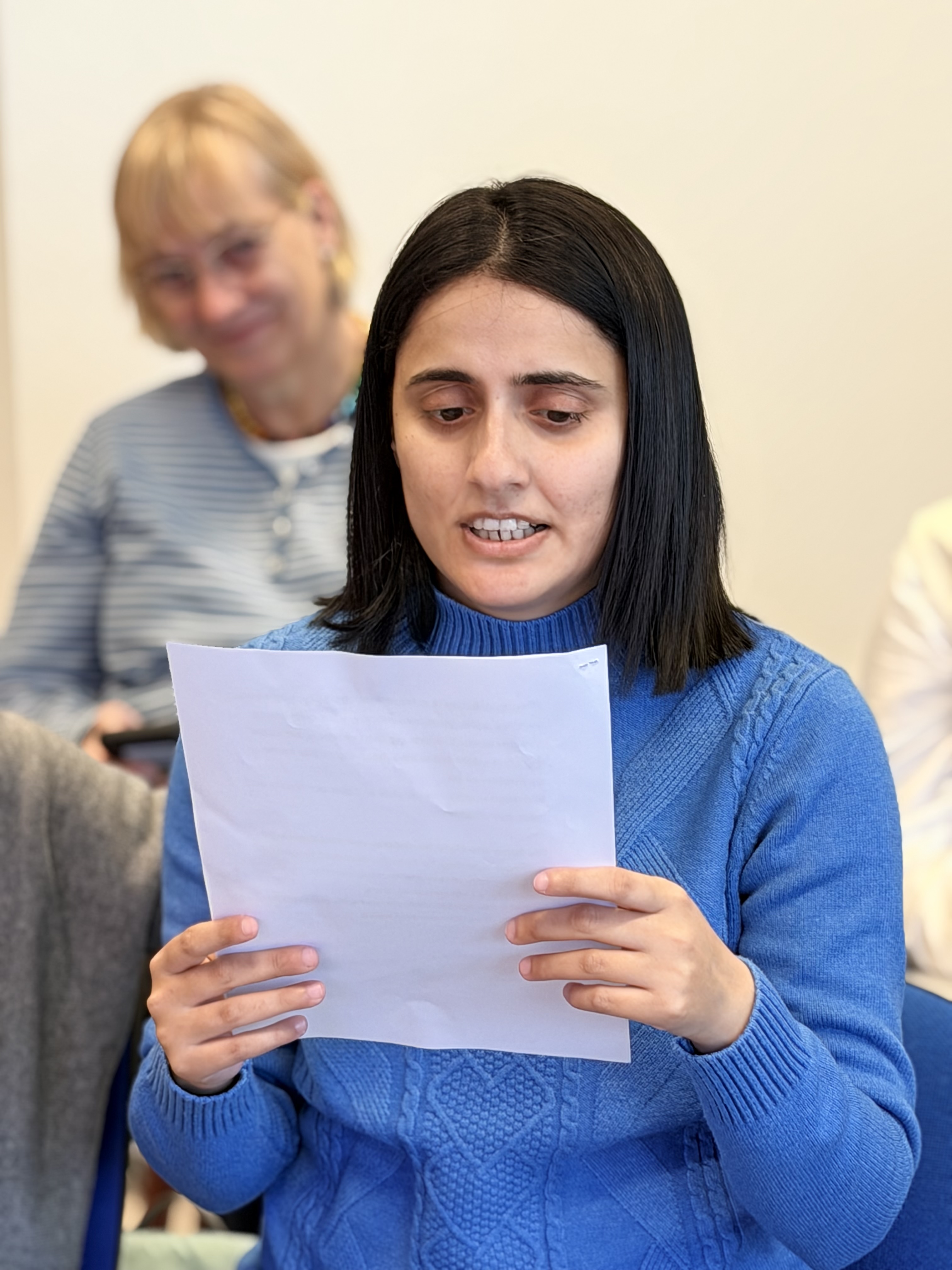
Hear Our Voices! self-advocacy events
The Hear Our Voices! events brought together 1,237 self-advocates across 18 countries. Thank you everyone who contributed and participated!
Hear Our Voices! also brought the views and issues from national events to the EU level with its final event in Brussels bringing together 45 participants from different countries.
Representing in Brussels and beyond
We organised 2 events in the European Parliament to talk about issues faced by people with intellectual disabilities, and to give space for self-advocates and family members to voice their views and expectations.
- Skills for inclusion, skills for life. We launched the Ulla Topi traineeship in inclusive policy-making at this event.
- What the EU needs to do for inclusion of people with intellectual disabilities
We also contributed to 38 events organised by others: Conferences or workshops where we were invited to share our expertise and views, reaching estimated 4,000 participants.
- This included speaking at the Global Disability Summit, where we also co-organised a self-advocats’ session with Lebenshilfe and Inclusion International.
Shaping EU policy
Throughout the year, Inclusion Europe worked to keep the issues that matter most — moving away from institutional care, ensuring people can make their own decisions, and addressing the specific situation of people with intellectual disabilities — at the heart of discussions on the future of EU disability policy.
This included contributions to 14 EU initiatives and consultations, participation in the Disability Platform, and regular engagement with the European Commission, European Parliament, and civil society coalitions. For example:
- EEG. We continue to work with our partners in the European Expert Group on Transition from Institutions to Community-Based Support to advocate for deinstitutionalisation. As part of the EU grant we receive, Inclusion Europe employes the EEG Coordinator working on behalf of the group.
- European Disability Forum. EDF represents people with all disabilities from all over Europe. As their European member, we work closely with EDF on many issues. Tamara Byrne, self-advocate from Ireland, represents Inclusion Europe in EDF Youth Committee. Maureen Piggot, our past president, is our representative at EDF’s board.
A big topic for our work has been next EU budget. We advocate for EU money to be used for inclusion, and we work with our members to help them influence how national governments plan to use EU money.
The CRPD Committee, in its review of the EU, called for stronger action on deinstitutionalisation, supported decision-making, and the right to vote. This is an outcome we welcome. We contribute to the EDF alternative report informing the Committee. We also participated at the hearing.https://www.youtube.com/embed/1R7wkV8lzbM?si=DKeDaiO_Fb5wCaSY
Inclusion Europe “is increasingly seen as the reference organisation, especially on Easy-to-Read communication and the inclusion of people with intellectual disabilities in policy processes.” Its “activities directly supported CERV’s priorities by strengthening disability rights, increasing awareness of EU-level initiatives, and building the capacity of both national organisations and self-advocates to engage with EU social policy frameworks.”
Supporting change in different countries
Inclusion Europe was invited to support change in several countries:
- Providing legal and policy analysis for countries implementing supported decision-making reforms.
- Supporting strategies and actions for development of community-based support and for deinstitutionalisations.
- Advising on the use of easy-to-read and other means of making information and events accessible.
Inclusion Indicators
Progress on legal capacity reform across Europe – as well on other key areas – is tracked every year with our Inclusion Indicators.
Inclusion Indicators recorded situation in 33 countries. And also provided specific insights into housing and support across Europe.
Inclusion Indicators findings reach MEPs, European Commission officials, and civil society organisations, as well as broader audiences through media coverage in multiple languages.
Research and knowledge-sharing
Inclusion Indicators weren’t the only reports we wrote last year. We also wrote about:
- Employment,
- Gender inequality,
- Supported decision-making,
- Countries joining the EU,
- Issues faced by self-advocates in different countries.
“Inclusion Europe is increasingly invited by the European Commission, the European Parliament, and other EU institutions to contribute to consultations, events, and the development of accessible materials.”
Spreading the message We use different communication channels to inform policy-makers at European and national levels.
101 articles on our website contributed to over 230,000 website visits during the year.
13,545 subscribers received our newsletters, including the Europe for Us easy-to-read magazine (available in 8 languages).
- Subscribe to our newsletters here if you haven’t already.
Our online channels grew by 2,363 new followers, especially on LinkedIn and Instagram.
We published 6 new podcast episodes of Inclusion Europe Radio.
And we made 43 media appearances, bringing information about our work to audiences in several languages and countries.
A growing, active network
We were happy to see 3 new members, all of them joining as Self-Advocacy Members and part of the European Platform of Self-Advocates:
We had 7 online sessions with our members, to discuss different issues and topics. Some of those sessions informed the reports we wrote, some resulted in articles for our website.
We were also happy to see 21 participants from 9 countries at our members’ meeting in Berlin, Germany, hosted by Lebenshilfe. We talked about young families, legal capacity and other topics. And we visited Lebenshilfe Berlin to learn about their work.
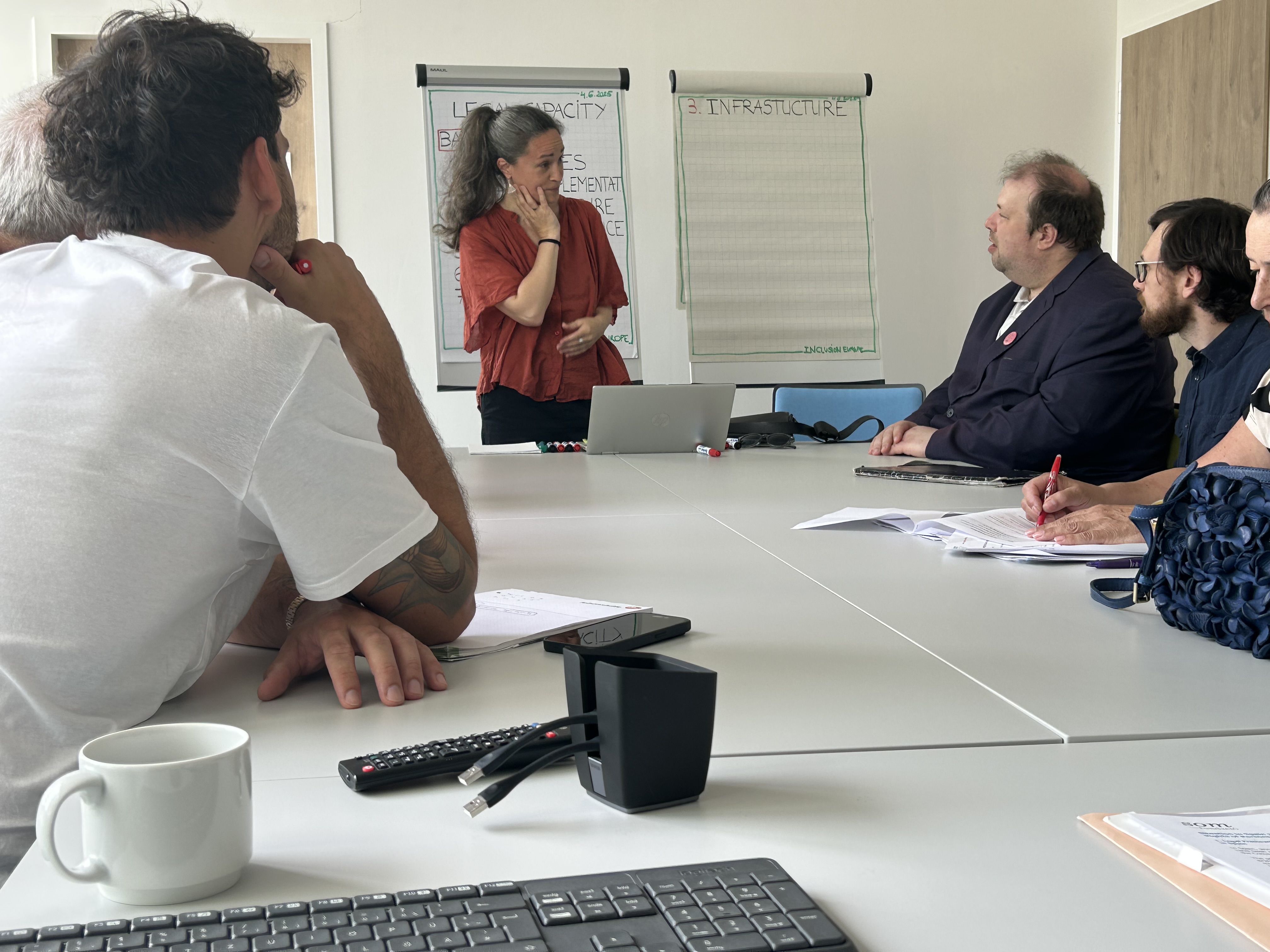
And thank you also to Fenacerci for hosting and helping us organise a training in Portugal. We talked about support services and other topics.
We also went to the World Congress of Inclusion International to meet people from around the world, and to organise some sessions based on our work.
Inclusion Europe is “a highly relevant, effective, and efficient EU-level organisation with a clear mission and strong credibility,” whose work “demonstrates meaningful impact on policy debates, accessibility practices, and the empowerment of people with intellectual disabilities.”
We did this work, and much more, thanks to co-funding by the European Union.
The evaluation report from which we are quoting also identified some areas for improvement – especially around collaboration with members and involving more people with intellectual disabilities directly in the Inclusion Europe team. We are already taking steps to improve on these recommendations.
See also our 2025 work we did as part of other projects: