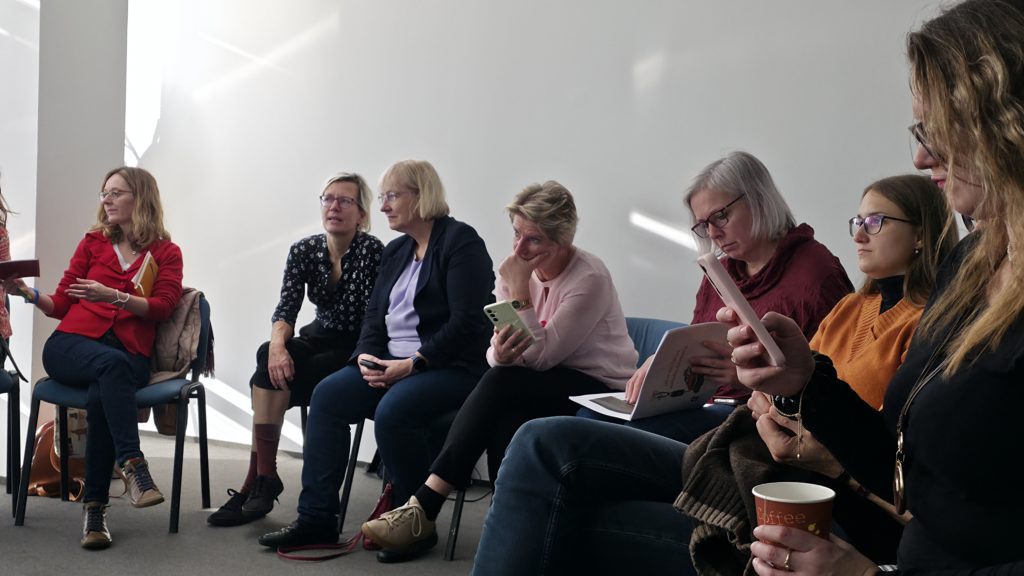
Jeanne Nicklas-Faust is the President of Inclusion Europe.
Ms Nicklas-Faust was invited to speak at the General Assembly of SPMP (Inclusion Czechia) in Olomouc on 7 November 2026:
Dear members, dear all,
Thank you very much for inviting me. I am happy and feel honoured to be here.
First of all, I would like to thank Ivana Ambrosová for being President for such a long time. She was very active and achieved a lot, so thank you very much for all your energy and engagement!
Secondly, I would like to congratulate the new President, Barbora Závadová, on her election. As you have been Vice-President before, you know the work that awaits you now as President. How good that you had the courage to take on this responsibility. I wish you all the best and every success in your work with the new board.
I am grateful for the opportunity to speak with you today and to meet the members of your organisation. As a mother myself, I am happy to represent Inclusion Europe as President here in Olomouc.
I have gained some insights into your work, and I am deeply impressed by what you are doing and what you have achieved. Your advocacy on behalf of people with intellectual disabilities and their families, your counselling and support services, including your important work on counselling around challenging behaviour, is truly impressive. I am equally impressed by your work as an umbrella organization for your members, and by your support for them as strong local networks and volunteer structures that provide good support at the local level.
When we look back over the history of our family organisations, we see a remarkable story. Our founders, and especially yours in very difficult times, were brave and full of energy to change the lives of people with intellectual disabilities and their families. They spoke to politicians and other responsible representants, built organisations, established services, and fought for rights and opportunities. They came together when support was scarce and when many people with disabilities were excluded, not listened to, and not respected as equal citizens. Parents and family members created self-help groups, supported one another, shared experiences, and refused to accept that their children should be left behind.
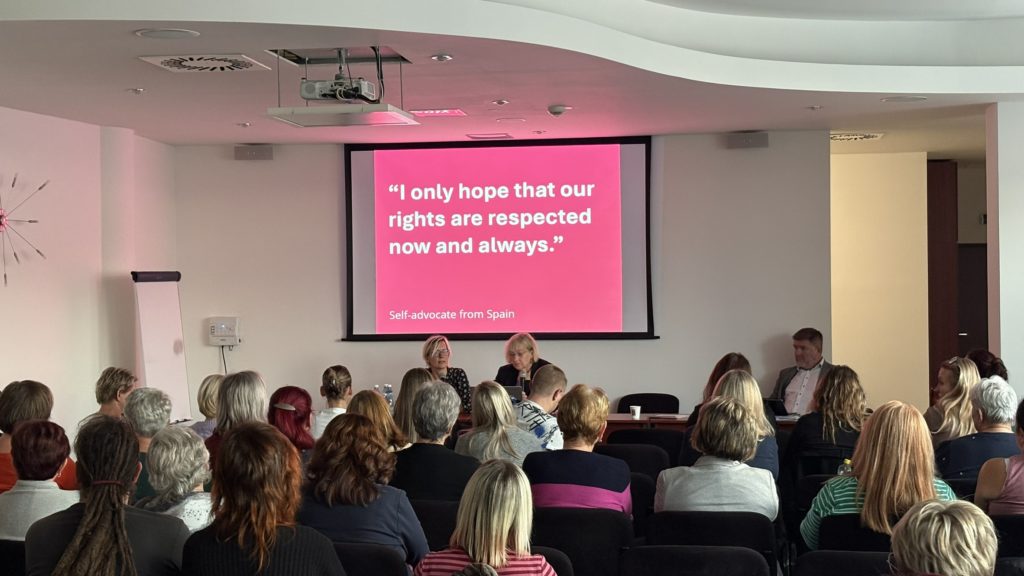
So they became advocates for change. In the early years, it was often parents and professionals who led these efforts together. But their vision was always larger than that. Their goal was not only to create support services. Their goal was that people with disabilities themselves would be heard, that they would have their own voice and be recognised as citizens with equal rights.
And this is one of our greatest successes. Over time, people with intellectual disabilities have become stronger and stronger advocates for themselves. Self-advocacy has grown. People with disabilities have taken their rightful place in our movement and speak for themselves. It fills my heart as a mother with joy that our children are becoming more and more part of society and our movement.
Today, we can state that we have achieved a lot and made life better for people with intellectual disabilities. But we can also state that there is still a lot to be done, and sometimes we even feel a backlash, with things getting worse. So we will need all our strength to fight for the rights of and good support for people with intellectual disabilities.
Listening to your discussions this morning, I can say that we have similar discussions in Lebenshilfe Germany and in Inclusion Europe.
In Lebenshilfe, we are losing members and are experiencing that local associations are becoming weaker and sometimes vanish, so we have started a process called “Lebenshilfe 2040.” Together with self-advocates, parents, siblings, professionals and staff, we are asking ourselves important questions: How do we need to adapt our structures and our constitution? How can we create new opportunities for participation and active engagement?
And you are also going through a very similar process, so we both try to renew our organisations so that they remain strong, full of energy to fight for our common goal: a good life for people with intellectual disabilities and their families. I wish you a lot of energy and every success in this process.
In all these changes, one point is essential: The engagement of families is extremely important. Families can speak as experts on their lives and experiences, and on what is needed for a good life. That’s the reason why parents, self-advocates and siblings have to have a strong voice in our organisations!
I heard strong voices from the candidates for the board and the new President. I wish you all the best and every success in the time to come!
About growing up and gaining independence
Jeanne Nicklas-Faust also participated in a conference in Olomouc, which was about growing and gaining independence – and especially about the role of family members in supporting people with intellectual disabilities to live independently, included in the community.