Milan Šveřepa writes about a conference on independent living, which took place in Copehnagen.
It started well enough, over a good coffee and in great company.
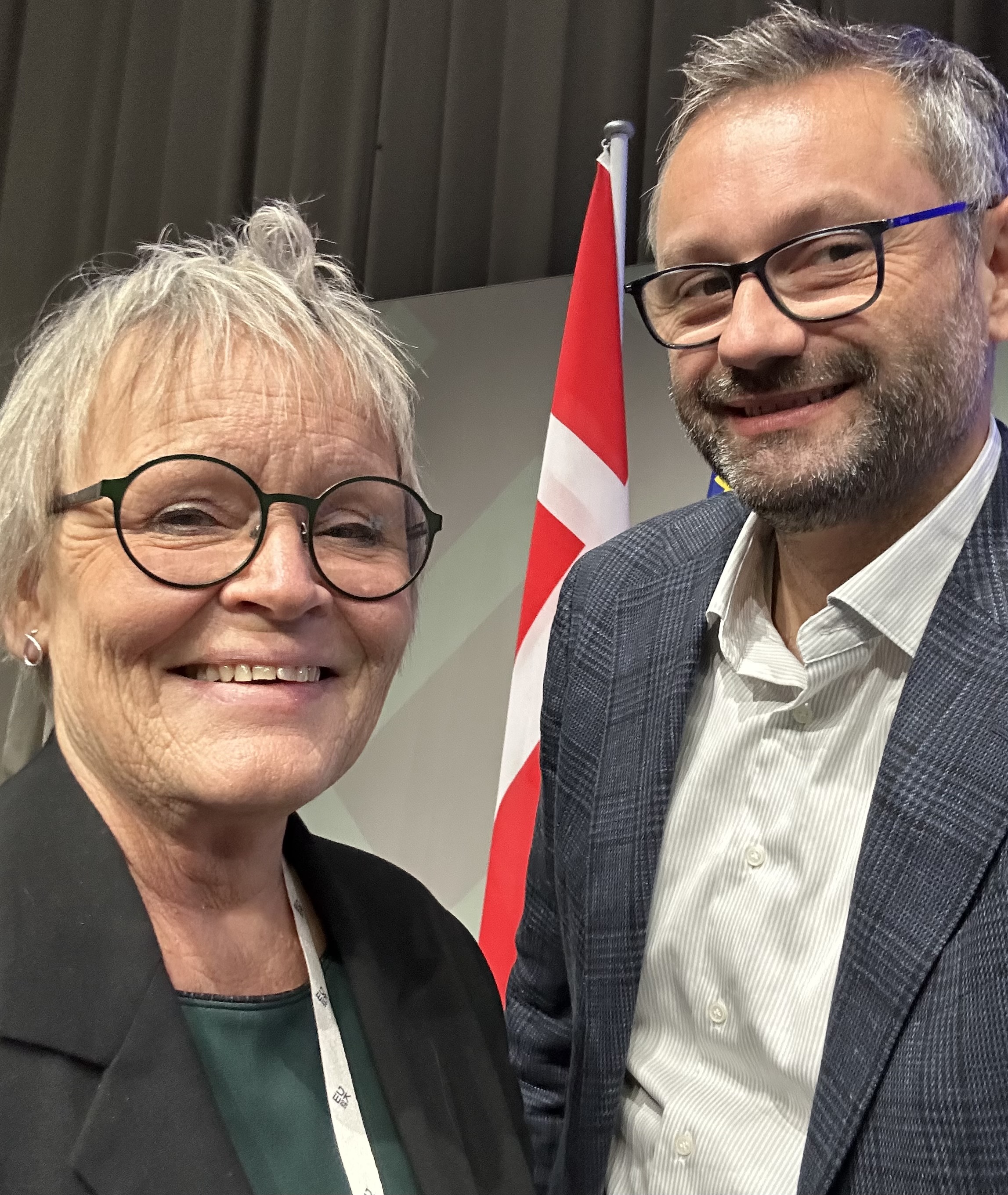
Anni Sørensen and Marie Louise Johannessen are from Lev, our member in Denmark. Anni is the president, Marie Louise the director. I leaned a lot.
We spoke about the lack of national data, and how it makes it hard to track what governments are doing and if things are getting better or worse. This applies in most countries, not only in Denmark. It’s one of the reasons we have Inclusion Indicators.
And about how municipalities handle most responsibilities when it comes to providing support to people with intellectual disabilities. This, again, is quite similar to many countries in Europe. A lot of EU-level work is focused on the national level, which makes sense to some extent. But it’s important to consider the role regions and cities have, especially in topics like support services or deinstitutionalisation.
We also talked about Nordic Inclusion – a network of Inclusion organisations (our members) from the Nordic countries who regularly come together to learn from their experiences and work.
We talked a lot about working together, learning from each other, building on what others do. Adapting to the world. What gets in the way of such this? How can we make the most of (inter-)national meetings and exchanges? How do we show the value of promoting rights and inclusion across Europe?
It was altogether very fun and useful meeting.
Independent living conference
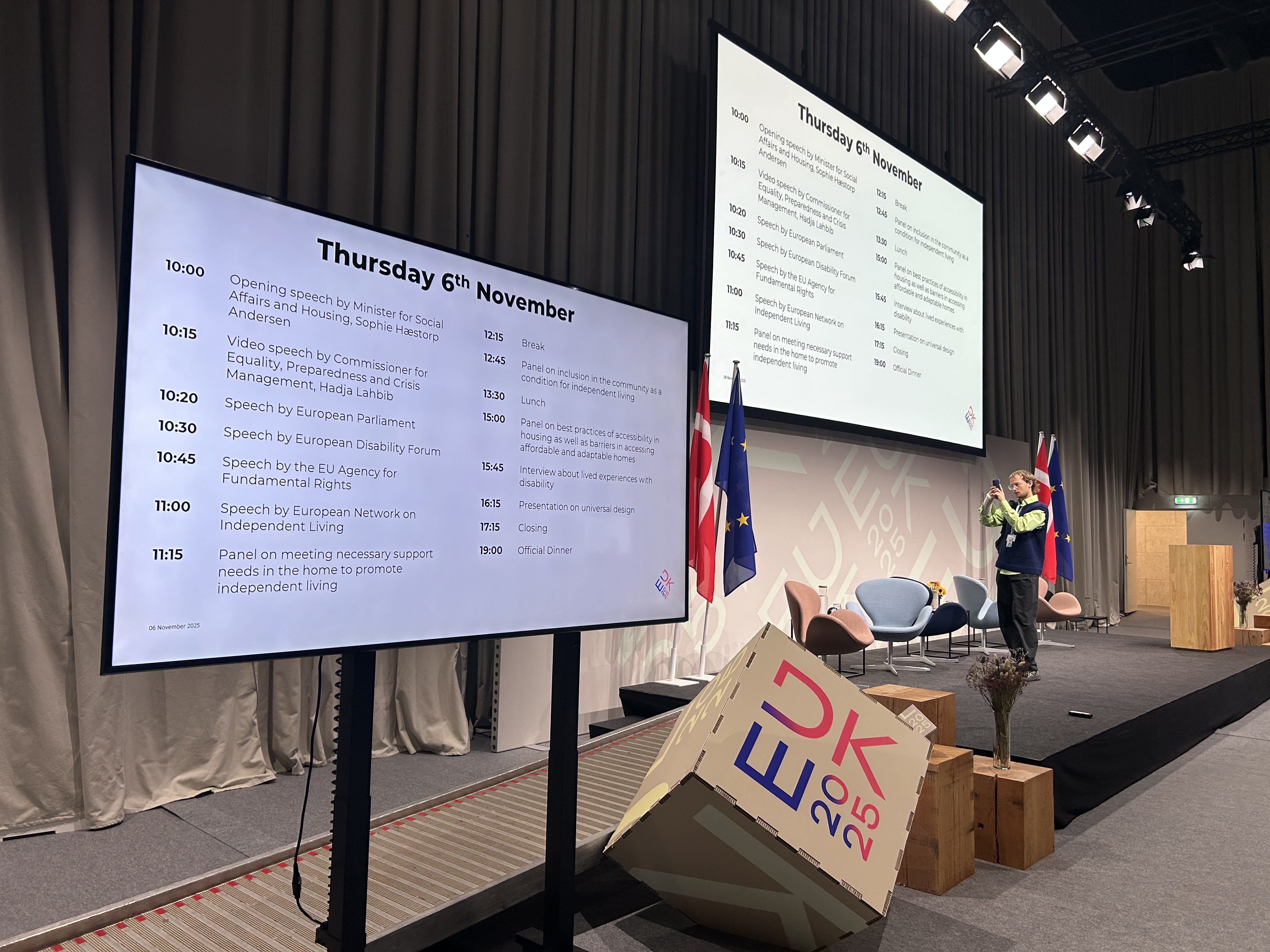
Then, it was two days of conference on independent living, organised by Denmark as part of their Presidency of the Council of the European Union.
“My aunt lived in an institution. Deinstitutionalisation gave her more and more independent life. Relations with family and loved ones.”
That’s how the Danish minister Sophie Hæstorp Andersen opened the conference. She also spoke about the importance of housing, and about the document on independent living recently approved by EU countries’ social ministers.
Speakers that followed:
- Marianne Vind, MEP, spoke about the connection between inclusion and gender (in-)equality and violence.
- Yannis Vardakastanis, the president of EDF, said: Europe faces a housing crisis — but for people with disabilities, it has been a crisis for decades. He went on to talk about the 1.5 million people who are institutionalised, and what EU must do for independent living.
- Sirpa Rautio, the director of the Fundamental Rights Agency, spoke about what needs to be done for deinstitutionalisation, and also about a new report FRA will publish. It is about monitoring of abuse and about how people in institutions can complain. I think that is very important – but some of how FRA talks about is problematic. Saying “we must ensure that the rights of people with disabilities living in institutions are upheld” makes little sense (institutionalisation itself is a violation of people’s rights, and it creates many of the abuses and violations in the first place) and it gives cover to those who oppose deinstitutionalisation.
Then, there followed a discussion with Jamie Bolling from ENIL, and other participants.
Inclusion in the community
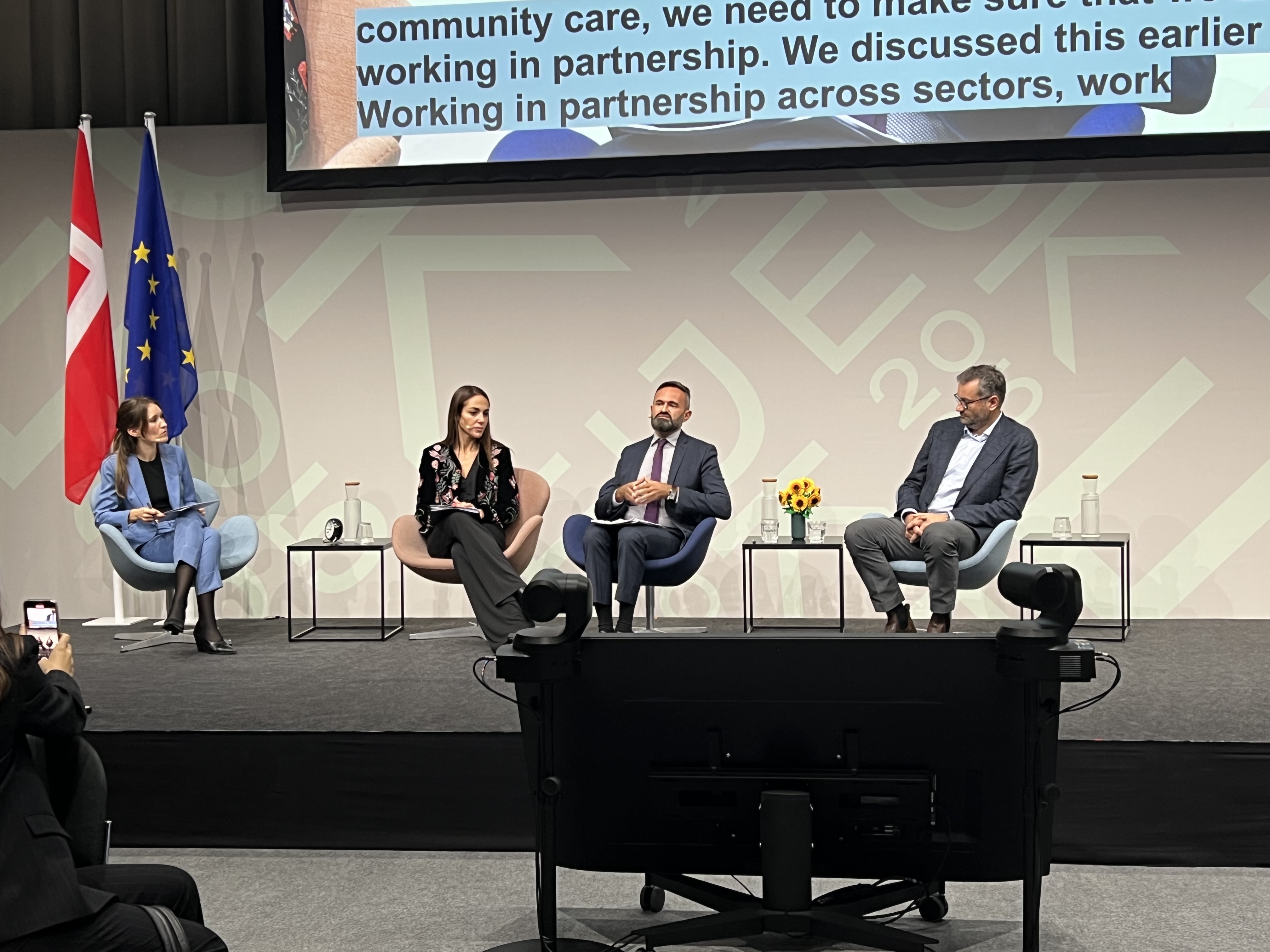
I was invited to speak on a panel about inclusion in the community.
I was on stage together with Domna Maria Michailidou, minister of the Greek government, and with Alfonso Lara Montero, CEO of the European Social Network.
We had a lively discussion, and I enjoyed it quite a bit.
The minister spoke about their work to increase the number of services for people with disabilities, for example “semi-independent living houses”. She also mentioned there is opposition from future neighbors to people with disabilities living in these appartments. I’ve seen this so many time. It is sad/outrageous every time anyway.
The minister also said that it’s important to listen to organisations of people with disabilities: “The real good advice comes from disability organisations, not consultants.”
Alfonso Montero spoke about the value of public services in supporting people to live independently and to be included.
I said something like this:
“There are some 800,000 people with intellectual disabilities in institutions. There are also many countries where there are very little support services, and all support is left for families to provide.
“Being included isn’t just a matter of services. It’s about having a place to live, about having things to do. About playing a role in other people’s lives.
“It is important to ask people what they need, and to listen properly to what they have to say. Authorities and service providers must listen especially to survivors of institutionalisation. I often hear from them about the importance of having someone you can trust. Who can support them establish a new life included in the community.
Housing
The following discussion was about housing, which is of course a crucial topic.
“800,000 people in institutions? That’s something that is very much doable, when there’s the will,” said one of the panelists, looking at the issue from a different perspective and offering a much needed energy to solving public policy issues.
The next day, the Danish minister talked about housing some more, saying Denmark wants the EU countries’ ministers to approve a document on housing by the end of the year.
Disability Rights Strategy
Housing was a topic of a discussion about what the next years of the EU Disability Rights Strategy should be about.
Ana Carla Pereira, director for Equality and Non-Discrimination at DG Justice of the European Commission, talked about the Strategy, and the work that starts now to update its priorities.
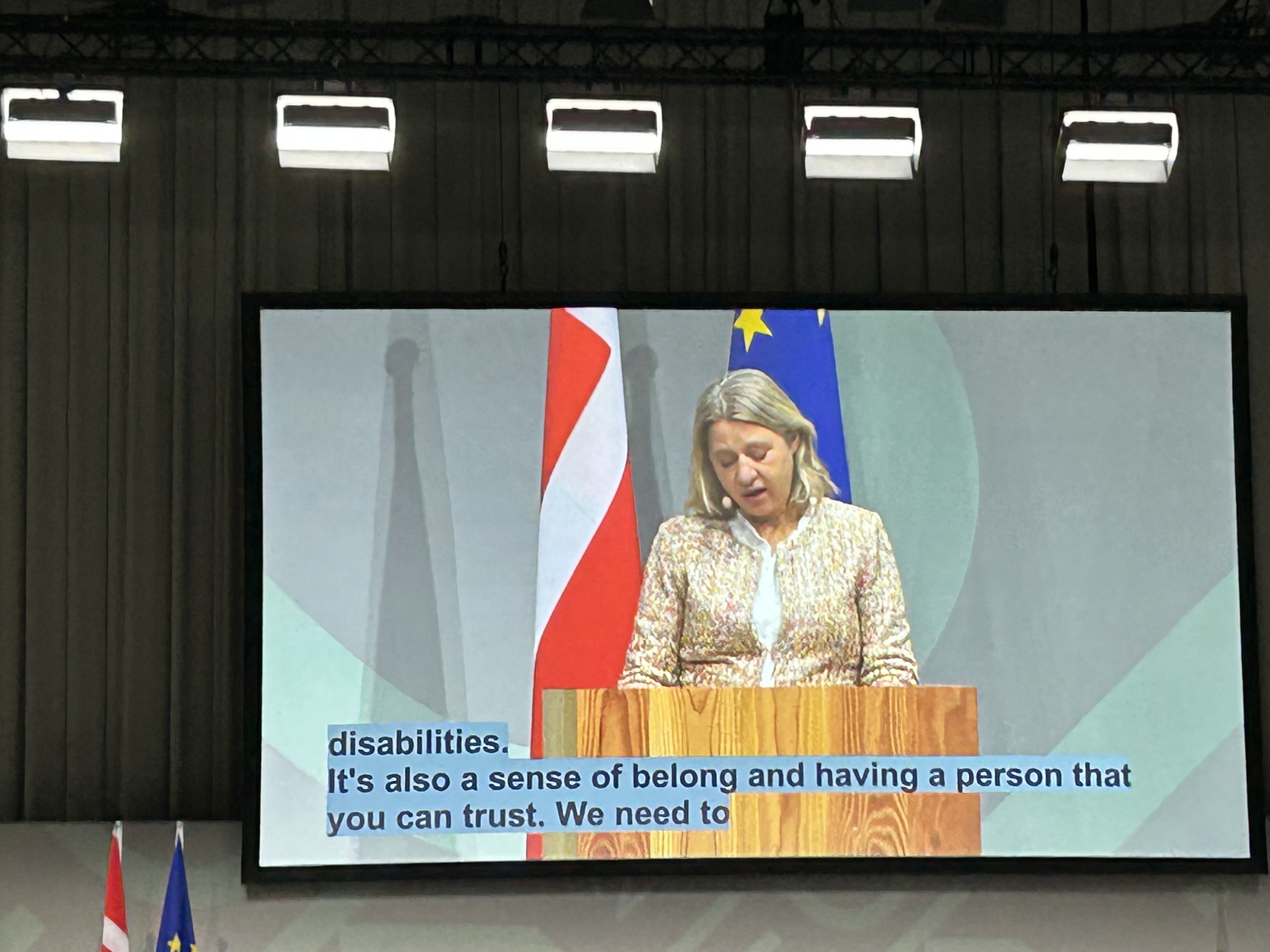
The conference was closed by the Danish minister, who said:
“Being included is also a sense of belonging and having someone you can trust.”
“We always need to remember to ask and to actually listen to the answers from people.”
I couldn’t agree more 😉