The European Expert Group on the Transition from Institutional to Community-Based Care (the EEG) has just announced a new Coordinator and Advocacy Officer. It’s a big step in strengtening its voice for deinstitutionalisation.
Mariya Yasenovska joins the EEG with more than 20 years of experience in human rights advocacy, focused in particular on deinstitutionalisation in Eastern Europe, and with deep expertise on the rights of persons with disabilities and children. Mariya also brings to the role her experience working at EU-level, from her previous job at the European Disability Forum.

“I am thrilled that Mariya has joined as EEG coordinator and policy officer,” said Alfonso Lara-Montero, CEO of the European Social Network and one of the EEG co-chairs. “I am looking forward to working with her to put in place ideas and programmes that place community care right at the heart of EU policies.”
This appointment is made possible through the support of the European Union and of Tanya’s Dream Fund.
“EEG has played a crucial role in advancing deinstitutionalisation in Europe, and we are pleased to be able to increased its capacity with this new funding from the EU and TDF,” said Milan Šveřepa, Chief Executive of Inclusion Europe.
“This comes at the right moment, with new EU budget being decided, and with how – or whether – EU money will continue to play a positive role in the transition from institutionalisation.”
The role of the EEG
The EEG has been crucial in bringing together advocates, practitioners, and policymakers working to close institutions across Europe.
That work has had real consequences.
- The EEG organised trainings that built shared understanding of deinstitutionalisation across Europe.
- It created guidelines for using EU structural funds in ways that advance the transition from institutions to community-based care.
- And it produced reports that shaped how the European Union and its Member States engage with the issue.
- EU funds have at times been used to segregate people rather than support their inclusion — the EEG helped national-level advocates call this out and push back.
The problem of institutionalisation remains urgent
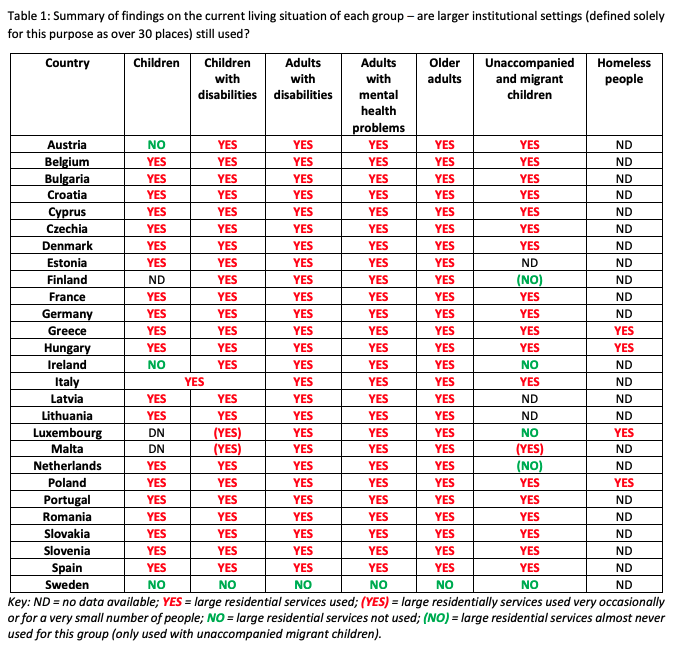
Across Europe, an estimated 1.5 million people are still living in institutions. Both the EU and national governments have a responsibility to close these places down and replace them with good housing and community support.
“Inclusion Europe has been an active member of the EEG for many years,” added Milan Šveřepa. “We were involved in its establishement, co-led major pieces of its work, and we rely on it as a cornerstone of our alliances in Brussels.
We consider the EEG a crucial part of our advocacy to make Europe finally end segregation of people with intellectual disabilities and isolation of their families.”
See also:
- Inclusion Indicators 2025: Situation of people with intellectual disabilities and their families
About the funding
The EEG Coordinator and Advocacy Officer is employed by Inclusion Europe on behalf of the EEG, which is a coalition of different organisations.
This has been possible for many years thanks to co-funding by the Eureopean Union (CERV program, most recently) as part of Inclusion Europe’s operating grant.
From this year, Tanya’s Dream Fund also contributes funding, allowing for the increased capacity of EEG activities.