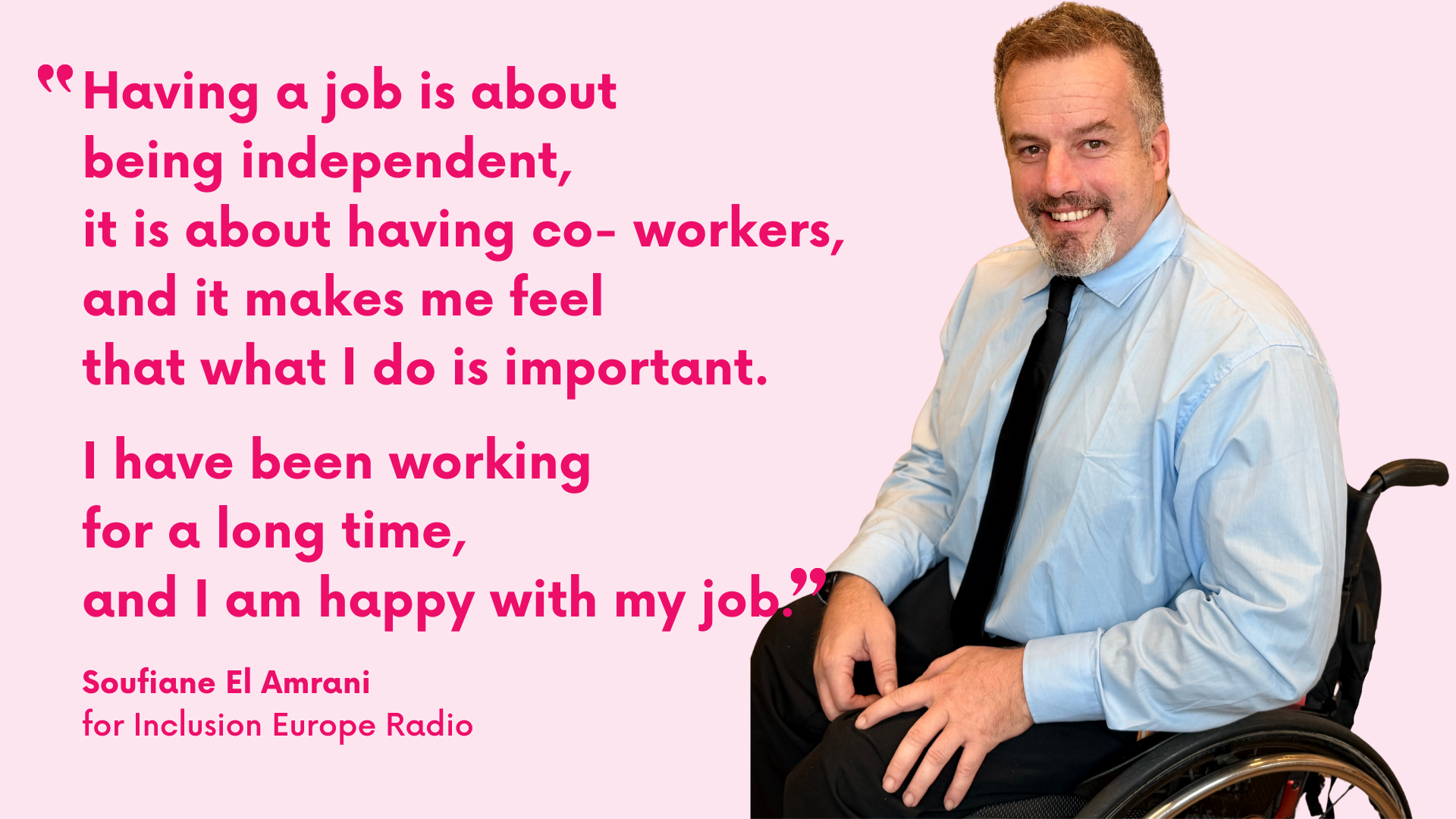
People with intellectual disabilities face major barriers in finding work. They are often excluded from regular jobs.
Many do work-like activities in “protected employment” settings where they often get paid less than the minimum wage and do not enjoy proper working rights.
We work so people with intellectual disabilities have access to real jobs, real pay, and good working conditions. We work to promote inclusive jobs.
Barriers to employment and exclusion from regular jobs.
Less than 10% of people with intellectual disabilities have a paid job on the open labour market.
Many work in ‘protected employment’ and get paid less than minimum wage. They often perform a work-like activity, do not have the same labour rights and perspectives for working in the open labour market.
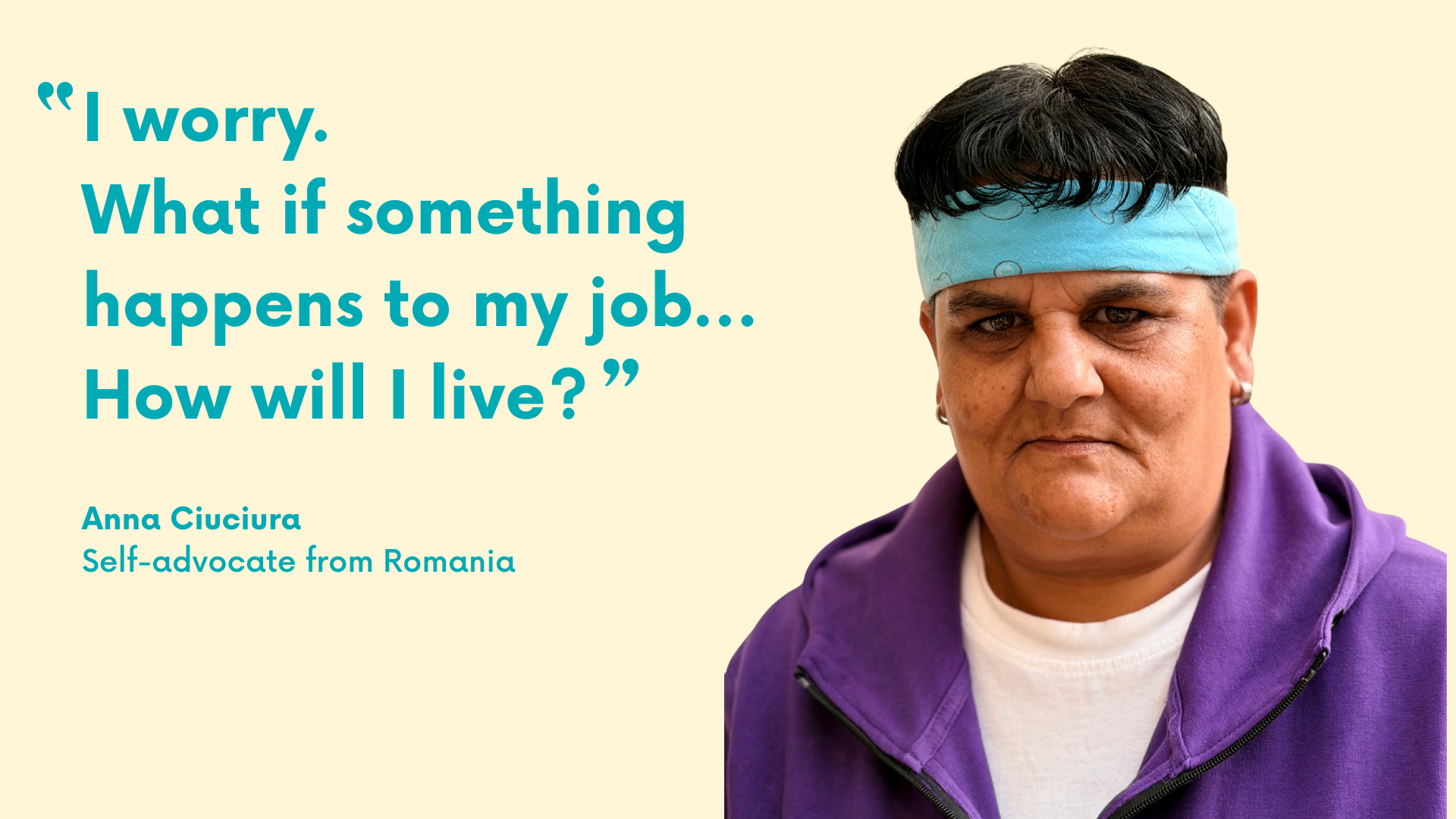
Why is it a problem?
Because jobs matter for inclusion!
Work is more than a way to earn money. It helps people to be independent and confident by applying skills and engaging with others.
It helps to belong.
But because of the lack of quality jobs, many people with intellectual disabilities live in poverty, rely on their families, and do not the skills and network to be included.
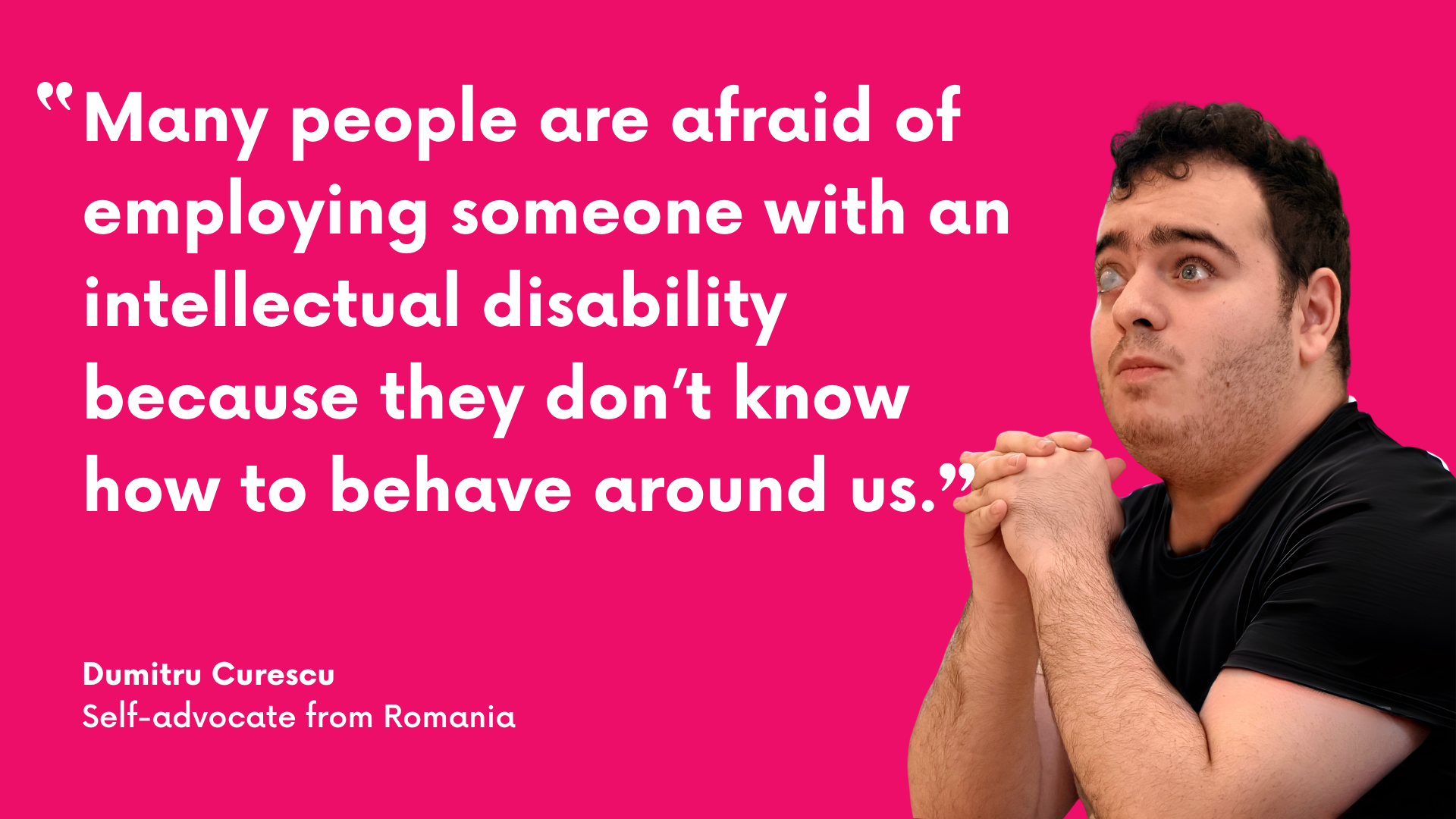
Jobs for inclusion
People with intellectual disabilities should have access to jobs.
They should be able to earn their own money, be around their colleagues and other people, and keep learning new skills.
Jobs are a way to inclusion.
This is why employers should hire people with intellectual disabilities.
There are good examples of creating inclusive jobs for people with intellectual disabilities by providing:
- inclusive hiring programmes
- supported employment
- reasonable accommodations
- accessibility of the workplace
- traineeship opportunities.
In parallel, “protected employment” should be reformed towards real pay, labour rights and pathways to the open labour market.
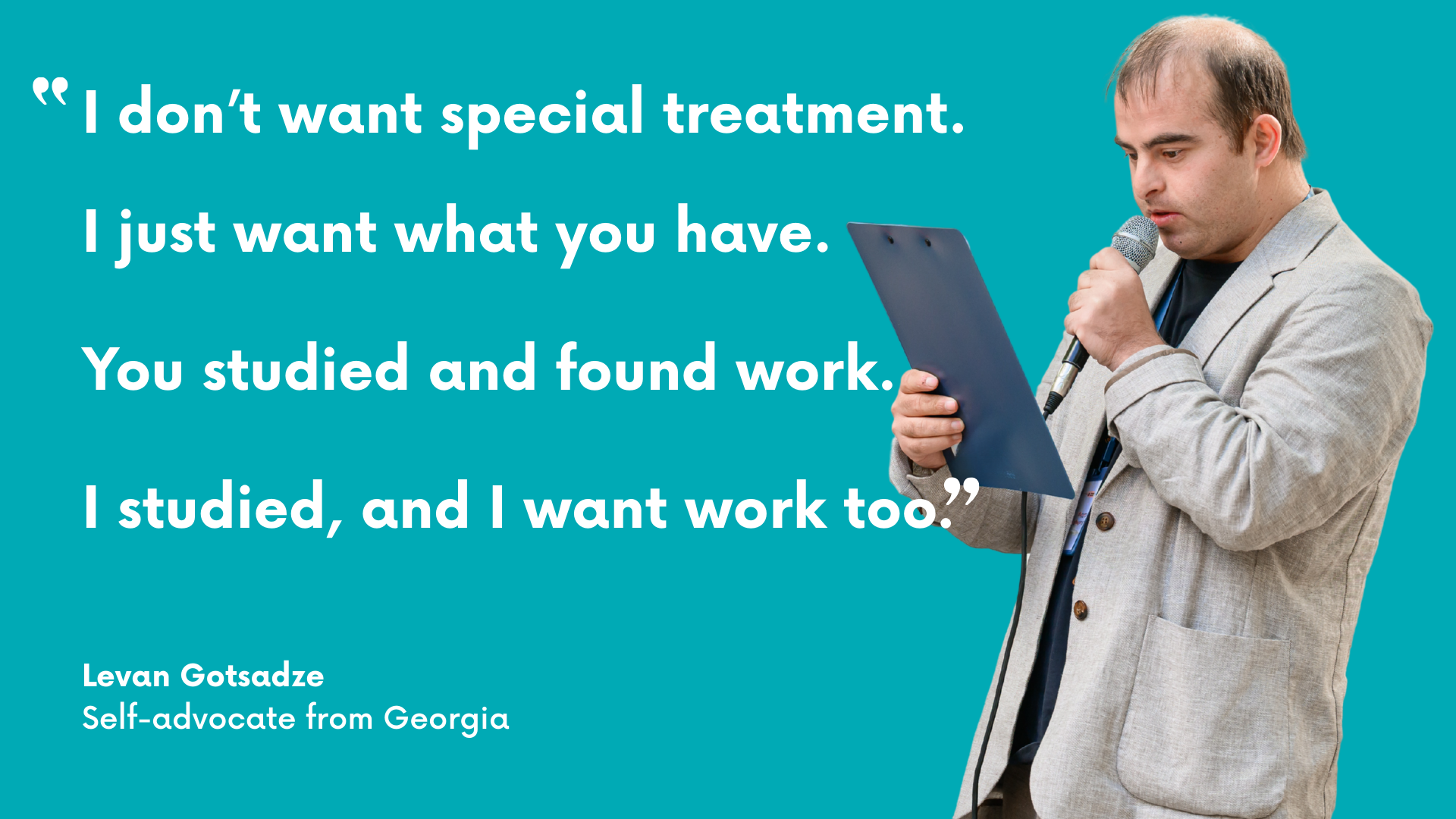
What do we do to make it happen
Inclusion Europe demands that people with intellectual disabilities have same job opportunities and protections as everyone else.
The Job First! report gives 15 examples of supported employment of people with intellectual disabilities in different countries.
The Inclusion Indicators help to monitor the situation regarding employment in Europe.
The “My Talents for Diversity“ project tackled barriers to employment by promoting diversity management amongst private and public employers.
On the Inclusion Europe Radio podcast, we listen and speak with people explaining why job is important and how to create jobs for people with intellectual disabilities:
- Breaking barriers programme – Leanne Williams from Enable Scotland and Melanie Hill from Scottish Power
- The road to employment – The Trinity College’s programme for people with intellectual disabilities
- The employment package for people with disabilities – discussion with Katarina Ivanković-Knežević
We call for using public money to promote inclusive employment and reform protected employment.
We call for making jobs accessible in the open labour market.