What does the European Disability Act mean for people with intellectual disabilities?
The European Accessibility Act is a law that makes the life of people with intellectual disabilities easier.
It requires businesses to make their products and services accessible:
- computers and operating systems
- ATMs (cash machines), ticketing and check-in machines
- smartphones
- TV equipment related to digital television services
- telephony services and related equipment
- access to audio-visual media services such as television broadcast and related consumer equipment
- services related to air, bus, rail and waterborne passenger transport
- banking services
- e-books
- e-commerce
What does “accessible” mean in this law?
The products and services listed above must be designed in a way that is usable by people with disabilities.
Information about how to use the products and services must be available and accessible as well.
It means that information must be presented in “an understandable way”.
EU countries have the choice to decide how to make products, services and their information accessible.
The Act suggests ways to make them accessible.
For example, EU manufacturers and service providers are encouraged to “use the same words in a consistent manner, or in a clear and logical structure, so that persons with intellectual disabilities can better understand it.”
Examples of what can change for people with intellectual disabilities in the European Union
Banks and payments
The information to open a bank account or ask for a loan must be presented in an understandable way for people with intellectual disabilities.
ATM (cash machines) and check-in and ticket machines must be designed in a way that is usable by people with intellectual disabilities.
Identification methods and electronic signatures, and online payment must also be usable and understandable.
Smartphones, computers and TVs
They must be designed in a way that is usable for people with intellectual disabilities.
It means for example that the products made for communication, like smartphones, must provide more than one sensory channel and provide alternatives to vision, auditory, speech and tactile elements.
Information on how to use them must be also available in an understandable way.
Transport
Information on transport websites, apps about travel information and travel services must be accessible to people with intellectual disabilities.
This applies to travel by air, bus, rail, or boat.
Also, information on the accessibility of vehicles, the surrounding infrastructure (like airports or train stations) and assistance for persons with disabilities must be made accessible for people with intellectual disabilities.
However, one important exception is that the EU Accessibility Act does not apply for local and regional transport.
Specifications and national context
The European Accessibility Act does not go into detail about technical specifications.
There are no specific standards that EU countries must meet.
EU countries can go beyond EU law and have stricter accessibility requirements.
What can be done to improve accessibility for people with intellectual disabilities
What can you do to make sure that products and services are accessible to people with intellectual disabilities in the EU?
**See if your national law on accessibility of products and services complies with the EU Accessibility Act. **
- You can consult which accessibility laws are applicable in your country.
Raise complaints if you think it is necessary.
- Each EU country must make sure that the EU Accessibility Act works in their country.
- They must appoint an authority and create procedures to check if products and services are accessible, receive complaints, and give corrective measures.
- A list of competent authorities will be soon available.
Ask for more
Every EU country can go beyond the EU Accessibility Act.
So, here are the things you can ask your government for:
- Ask for good accessibility standards for people with intellectual disabilities. Inclusion Europe produced the European standards for making information easy to read and understand. Standards on digital accessibility can help to implement the act, like the standard of the European Telecommunications Standards Institute.
- Ask for having easy-to-read version of important information. Potentially work with manufacturers, and services to create the easy-to-read version.
- Ask to involve people with intellectual disabilities in the design and development of products and services. Collaborate with manufacturers and service providers to develop accessible products and services for people with intellectual disabilities.
Examples of work being done for accessibility
Banking
In Spain, Plena inclusión worked with Santender bank on an easy-to-read guide for people with intellectual disabilities.
It addresses issues such as how best to manage money using a budget, how to open a bank account or what are basic banking products and services such as loans.
It also explains everylife financial things what a payslip is, how an invoice is broken down, taxes, what social security.
The guide as part of an financial education programme helps for empowerming 10 million people by 2025 with or without disabilities in Spain.
In Ireland, AIB bank worked with Inclusion Ireland to support financial inclusion for people with intellectual disabilities.
Derval McDonagh and Lydia Fisher, a self-advocate from Inclusion Ireland, did a Disability Equality and Inclusion Training, about how to make banks accessible and inclusive.
Transport
In France ADEPEI 69 worked together with the transport operator and the local government on an easy-to-read travel booklet to help people plan their journey.
People with intellectual disabilities were involved in the making of the travel booklet.
The booklet has forms to fill out with your travel information. It also helps to learn
how to buy a ticket, how to find your stop or platform, how to ask for help etc.
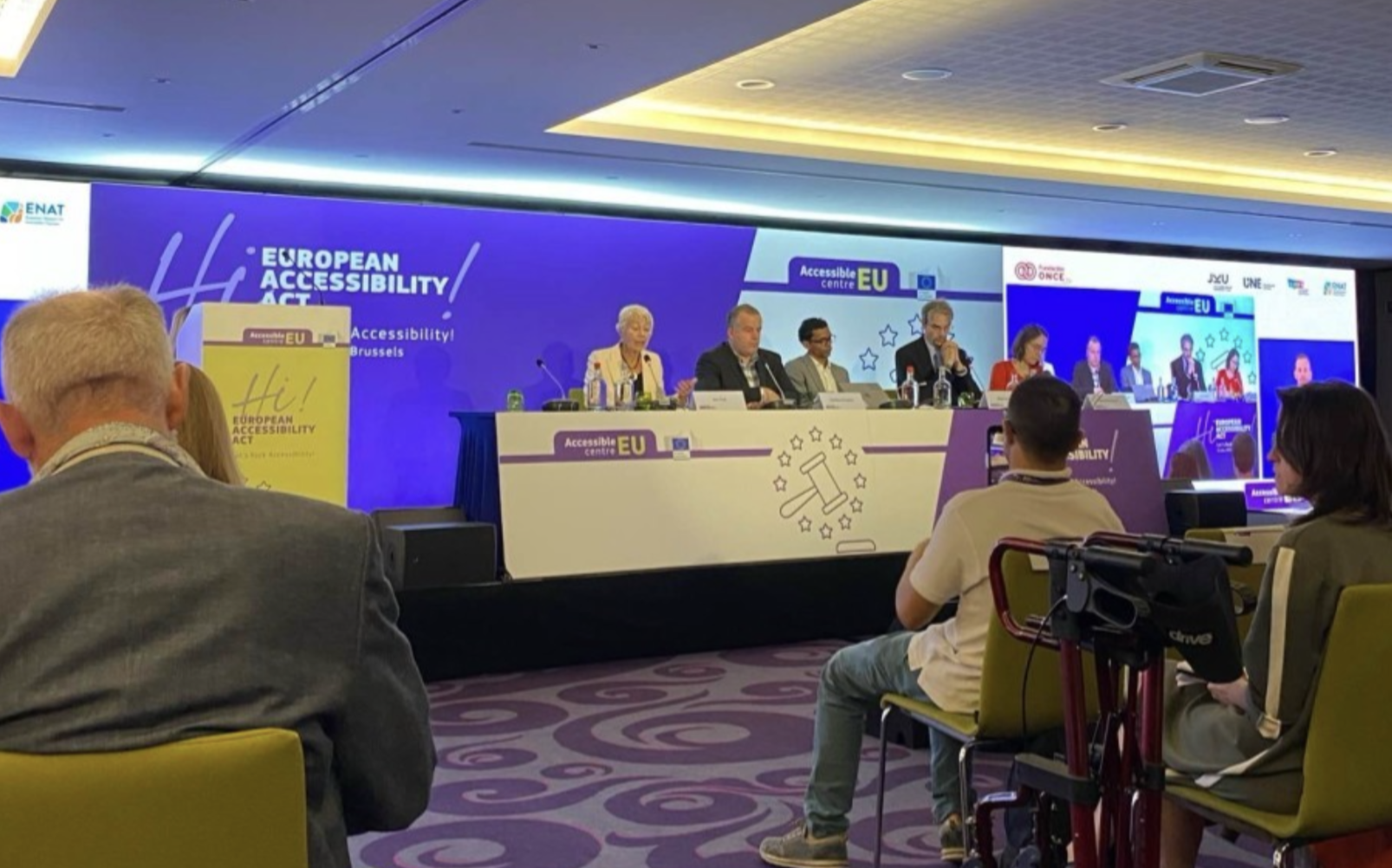
“It is important to know how to move around to be able to travel, go to work, to the cinema, and other places,” said Soufiane El Amrani during a conference on accessibility, which took place in July 2025 in Brussels.
“Mobility is about being independent and connecting people with each other.”
For more information on how to check if your law complies with the European Accessibility Act, you can also see EDF toolkit.