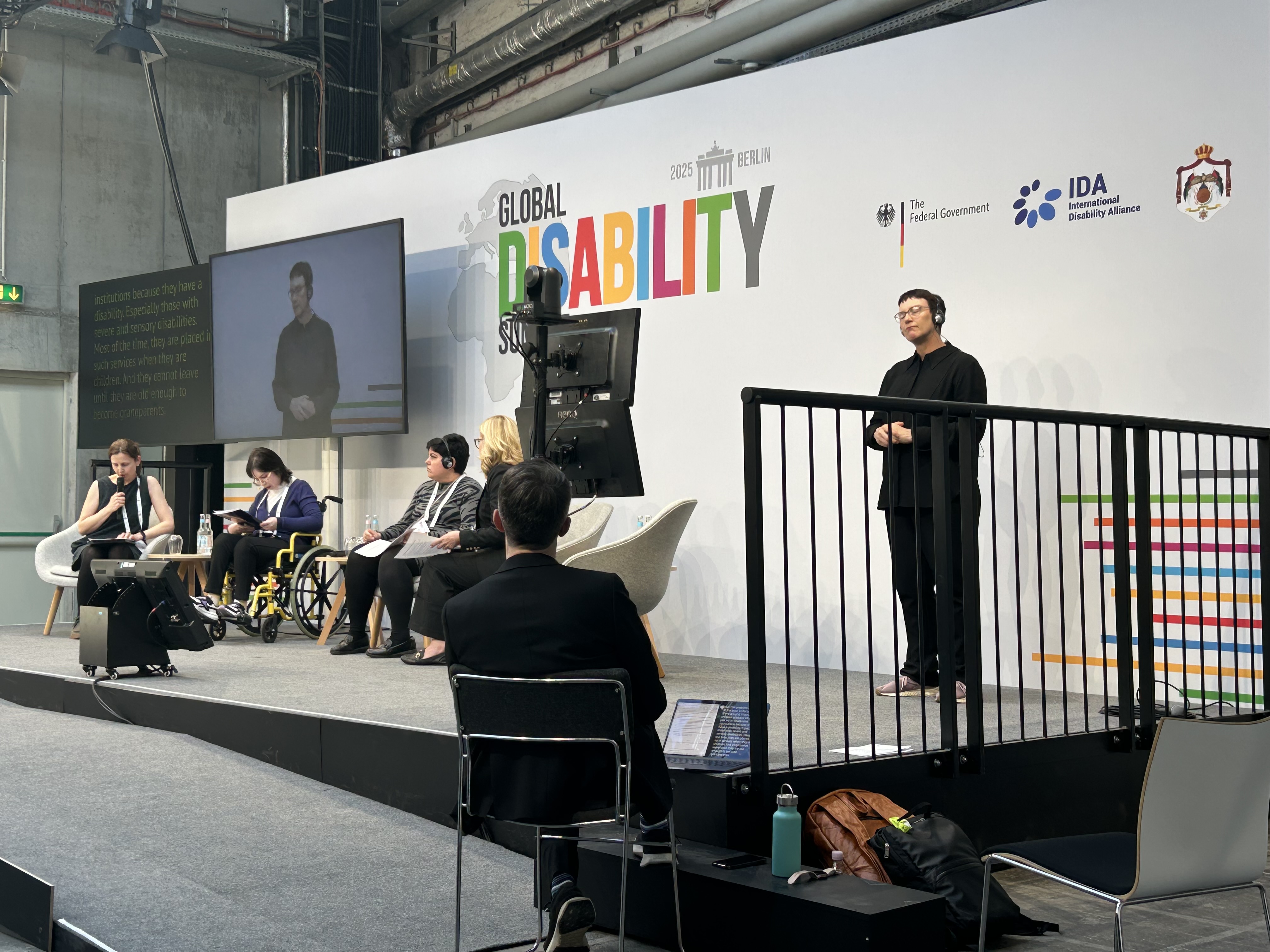
The Global Disability Summit aims for disability inclusion around the world. It brings together governments, multilateral agencies, the private sector, academia and civil society organizations, organizations of persons with disabilities, and foundations.
The summit is organised by the International Disability Alliance together with governments. This year, it was organised together with Germany and Jordan. It was the third GDS.
The GDS also creates reports and committments - promises about how governments and others are gooing to use their money for disability inclusion.
Inclusion International
Inclusion International is member of the International Disability Alliance.
Inclusion International is doing a lot of work on international development and aid. This includes making sure the money spent around the world is used well for people with intellectual disabilities and their families.
Inclusion International did a lot of work making sure people with intellectual disabilities are well represented at the Global Disability Summit.
There were many self-advocates, organisations from the Inclusion movement present during the summit in Berlin.
Self-advocates' session
Inclusion International, Lebenshilfe, and Inclusion Europe organised a self-advocacy session during the GDS.
Self-advocates from Germany, Nepal, Lebanon were speakers, as was Soufiane El Amrani representing Inclusion Europe.
- Claudia Franke described how self-advocates work in Germany.
- "Self-advocates help governments understand what people with intellectual disabilities want. They share stories and ideas. They help to make law fair for everyone." - said Shiva Shrestha
- "Together, we are stronger. Our voice is stronger. When I was in New York for the CRPD meeting, some said they didn't want to give us the right to choose and to make our own decisions. Self-advocates were there to say people must respect their rights. Today the CRPD respects our rights. Thanks to self-advocates." - said Marie Farah
- "Governments think they know what is best for us, but they don’t" - said Soufiane El Amrani
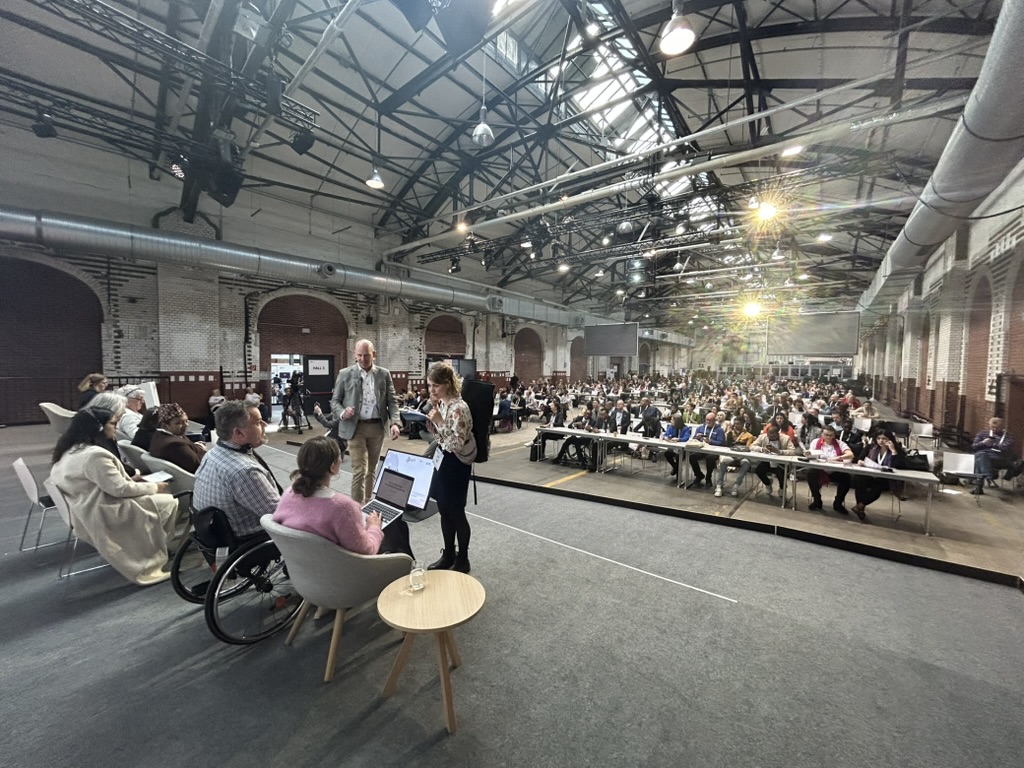
There was also quite a few questions and statements from the audiance, including from self-advocates. More than 200 people attended the session.
Deinstitutionalisation side-event
“Ending institutionalisation of children and adults with disabilities: sharing experiences” was a side-event organised by the UK Foreign, Commonwealth and Development Office (FCDO) and Inclusion International.
The UK Foreign Secretary David Lammy (on video) spoke about a new campaign by the FCDO.
“The UK will lead a new global alliance to advocate for sustainable, lasting reform of children’s social care around the world.”
Wafa Bani Mustafa, Minister of Social Development of Jordan, spoke about the country’s plan to close its institutions for people with disabilities in the next 10 years. Inclusion International is part of this project, too.
Dumitrita Cropivnitchi, children’s rights advocate from Moldova, said: “Each one of us can directly contribute to changing the system and in doing so, change thousands of lives.” (Note on her contribution from Lumos https://lnkd.in/ez47uJa6)
Maribel Cáceres, Vice President of Plena inclusión, said: “Mi Casa (My home) project of Plena inclusion is supporting many people with intellectual disabilities to be included.”
There were also two video statements from children in Rwanda and Zambia.
Milan Šveřepa, director of Inclusion Europe, talked about the work we are doing for Europe (and the world) to finally end segregation of people with intellectual disabilities.
Much more
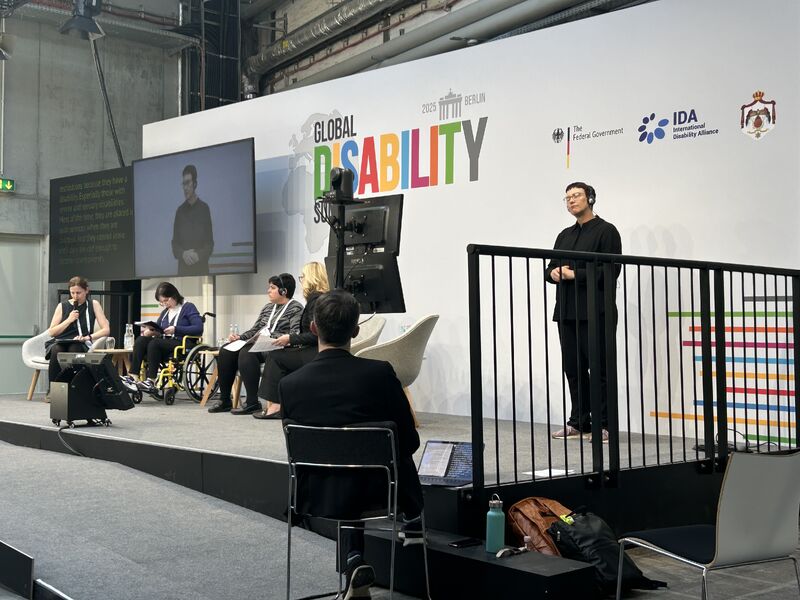
Maribel Cáceres spoke also at the closing session of the summit. There were a lot of speakers from the Inclusion movement on different sessions during the event.
Soufiane El Amrani took part in the work coordinated by Inclusion International to create easy-to-read version of GDS report summary.
Big part of the summit was meeting disability organisations or governments and others, to discuss about what needs to be done for full rights and inclusion of people with intellectual disabilities and their families.
Podcast
At the end of the summit, Connie Laurin-Bowie set down with Milan Šveřepa to record a conversation for Inclusion Europe Radio..