How self-advocates successfully influence policies – that’s the topic of Soufiane El Amrani’s speech at the Global Disability Summit.
Soufiane El Amrani is self-advocate, and accessibility expert of Inclusion Europe. Soufiane represent’s European self-advocates at the Council of Inclusion International.
Soufiane spoke at a side-event during the Global Disability Summit in Berlin. This is what he said:
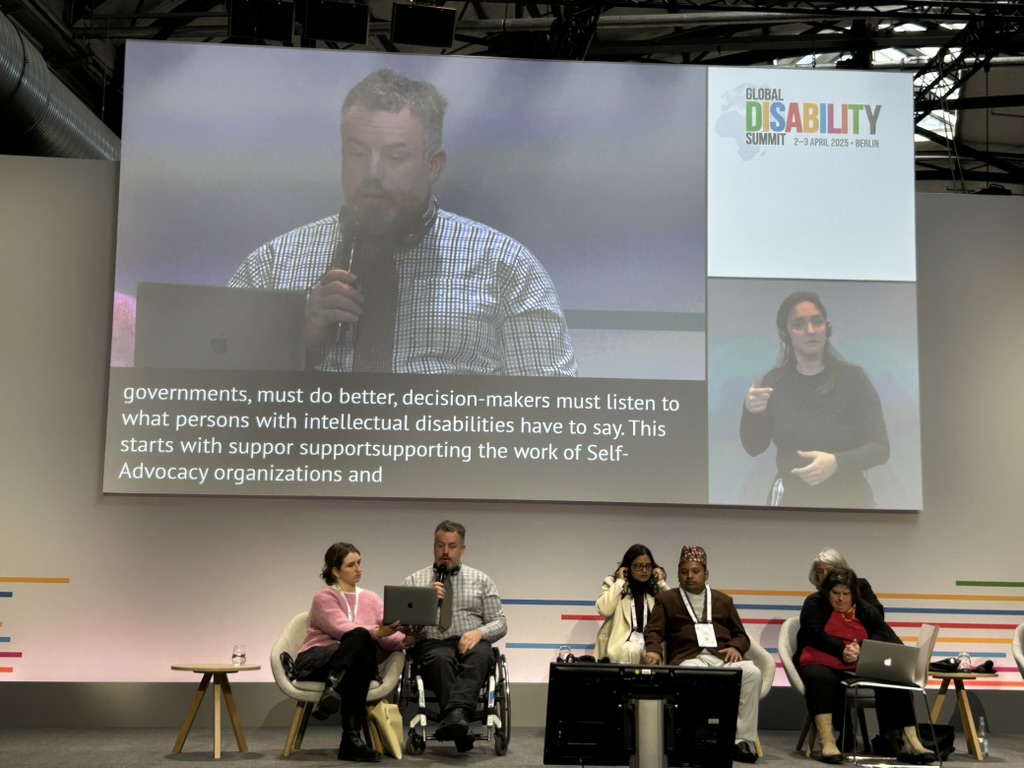
“Good morning.
Self-advocacy is very important because it means people with intellectual disabilities have a say about things that have an impact on their lives.
It also means they can contribute their expertise and expectations.
But we are not always listened to. This needs to change: governments, agencies, and organisations must do better.
Decision-makers must listen to what people with intellectual disabilities have to say.
This starts with supporting the work of self-advocacy organisations and groups.
There needs to be money available to support the work of self-advocates.
And countries that deny people legal capacity need to stop this. Not having the right to decide also means people are not able to form self-advocacy organisations.
**Another way of involving self-advocates in policy and decision making is to make meetings and documents accessible. **
Information for meetings needs to be easy-to-read so that everyone can understand what is being talked about.
This applies to organisations and their board meetings too.
Reports and documents need to be easy to understand. They must be accessible and understandable.
It is not ok to give easy-to-read information late. Or to give easy-to-read information that there is a document – but not what the document says.
And of course, it is also about having self-advocates as speakers and contributors to policy debates.
For example, it is important to see someone who spent many years in institutions stand next to the EU Commissioner and talk about how deinstitutionalisation should be done.
It is also important to see self-advocates lead the work to inform about their situation.
I presented a report in the European Parliament last December, at an event attended by many EU officials and politicians.
I also took part in developing this report, called Inclusion indicators. I was part of the debates about what the report should be about, and how to make it accessible.
László Bercse, chair of the European Platform of Self-Advocates, talked about what self-advocates expect from Europe. And several Belgian self-advocates talked about what issues they face every day.
I liked this as an example of how people with intellectual disabilities can contribute to reports and policies, and to lead the conversation about them.
I want to see more like this from all governments and organisations around the world.”
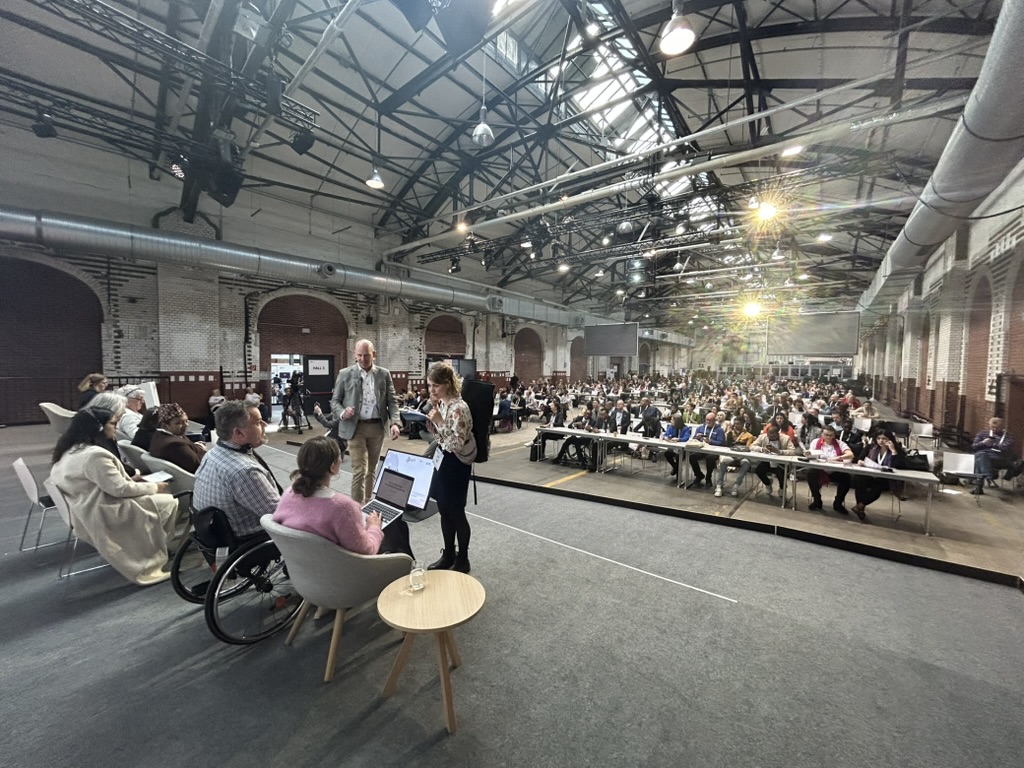
Asked what his closing message was at the end of the session, Soufiane said:
“Never give up. Keep fighting for your rights.
Governments think they know what is best for us, but they don’t.
We know what we need, and we need to tell them how we feel!”