At a series of conferences in Malta, government, organisations, and families discussed important reforms. New laws on supported decision-making are being prepared.
55 years of disability movement in Malta
The Malta Federation of Organizations of Persons with Disability (MFOPD) celebrates their 55th anniversary this year.
- MFOPD is member or Inclusion Europe, and also of the European Disability Forum.
- MFOPD brings together 44 organisations representing people with disabilities and other types of organisations.
- Inclusion Europe members in Malta are also NPSPD, Down Syndrome Association, and Inspire Foundation (all members of MFOPD too).
To mark the occasion, MFOPD organise a series of conferences about important reforms Malta is working on. Inclusion Europe was invited to contribute to these events.
Right to decide
One of the conferences focused on legal capacity and support for decision-making. Malta is preparing new laws to move away from substitute decision-making towards supported decision-making.
Marthese Mugliette, president of MFOPD, opened the conference saying how important the reform is, and that the new laws need to ensure the right to decide for all people with disabilities.
Julia Farrugia, minister for inclusion and voluntary sector, spoke about the two new bills Malta is preparing. “We are grateful to Inclusion Europe for the recommendations that helped shape the process,” the minister said.
Camille Latimier, director of Inclusion Czechia and board member of Inclusion Europe, gave a lecture on how to develop support for decision-making.
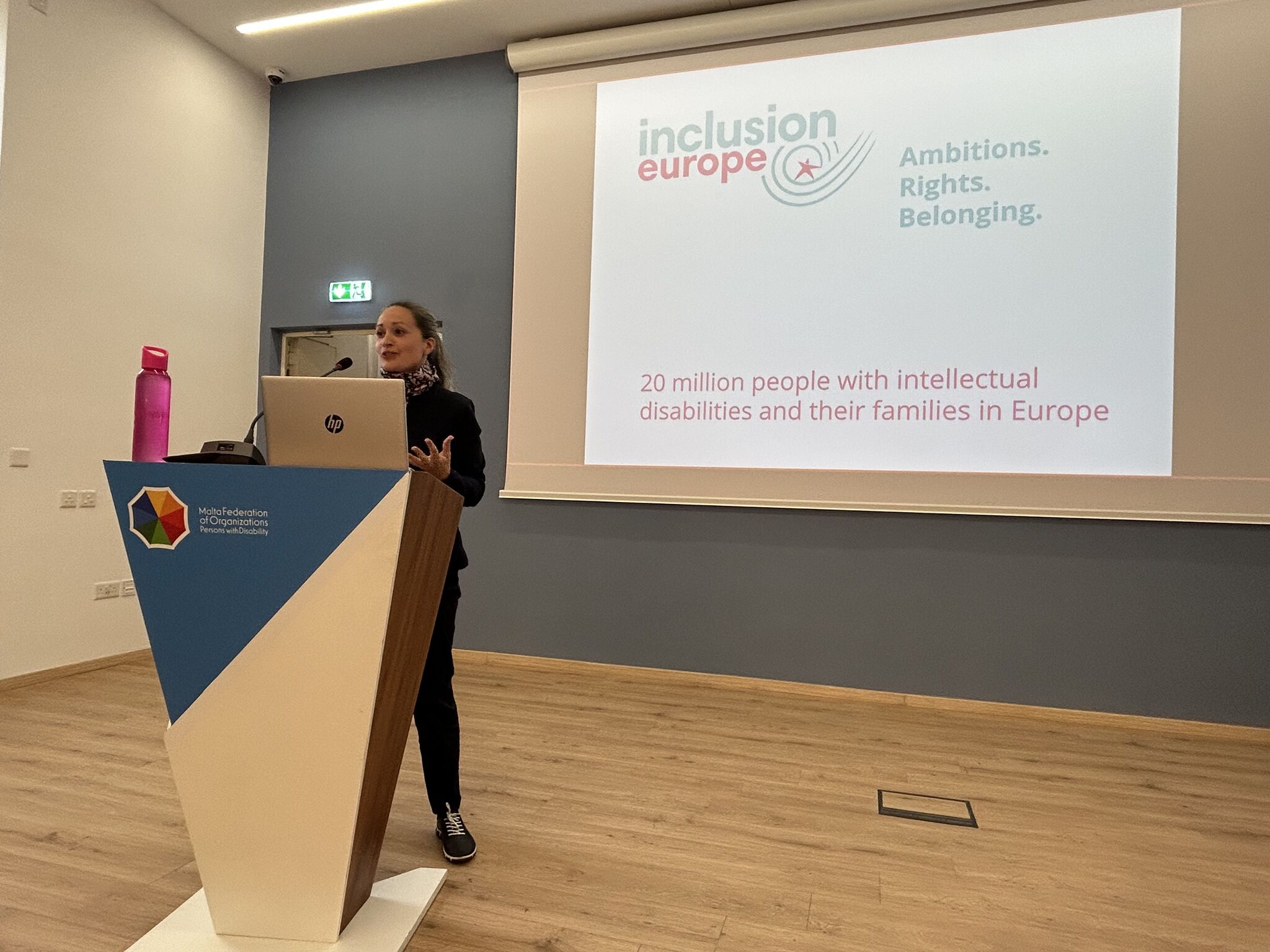
She explained that reforms must involve people with intellectual disabilities and their families at every step.
She also shared good practices from different countries.
“It is important to test the reform before it enters into force, to solve any problems early,” Camille Latimier recommended.
Parents attending the conference spoke up about their concerns. Many said progress is far too slow:
- “What will happen when I’m gone?” asked one of them.
- “Things are taking too long,” said another.
Inclusive education
The following day, there was a conference about inclusive education.
Marthese Mugliette again opened, saying education is very important and timely topic.
Milan Šveřepa, director of Inclusion Europe, spoke about why we care about education. Milan also gave examples of how inclusive education works in different countries.
“We need schools where students are together. They learn to work and to be with one another. We need schools that are about skills for life and work. It’s what students bring to their future. We need schools where teachers have the time and skills to support the ways of learning each student can have.”
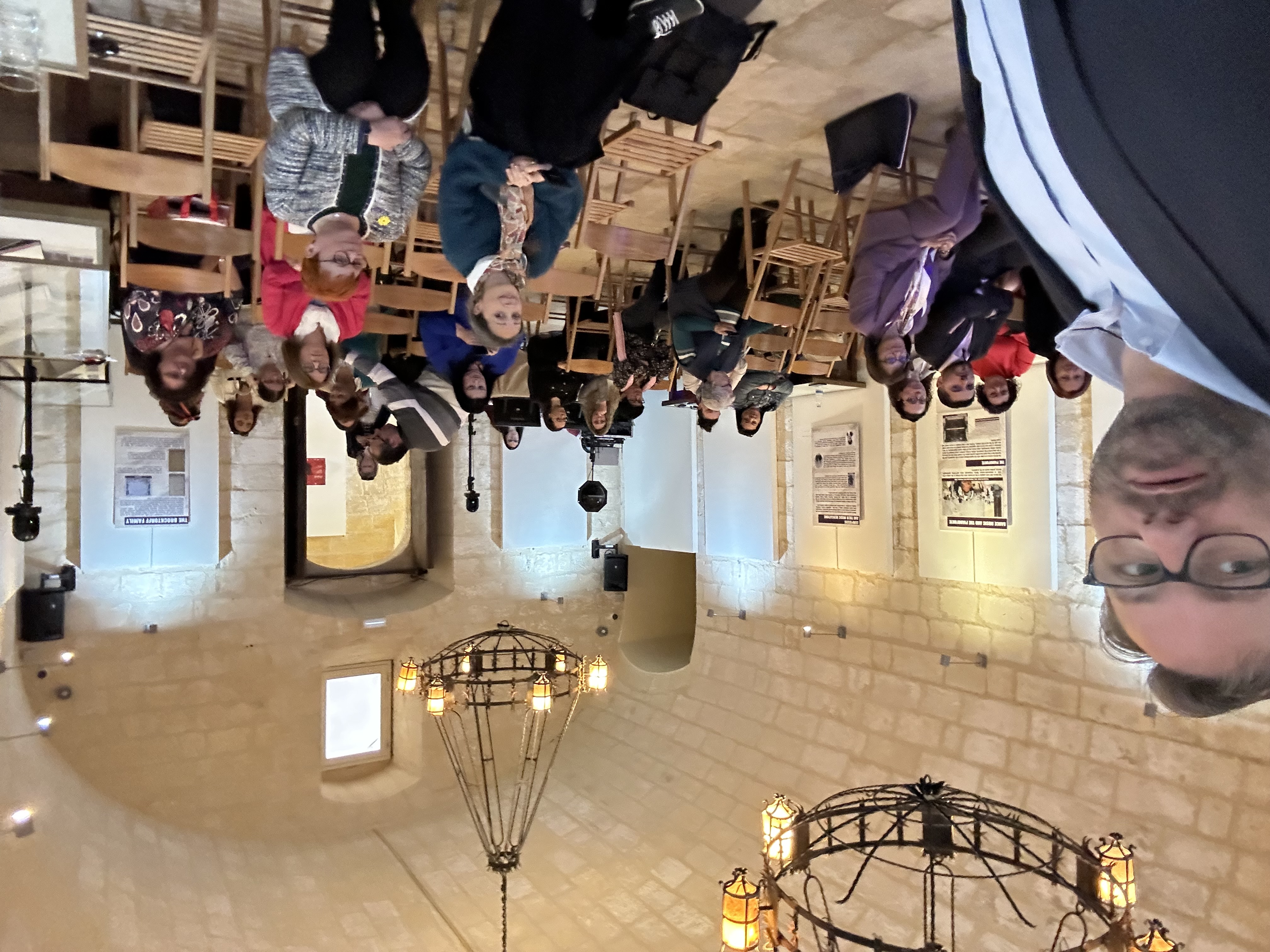
Milan Šveřepa also noted the lack of presence and participation of people with intellectual disabilities during the two conferences. “Work needs to be done to support self-advocacy and participation in Malta.”
In the following discussion, parents described worrying setbacks in school inclusion.
- Children being removed from mainstream schools and pushed towards special schools.
- “We are going backwards,” one parent said.
- “We don’t have inclusive education in Malta any more,” several people said during the debate.
More work for full rights
Being in Malta for the two conferences allowed us to hear from parents, politicians, policy-makers.
It was also a good opportunity to talk about other issues Malta is working to improve. For example, there will be a conference on deinstitutionalisation later this year.
“I hope what we had to say here was useful to the work Malta is doing. And I wish the reforms they propose will be a success for full rights and inclusion of people with intellectual disabilities and their families,” Milan Šveřepa said.