Many people with intellectual disabilities in Europe are denied their right to vote or stand for elections. This is often because they are deprived of their legal capacity.
Because of this they are not treated as equal citizens.
We work to make sure that all people with intellectual disabilities are able to vote and stand for elections. So they can be equal citizens and have a say in what happens in their countries.
Not allowed to vote or stand for elections
Many people with intellectual disabilities are not allowed to vote or stand for elections. In some countries, this is tied to legal capacity. When legal capacity is taken away from someone, they then automatically also are not allowed to vote or stand for elections. In other countries, a judge makes the decision if someone is allowed to vote or stand for elections.
This is a violation of their rights.
In at least 13 countries in Europe people with intellectual disabilities can still be denied the right to vote and in at least 14 countries people with intellectual disabilities can still be denied the right to stand for elections.
By not being allowed to vote or stand for elections, people with intellectual disabilities cannot politically participate as equal citizens. They cannot influence political decisions that have an effect on their everyday lives.
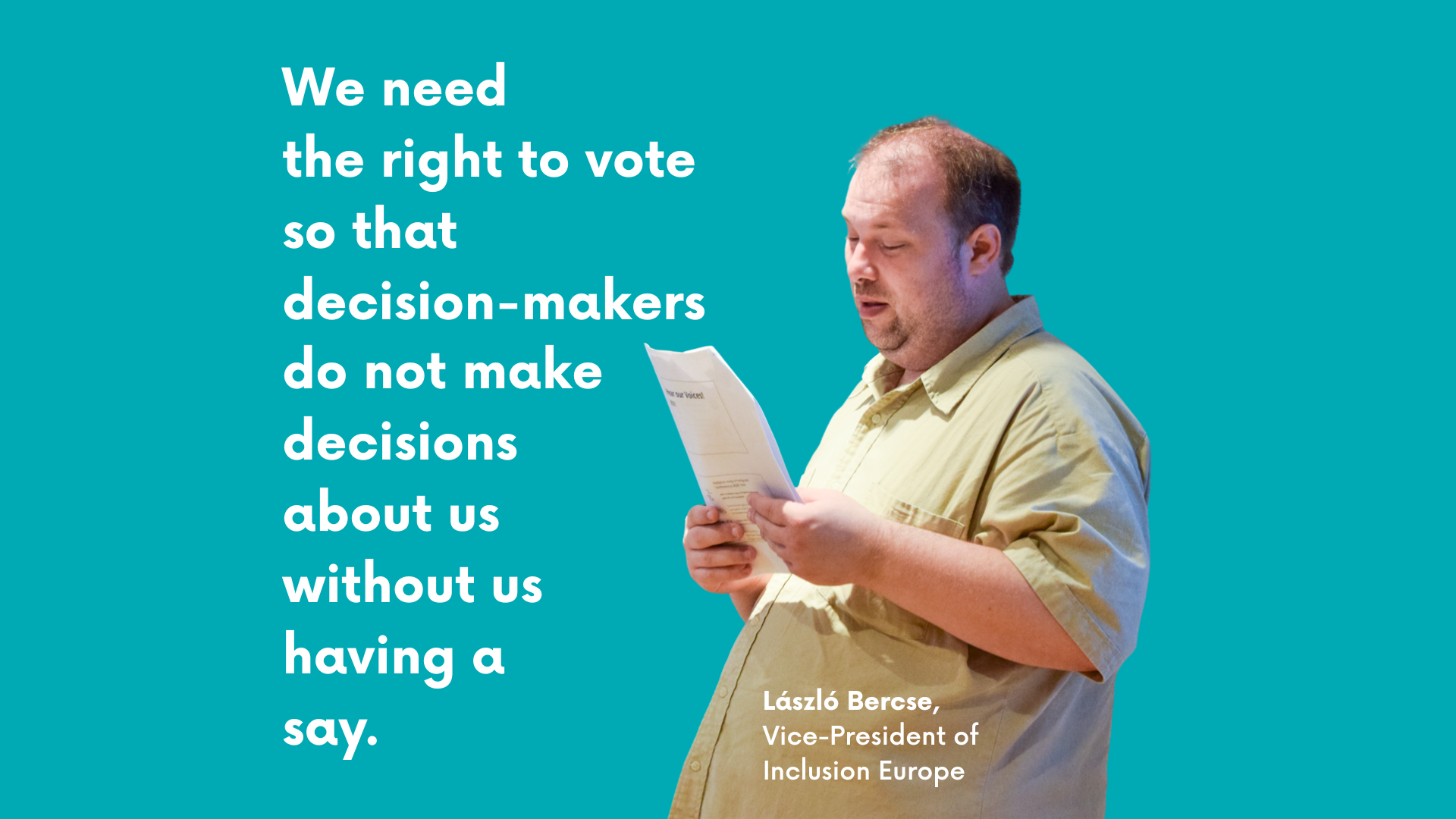
“I don’t feel equal to the others because I’m not allowed to vote!”- a self-advocate to Inclusion Europe’s vice-president László Bercse.
Respect the right to vote and stand for elections
The solution is simple, allow everyone the right to vote regardless of their legal capacity status and treat everyone as equal citizens.
The good news is that many countries have made this change: Czechia, Slovenia, Luxembourg, Denmark, France, Germany, Spain and more.
The next step?
To make voting accessible, because having the right to vote but not being able to vote because of barriers is not acceptable.
How to make voting accessible:
Provide easy-to-read information about elections and how to vote Allow a support person of their choice to accompany a person with an intellectual disability in the voting booth. Allow for postal voting or electronic voting from home Encourage political parties to use easy-to-read information in their communication.
What we do to make it happen:
Inclusion Europe demands that countries respect the right to vote and the right to stand for elections regardless of someone’s legal capacity status and to make elections accessible.
We campaigned for people to be able to vote during the 2019 elections to the European Parliament with success. In 2023, the European Parliament adopted a resolution to ensure everyone in the European Union above the age of 16 should be able to vote during the European Parliament elections, regardless of their legal capacity status.
We also publish the Inclusion Indicators every year. Right to decide and right to vote is one of the 7 Indicators. We collect data on which countries respect the right to vote and make voting accessible. We also collect data on which countries have elected someone with an intellectual disabilities. This data helps us to show how many people with intellectual disabilities are still not allowed to vote and stand for elections and which countries need to do better.
Inclusion Europe promotes the right to vote among its membership and in all European countries.