Freddy Jussien, Inclusion Europe advocacy lead, writes about Europe in Action 2026 conference:
“Across Europe, the right to make one’s own decisions remains more aspiration than reality.”
When Josep Tresserras and Raúl Olivera started their speech like this during a workshop on legal capacity, I can tell you that everybody in the room was carefully waiting to hear what would come next…
“The law must not only be good on paper, but work in practice.”
Because for many people with intellectual disabilities, in many European countries, the right to decide is far from being a reality.
For decades, others made decisions for them. About money. About housing. About relationships. About their future — without even consulting them.
This is what Josep Tresserras has been advocating to change for more than 20 years.
Josep led Som Fundació, a non-profit organisation in Catalonia, Spain, founded in 1987.
Today, the organisation supports more than 860 people with intellectual disabilities in decisions about their legal, social and financial lives. It also works with more than 550 families to prepare for the future through its Som Futur programme.
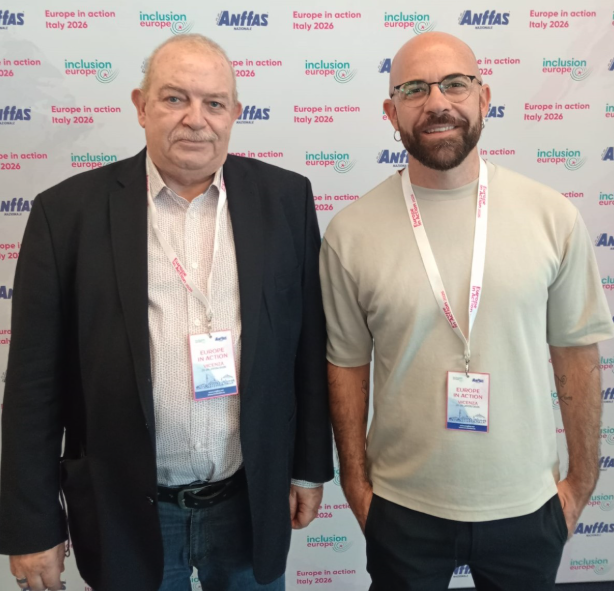
“The change is mainly cultural. It’s important to understand that, and do something about it.”
Behind these numbers are people making choices every day.
And behind those choices are professionals like Raúl Olivera. Raúl is a social worker at Som Fundació. His job is not to decide for people. His job is to listen.
He spends time understanding what matters to each person. What they want. What they fear. What their goals are. He works together with families, friends and others in the person’s community to build support around those wishes.
It sounds simple.
But listening takes time. Trust takes time. Respecting a person’s will and preferences takes commitment.
“To avoid conflicts of interest, service providers cannot simultaneously act as decision-making supporters.”
This way of working has become part of the Som Fundació methodology.
It is person-centred, based on rights, and activated when the person decides they need support. It combines emotional support, planning for the future and coordination with people around them.
The approach has helped inspire one of the most important reforms in Europe. In 2021 Spain adopted Law 8/2021, replacing guardianship with support measures that recognise that all people have legal capacity and have the right to make their own decisions with the support they choose.
The law is very good, but it is the hard work of organisations like Som Fundació which makes it real for people.
“Families must be seen as partners in support planning, not legal substitutes.”
The experience of Josep, Raúl and the team at Som Fundació shows that supported decision-making is not only about changing laws. It is about building relationships.
As Europe continues its journey towards the full implementation of the right to decide, all of us have a role to play.
Whether you are a family member, a professional, a friend, a neighbour or simply someone who believes in equal rights, the challenge is the same:
How can we support people to make their own decisions, instead of making decisions for them?
Read also: Som Fundació article about Europe in Action