Rights and inclusion of people with intellectual disabilities and their families in 33 European countries.
The Inclusion Indicators show data about rights and inclusion of people with intellectual disabilities and their families in 33 European countries.
The Inclusion Indicators collect data on 7 topics important to people with intellectual disabilities and their families:
- Right to decide and right to vote
- Right to live independently and to be included in the community
- Housing and support
- Education
- Employment
- Healthcare
- Representation
The Inclusion Indicators are useful for anyone who wants to:
- Learn about the situation of people with intellectual disabilities and their families;
- See what changes happened in Europe.
You can use the Inclusion Indicators to call on your government to do better for people with intellectual disabilities and their families.
Inclusion Indicators 2026 (PDF)
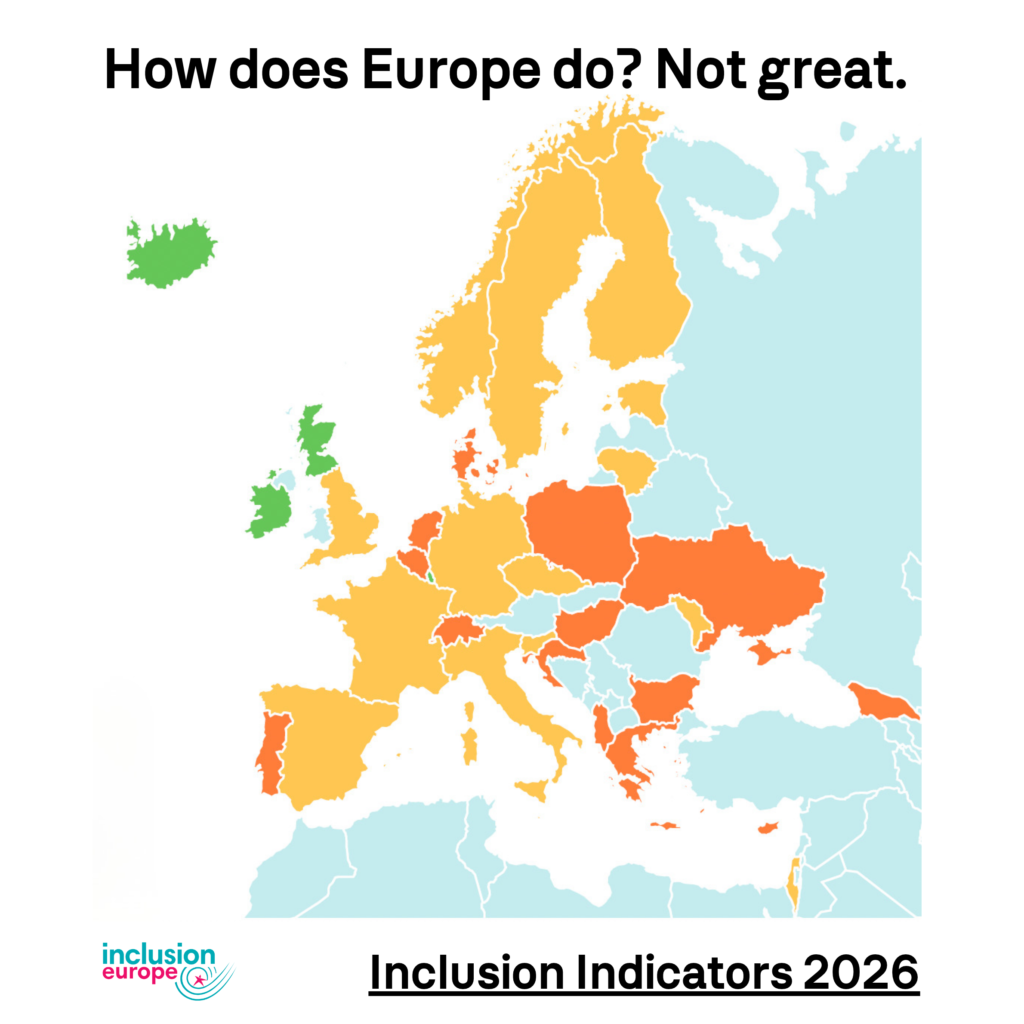
What’s new in 2026
The most important changes from around Europe:
Right to decide and right to vote
- Malta changed their laws from substitute decision-making towards supported decision-making.
Right to live independently and be included in the community
- Ireland, Norway, Scotland, and Slovenia closed institutions and did not open any new institutions in the past year.
Housing and support
- New data shows that in 22 European countries, people with intellectual disabilities struggle to cover basic living costs even when receiving benefits.
Education
- The Netherlands introduced a new inclusive education policy.
- There are now 19 countries in Europe that have inclusive education policies.
Employment
- Poland introduced a new support benefit that is not tied to income.
- People with intellectual disabilities can work without risking to lose this benefit.
Healthcare
- Forced sterilisation is still legal and/or performed in 17 European countries.
- In 18 countries, people with intellectual disabilities have no or very little freedom of choice about their reproductive health.
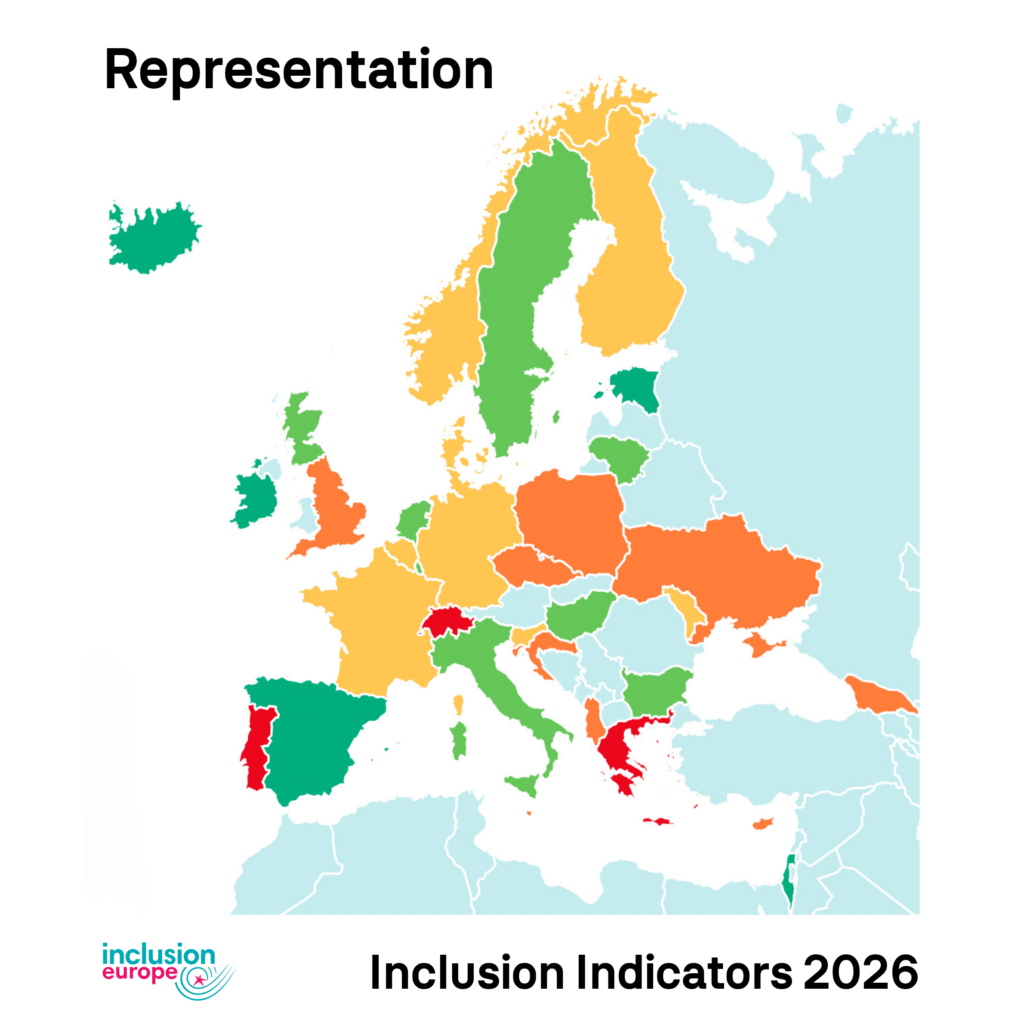
Representation
- New data shows that in 18 countries there is a national platform of self-advocates.
- (See also: Soufiane El Amrani and Joachim Busch elected first persons with intellectual disabilities to Board of European Disability Forum)
Inclusion Indicators 2026 (PDF)
Rights and inclusion: Situation in 33 countries
What it’s like to live in Europe for people with intellectual disabilities and their families:
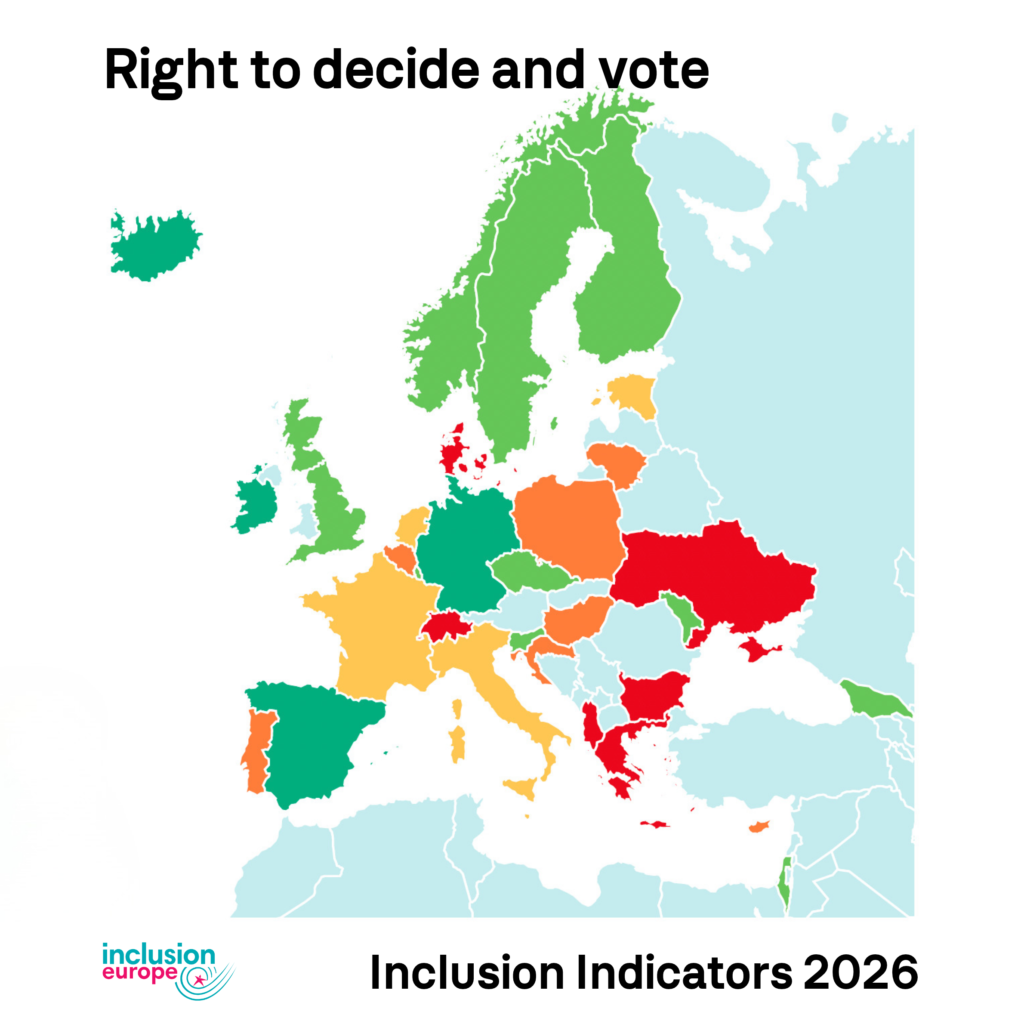
Right to decide and right to vote
People with intellectual disabilities have the right to make decisions about their life just like any other person.
They also have the right to vote and the right to stand for elections.
European citizens take these rights for granted and expect to exercise them freely, they can vote and stand for elections if they wish to.
But it is far from being the same for many people with intellectual disabilities:
- In 12 countries, legal capacity can be fully removed and the right to decide is not respected (EU: 9).
- In 13 countries, legal capacity can be (partially) removed and the right to decide is not respected (EU: 10).
- Only 8 countries fully respect the right to decide and provide supported decision-making (EU: 4).
- In 14 countries, people can be denied the right to vote because their legal capacity was removed (EU: 11).
- In 13 countries, people with intellectual disabilities are restricted to stand for elections (EU: 10).
- Only 5 countries have people with intellectual disabilities elected (EU: 4).
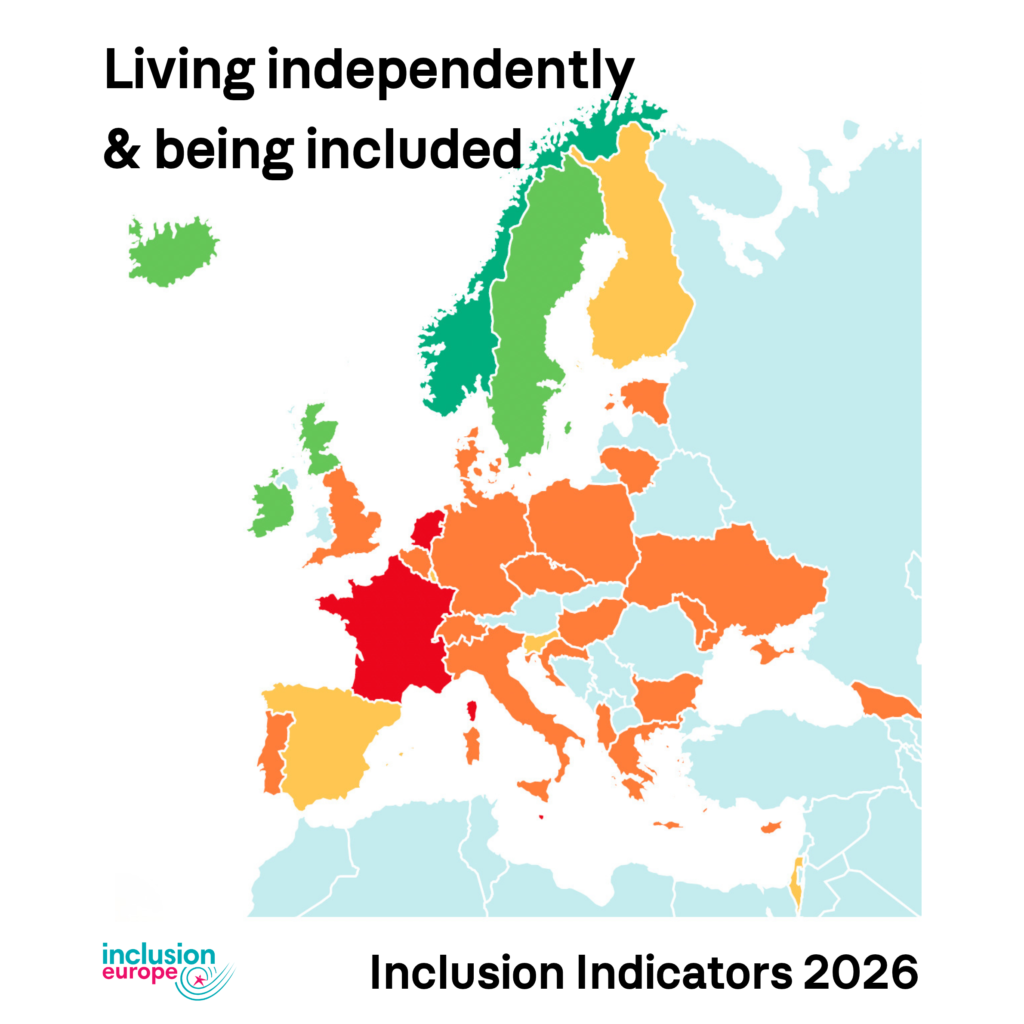
Right to live independently and be included in the community
People with intellectual disabilities have the right to live independently and to be part of the community.
But many people with intellectual disabilities are denied this right, having to live in segregated “care” institutions.
- At least 880,000 people with intellectual disabilities are in segregated “care” institutions where there are more than 10 people in one place (EU: 750,000).
- At least 380,000 people with intellectual disabilities are in small care homes (EU: 330,000).
- Over 36,000 people with intellectual disabilities are placed in psychiatric hospitals (EU: 33,000).
- Institutions have been closed in at least 9 countries in the past year (EU: 5).
- New institutions have been opened in at least 16 countries in the past year (EU: 12).
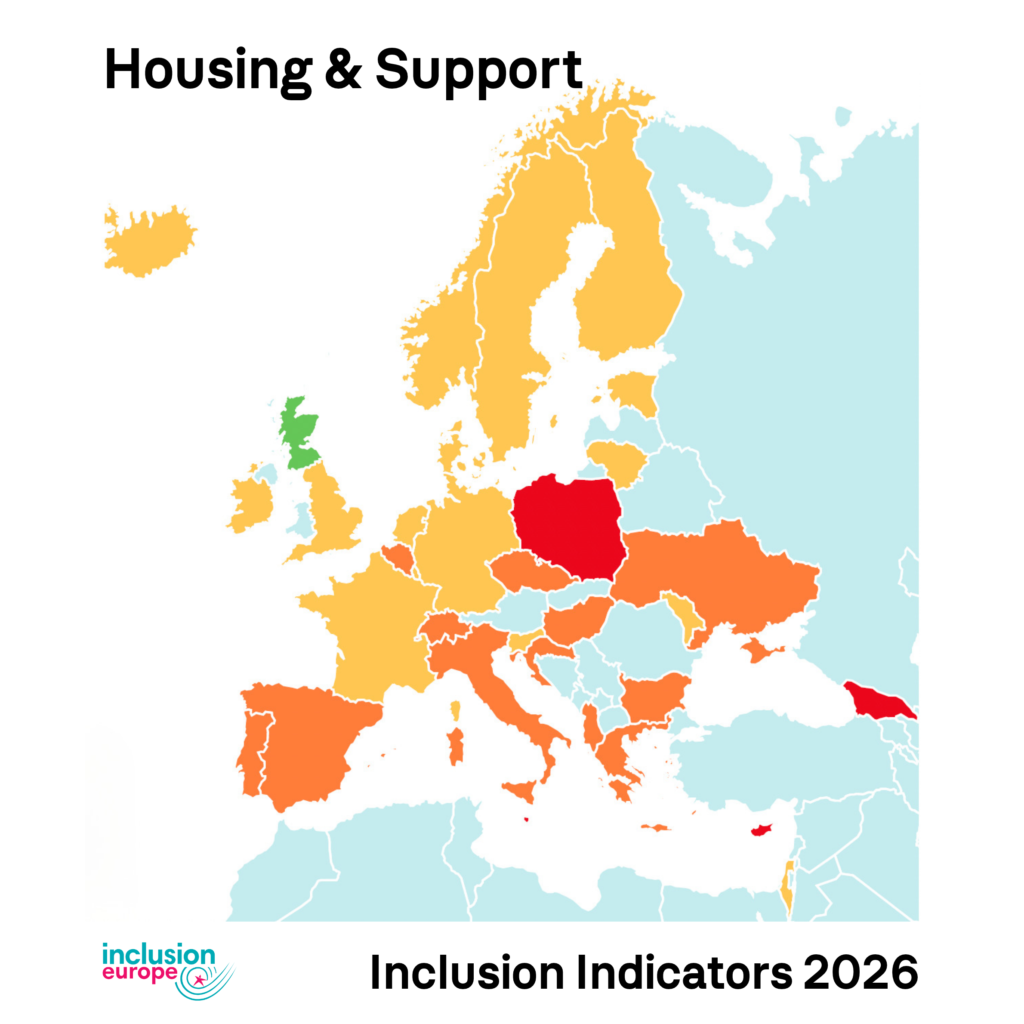
Housing and support
Most adults in Europe expect to live in their own place (whether rented or owned) with the people they choose (family, friends, or with no one at all).
It is very different for adults with intellectual disabilities. Most are living with their parents, whether they chose to or not. (Hundreds of thousands are also in institutions, as shown above.)
Many people with intellectual disabilities and families do not get disability support. This means family members serve as disability support providers, instead of being just a family.
- In 20 countries, most adults with intellectual disabilities live with their families (EU: 15).
- In 26 countries, few or no adults with intellectual disabilities live in their own place (EU: 19).
- In 26 countries, people with intellectual disabilities are likely to have to move into an institution after their parents can no longer support them (EU: 22).
- In 22 countries, people with intellectual disabilities are often struggling to cover basic living costs (even when receiving benefits) (EU: 15).
Education
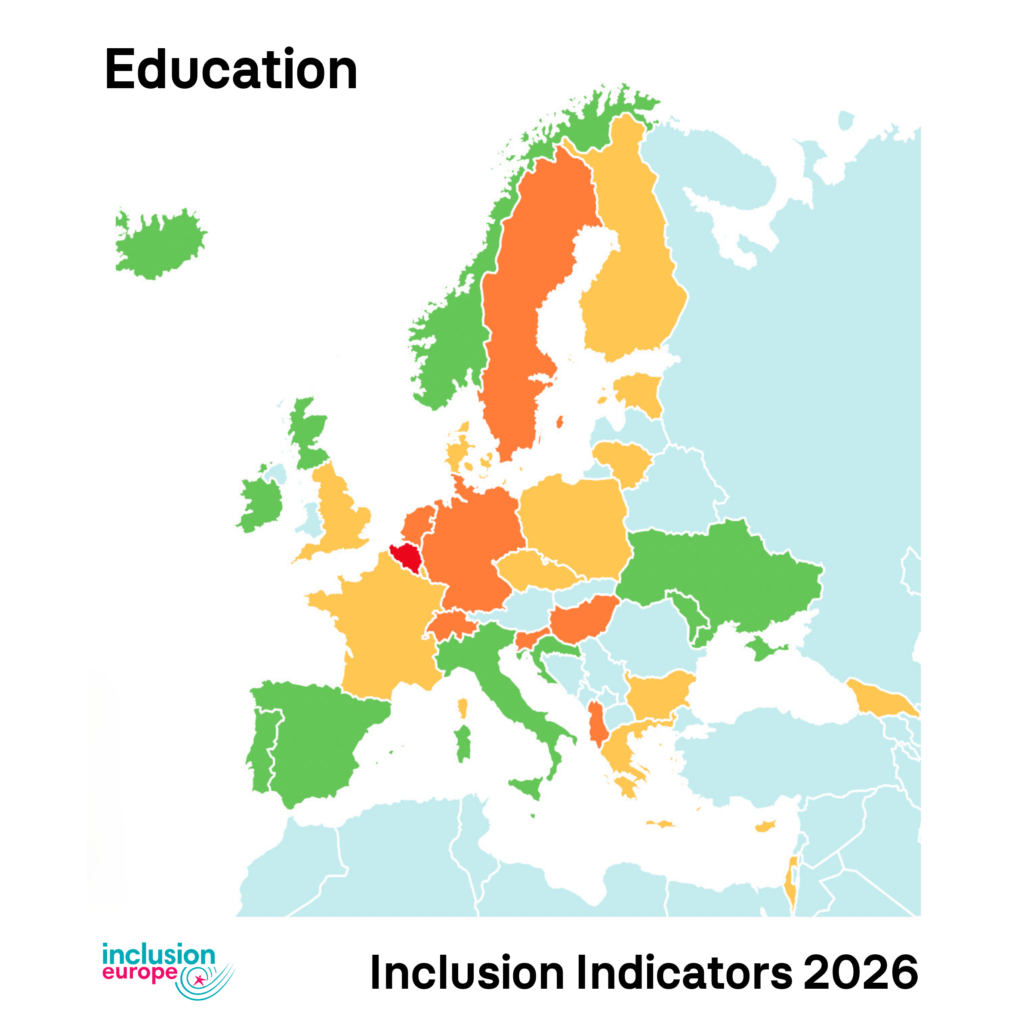
Children with intellectual disabilities should be going to school, and they should be going to the same schools as all other children.
Many children with intellectual disabilities often attend ‘special education’ schools where they are segregated from other children.
- Around 900,000 children with intellectual disabilities are in mainstream schools (EU: 660,000).
- At least 610,000 children with intellectual disabilities are in special schools (EU: 550,000).
- Over 25,000 children with intellectual disabilities are not in education (EU: 13,000).
- At least 19 countries have a national strategy for inclusive education (EU: 12).
Employment
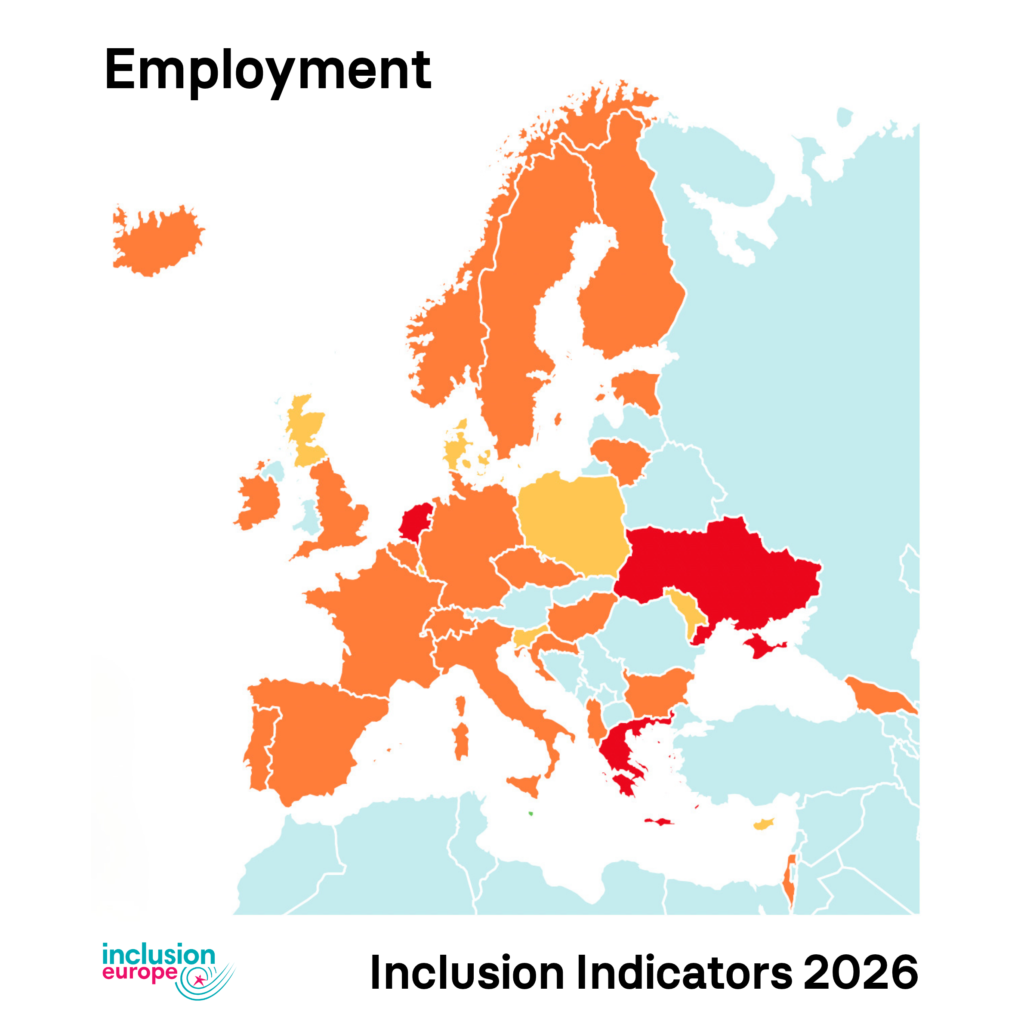
Employment is important for financial stability, social inclusion, purpose and belonging.
For people with intellectual disabilities, the employment rate is low.
People with intellectual disabilities also risk being underpaid and are less likely to be promoted.
- In 30 countries, few or no people with intellectual disabilities are employed on the open labour market (EU: 21).
- In 18 countries, people with intellectual disabilities risk losing their disability benefits when they earn their own salary (EU: 12).
- In 13 countries, adults with intellectual disabilities working in ‘protected employment’ get paid less than minimum wage (EU: 11).
Healthcare
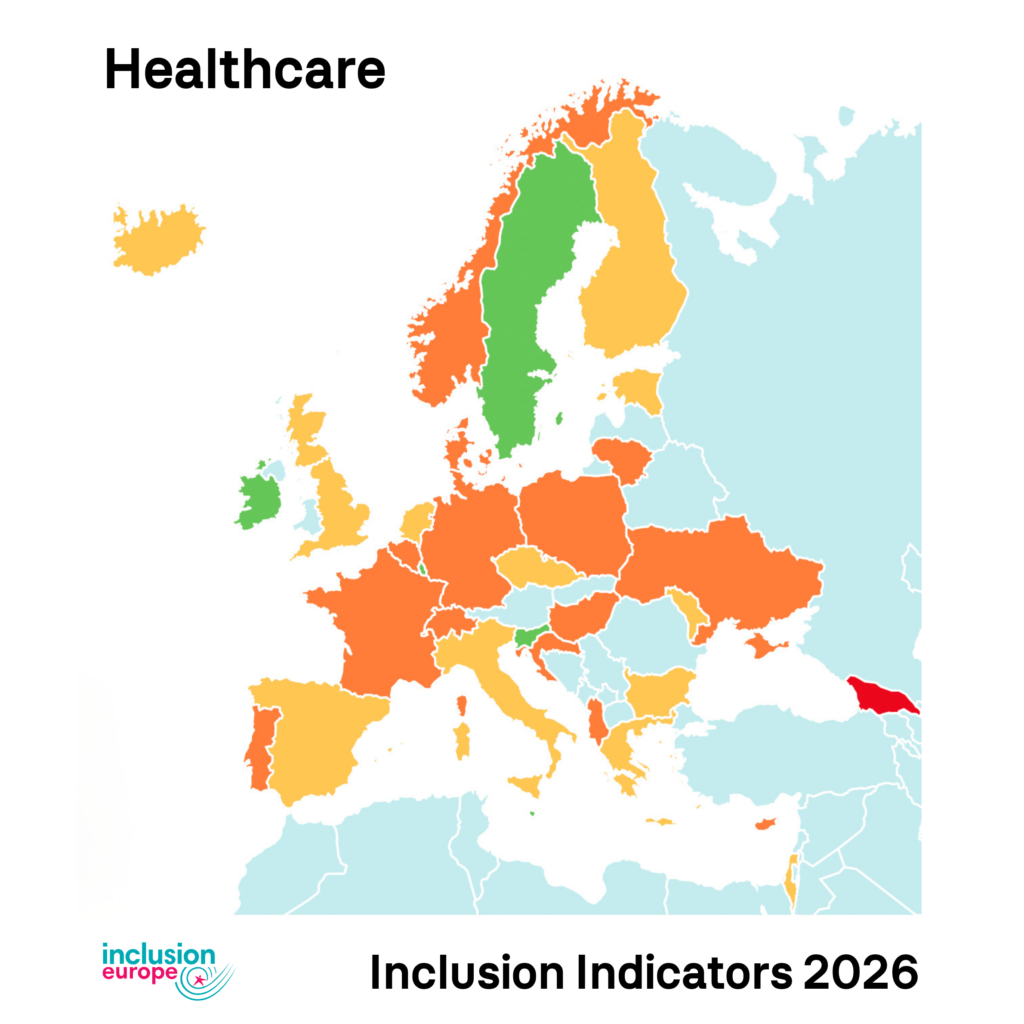
People with intellectual disabilities have the right to equal access to healthcare.
However, people with intellectual disabilities experience stigma, coercion, forced treatment and involuntary placement, forced sterilisation and forced abortion.
- In 23 countries, most people with intellectual disabilities have access to general healthcare (EU: 18).
- In 18 countries, people with intellectual disabilities have no or very little freedom of choice about their reproductive health (EU: 13).
- In 17 countries, forced sterilisation is still legal and/or performed (EU: 13).
Representation
It is important that people with intellectual disabilities are represented and visible in all aspects of society, in civil society organisations and political parties, and in the disability movement.
So that they can advocate for their rights, views and expectations.
- In 29 countries, people with intellectual disabilities are represented in a national cross-disability organisation (EU: 20).
- In 24 countries, there is no person with an intellectual disability part of the council of the national cross-disability organisation (EU: 17).
- In 14 countries, our member organisations report there is no government funding for advocacy work (EU: 8).
- In 18 countries, there is a national platform of self-advocates (EU: 12).