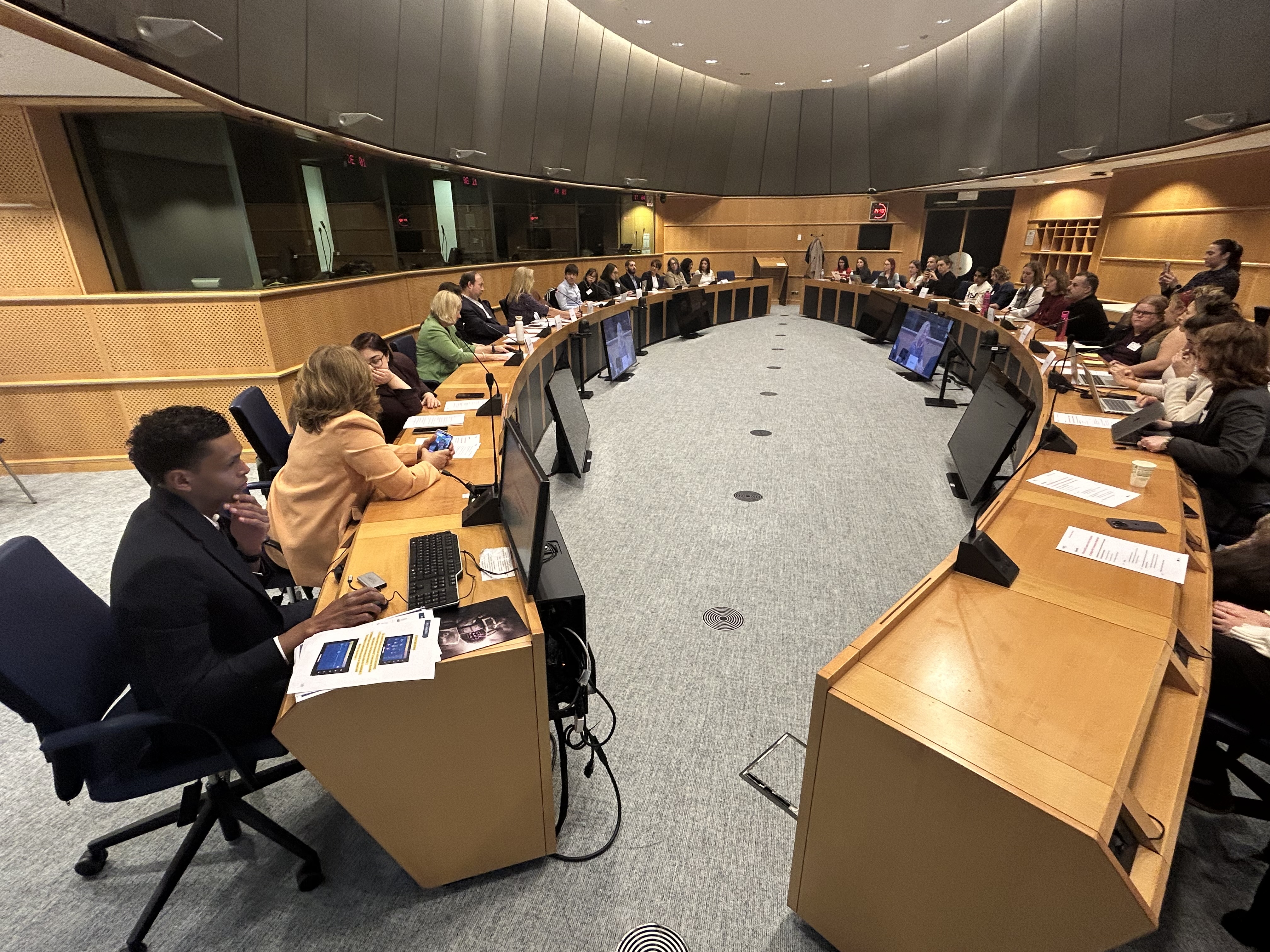
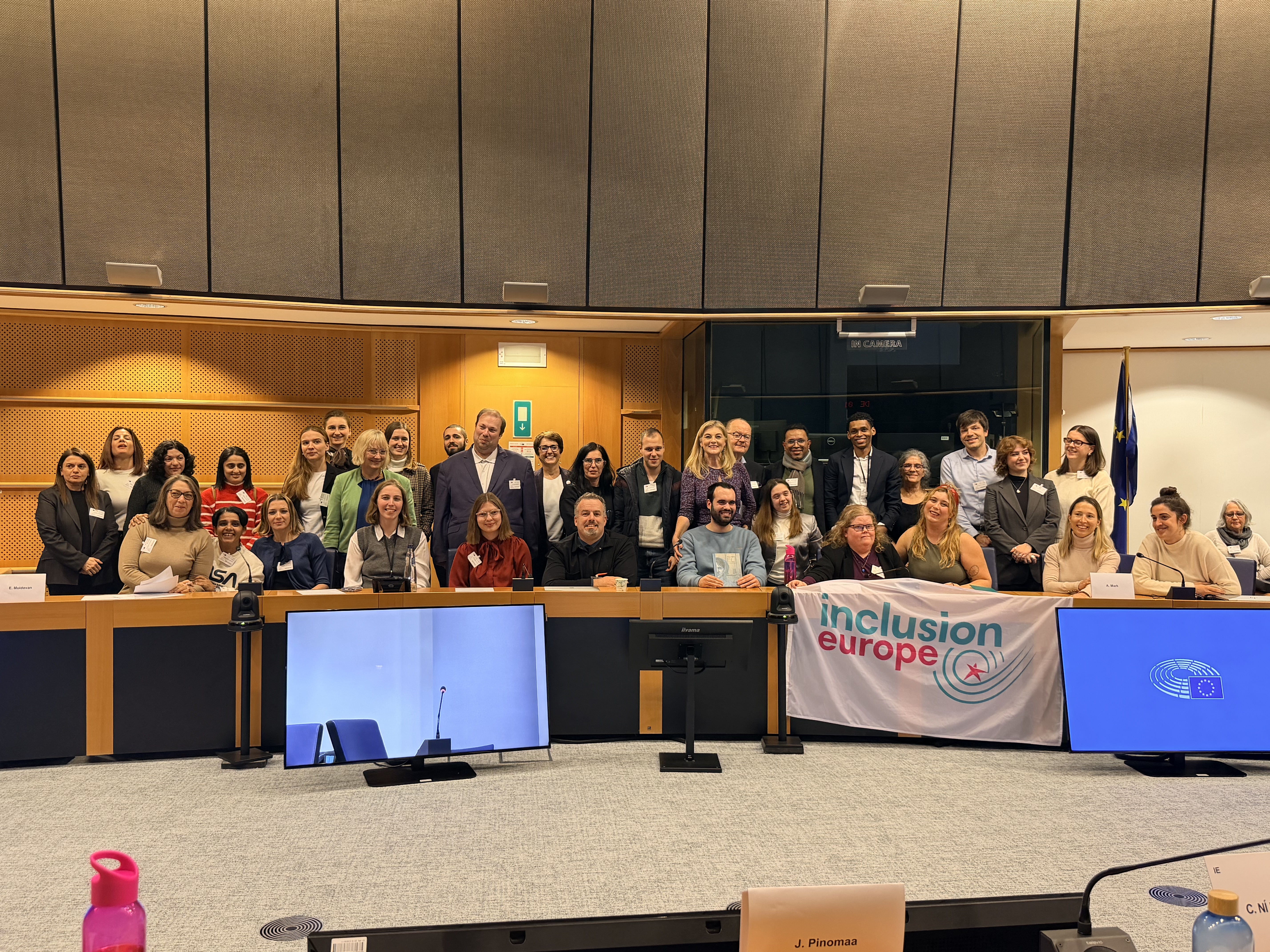
Self-advocates and family-members spoke about what needs to change in their countries and what the EU needs to do. They spoke in the European Parliament on 3 December 2025. This Inclusion Europe event was hosted by Cynthia Ní Mhurchú MEP (Ireland, Renew).
Rights of people with intellectual disabilities must be respected
Cynthia Ní Mhurchú MEP welcomed participants to the event. She explained that disability advocacy is deeply personal to her, describing her mother’s experience. She talked about some of the barriers people face in access to employment, transport, education, or public services.
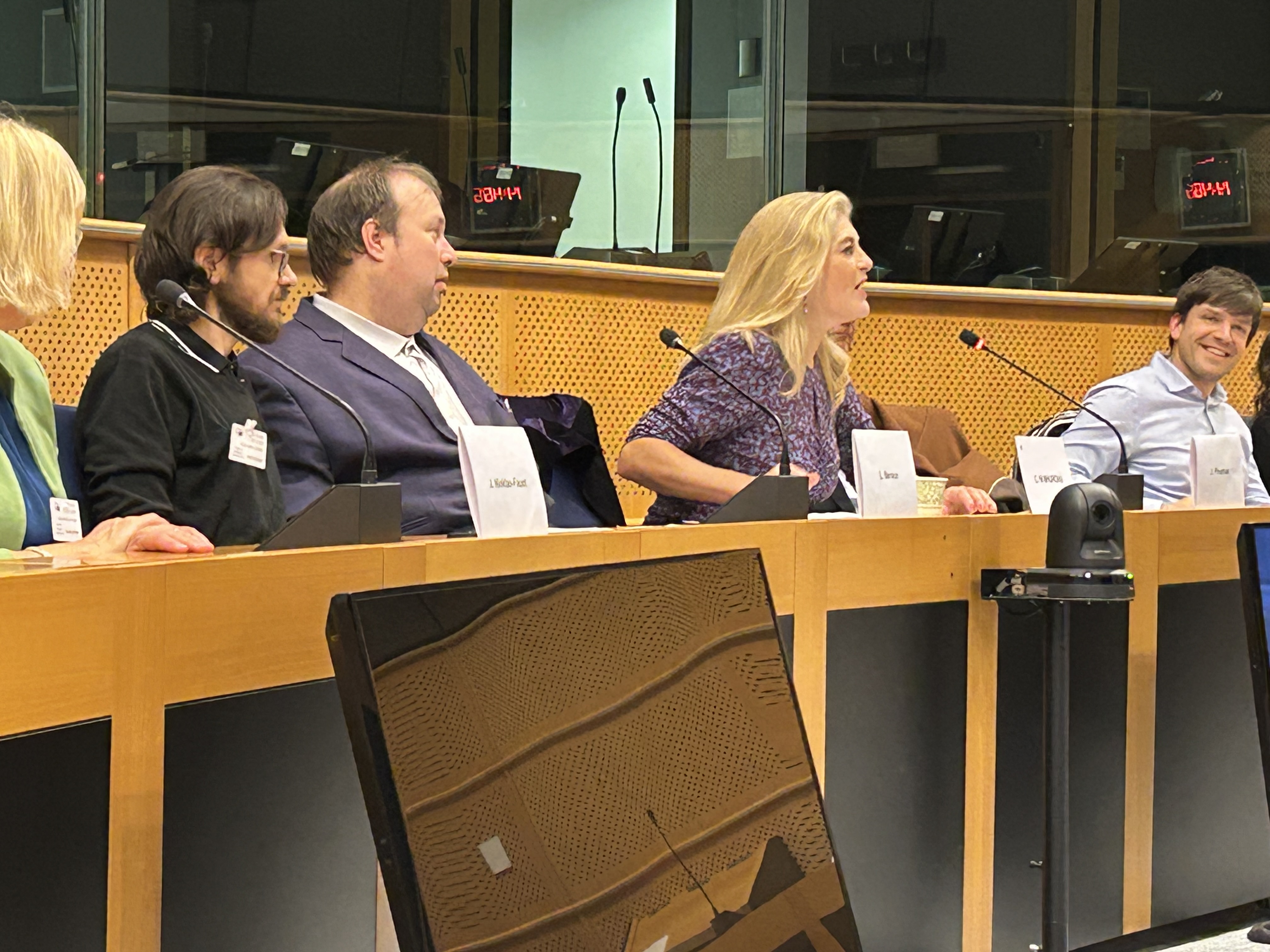
László Bercse, Chair of the European Platform of Self-Advocates and Vice-President of Inclusion Europe said:
“It is important for us to be able to come to the European Parliament and tell about the situation of people with intellectual disabilities and their families.”
“I was happy to see that the European Parliament approved a good document about the Disability Rights Strategy last week. Now, we expect the European Commission to take it into account, together with the views of disability organisations, and create a good set of actions.”
“Rights of people with intellectual disabilities must be respected. Everywhere. All the time.”
What Europe looks like for people with intellectual disabilities and families
Soufiane El Amrani, self-advocate and accessibility expert from Inclusion Europe, presented Inclusion Indicators 2025 report.
The report shows what the situation is for people with intellectual disabilities and their family members in 33 countries.
Self-advocates and family members spoke about the situation in their countries – what issues they face, and what they expect from the EU:
🇷🇴 Elisabeta Moldovan from Romania: “I want the institutions in Romania to be closed and the money to be invested in communities and social services. And I want those 16 000 people living in institutions to live in the community the same way we live in the community. Close institutions! I lived for 25 years in institutions and now I live in the community, and I truly believe that every person with a disability can do the same.”
🇭🇺 László Bercse from Hungary: “We want to live independently as part of the community. Deinstitutionalisation must continue! We need support services, instead of institutions. For example, supported housing and personal assistance. Help people with disabilities to grow and to build relationships and support networks in the community.”
🇩🇪 Jeanne Nicklas-Faust from Germany: “People with intellectual disabilities must live in the community. In Germany we frequently see young people with complex support needs being institutionalised in elderly care homes, because of a lack of housing and support. That is no place for young people. This practice must stop!”
🇮🇪 Tamara Byrne from Ireland: “Make education inclusive for all! “From a very young age, we are separated from our peers and labelled as special. Many people with intellectual disabilities are offered no meaningful options after leaving school, with day services presented as the default pathway.”
🇬🇪 Mariam Berikelashvili from Georgia said: “I am an adult woman, who knows what she wants. Nothing is worse than being treated like a child.”
“Participation mechanisms for self-advocates have been suspended. Self-advocates no longer have access to decision-making. The Department of Inclusive Education was abolished in 2025. The situation has worsened rather than improved. The European Union should support us.”
🇨🇾 Anastasia Andreou from Cyprus: “There is still a lack of understanding of intellectual disability and a need for broader public awareness. Parents need support so they are not over-protective. People should should respect us.”
🇮🇸 Jónína Rósa Hjartadóttir from Iceland: “Make education accessible. Also universities. We might fail an exam every once in a while, like everyone else. That’s ok, we can handle the truth. But we want the same opportunities as everyone else to learn what interests us the most.”
Making these issues understandable and accessible
The event in the European Parliament continued with debate about how to make issues faced by people with intellectual disabilities visible in the media – and how to make the news in the media accessible to people with intellectual disabilities.
Guillaume Jacquinot, Secretary General of Inclusion Europe, shared his experiences supporting self-advocates and working with journalists during his job with Inclusion Ireland.
Anna Mark, from Austrian public broadcaster ORF, talked about their work with different broadcasters to make news easy to read and understand. ORF has been producing accessible news content since 2017. This work was developed together with people with intellectual disabilities.
Jyrki Pinomaa, President of Inclusion Europe, closed the event, thanking everyone for their participation, and Cynthia Ní Mhurchú MEP for hosting us in the European Parliament.
The event was co-funded by the European Union.
Read also: